 Back
BackThe Immune System: Innate and Adaptive Body Defenses
Study Guide - Smart Notes
 Tailored notes based on your materials, expanded with key definitions, examples, and context.
The Immune System: Innate and Adaptive Body Defenses
Introduction to the Immune System
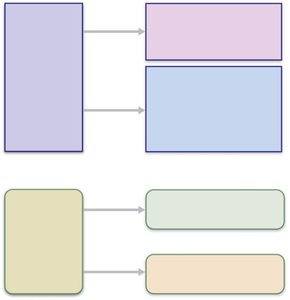
The immune system is a functional system that provides resistance to disease by defending the body against pathogens and foreign substances. It is composed of two main intrinsic systems: the innate (nonspecific) defense system and the adaptive (specific) defense system. These systems work together to protect the body through a series of coordinated responses.
Overview of Innate and Adaptive Defenses
Innate defenses include the first and second lines of defense, providing immediate, nonspecific protection.
Adaptive defenses constitute the third line of defense, targeting specific foreign substances and providing long-term immunity.
Innate (Nonspecific) Defenses
First Line of Defense: Surface Barriers
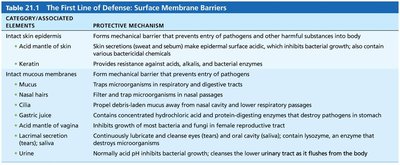
The first line of defense consists of surface barriers such as the skin and mucous membranes, along with their secretions. These barriers provide a physical and chemical shield against most microorganisms.
Physical barrier: Intact skin and mucosae prevent pathogen entry.
Chemical barriers: Secretions such as acid mantle, enzymes, mucin, defensins, and other chemicals inhibit or destroy microorganisms.
Respiratory modifications: Mucus-coated hairs and cilia in the respiratory tract trap and remove pathogens.
Second Line of Defense: Cells and Chemicals
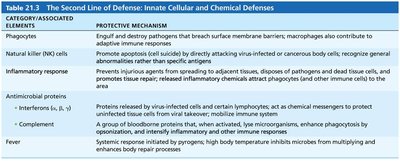
If pathogens breach surface barriers, the innate system's second line of defense is activated. This includes various cells and chemicals that act to inhibit the spread of invaders and initiate inflammation.
Phagocytes: White blood cells that ingest and digest foreign invaders.
Natural Killer (NK) cells: Lymphocytes that target and kill virus-infected and cancerous cells.
Inflammatory response: Involves macrophages, mast cells, white blood cells, and inflammatory chemicals.
Antimicrobial proteins: Interferons and complement proteins that attack microorganisms or hinder their reproduction.
Fever: Systemic response that inhibits microbial growth and enhances repair.
Pattern Recognition Receptors
Many innate immune cells possess pattern recognition receptors (e.g., Toll-like receptors, TLRs) that detect common structures on microbes and trigger immune responses.
Phagocytosis
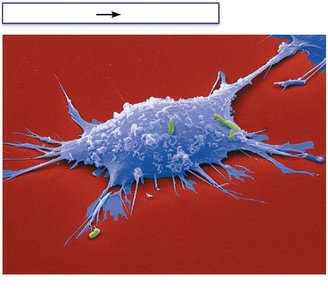
Phagocytosis is the process by which phagocytes engulf and digest pathogens. The main phagocytes are neutrophils and macrophages.
Neutrophils: Most abundant, become phagocytic upon infection.
Macrophages: Develop from monocytes; chief and most robust phagocytes. Can be free (wandering) or fixed (resident in tissues).
Steps of Phagocytosis
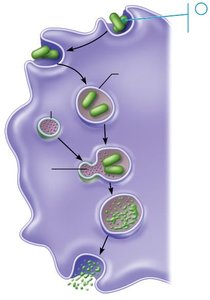
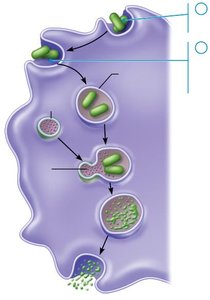
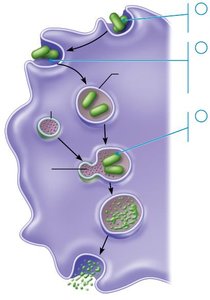
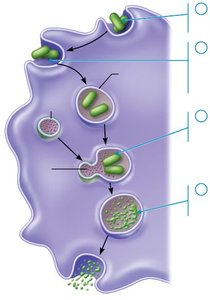
Phagocyte adheres to pathogen via recognition of surface carbohydrates. Opsonization (coating by antibodies or complement) enhances this step.
Cytoplasmic extensions (pseudopods) engulf the particle, forming a phagosome.
Phagosome fuses with a lysosome, forming a phagolysosome.
Lysosomal enzymes digest the pathogen.
Indigestible material is exocytosed from the cell.
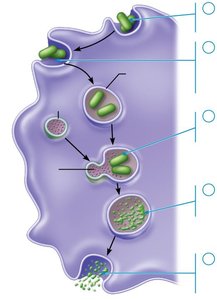
Special Cases in Phagocytosis
Some pathogens resist lysosomal enzymes (e.g., tuberculosis bacteria). Helper T cells can trigger macrophages to produce a respiratory burst (release of free radicals and oxidizing chemicals) to kill these pathogens.
Defensins in neutrophils can pierce pathogen membranes.
Natural Killer (NK) Cells
NK cells are nonphagocytic lymphocytes that patrol blood and lymph, targeting cells lacking "self" markers. They induce apoptosis in cancer and virus-infected cells and secrete chemicals that enhance inflammation.
Inflammation: Tissue Response to Injury
Inflammation is a localized response to tissue injury caused by trauma, heat, chemicals, or infection. It prevents the spread of damaging agents, disposes of debris, alerts the adaptive immune system, and sets the stage for repair.
Cardinal signs: Redness, heat, swelling, pain (and sometimes impairment of function).
Stages of Inflammation
Inflammatory chemical release (e.g., histamine, kinins, prostaglandins, cytokines, complement).
Vasodilation and increased vascular permeability (causing hyperemia and edema).
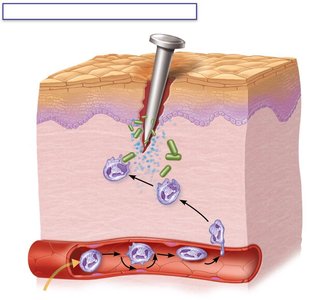
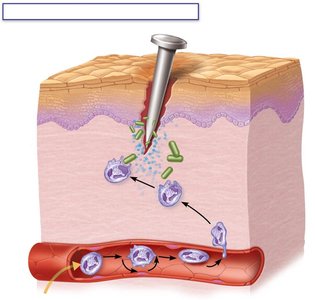
Phagocyte mobilization (leukocytosis, margination, diapedesis, chemotaxis).
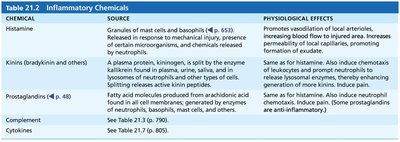
Phagocyte Mobilization Steps
Leukocytosis: Neutrophils enter blood from bone marrow.
Margination: Neutrophils cling to capillary walls.
Diapedesis: Neutrophils squeeze through capillary walls into tissues.
Chemotaxis: Neutrophils follow chemical signals to the injury site.
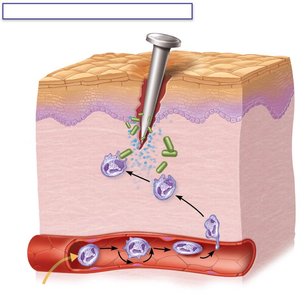
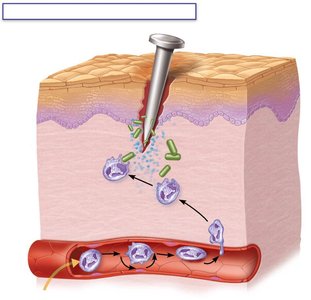
Clinical Note: Pus and Abscesses
Pus: Mixture of dead neutrophils, tissue cells, and pathogens.
Abscess: Walled-off sac of pus that may require surgical drainage.
Some bacteria (e.g., tuberculosis) can survive inside macrophages, forming granulomas.
Antimicrobial Proteins
Antimicrobial proteins enhance innate defenses by attacking microorganisms or hindering their reproduction. The two main types are interferons and complement proteins.
Interferons (IFNs)
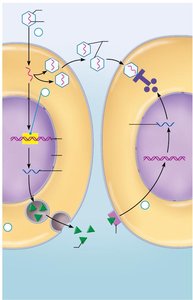
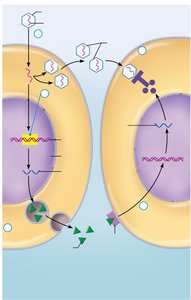
Proteins released by virus-infected cells to warn neighboring cells.
Stimulate production of antiviral proteins that block viral replication.
Types: IFN-α and IFN-β (antiviral, activate NK cells); IFN-γ (immune interferon, activates macrophages).
Used clinically to treat certain viral infections and immune disorders.
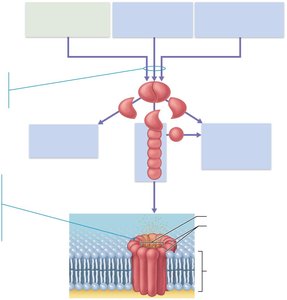
Complement System
Consists of ~20 plasma proteins (C1–C9, factors B, D, P) that circulate in inactive form.
Activated by three pathways: classical (antibody-dependent), lectin (sugar-binding), and alternative (spontaneous on pathogen surfaces).
All pathways converge at C3, which splits into C3a and C3b, initiating inflammation, opsonization, and cell lysis.
Membrane Attack Complex (MAC) forms pores in target cell membranes, causing lysis.
Fever
Systemic response to infection, mediated by pyrogens released from leukocytes and macrophages.
Raises body temperature, which inhibits microbial growth and increases metabolic rate for tissue repair.
Summary Table: Innate Cellular and Chemical Defenses
Additional info: The innate immune system provides immediate, broad-spectrum defense, while the adaptive system offers specific, long-lasting protection. Both systems are essential for maintaining health and preventing disease.
