Back
The Immune System: Innate and Adaptive Body Defenses
Study Guide - Smart Notes
 Tailored notes based on your materials, expanded with key definitions, examples, and context.
The Immune System: Overview
Introduction to Immune Defenses
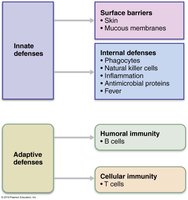
The immune system provides resistance to disease through a complex network of cells, tissues, and molecules. It is divided into two main branches: the innate (nonspecific) defense system and the adaptive (specific) defense system. These systems work together to protect the body from pathogens and abnormal cells.
Innate defenses: Provide immediate, nonspecific protection against a wide range of pathogens.
Adaptive defenses: Target specific pathogens and provide long-lasting immunity.
Innate (Nonspecific) Defense System
First Line of Defense: Surface Barriers
The first line of defense consists of physical and chemical barriers that prevent pathogen entry.
Skin: Acts as a physical barrier; keratin resists acids, bases, and toxins.
Mucous membranes: Line body cavities and secrete protective chemicals.
Protective chemicals:
Acid mantle: Inhibits microbial growth.
Enzymes: Lysozyme in saliva, mucus, and tears destroys bacteria.
Mucin: Traps microorganisms in mucus.
Defensins: Antimicrobial peptides that inhibit microbial growth.
Other chemicals: Sebum and sweat contain substances toxic to bacteria.
Second Line of Defense: Internal Defenses
If pathogens breach surface barriers, internal defenses are activated. These include various cells and chemicals that target invaders.
Phagocytes: White blood cells that ingest and digest pathogens.
Natural killer (NK) cells: Destroy infected or abnormal cells.
Inflammation: Local response to injury or infection.
Antimicrobial proteins: Interferons and complement proteins.
Fever: Systemic response to infection.
Phagocytosis
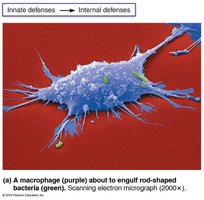
Phagocytes, such as neutrophils and macrophages, recognize and adhere to pathogens, then engulf and digest them. Opsonization enhances this process by coating pathogens with antibodies or complement proteins, making them easier to ingest.
Antimicrobial Proteins
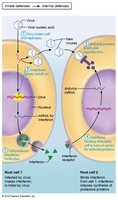
Antimicrobial proteins help defend against pathogens by interfering with their replication or marking them for destruction.
Interferons (IFNs): Proteins released by virus-infected cells to warn neighboring cells and activate immune cells.
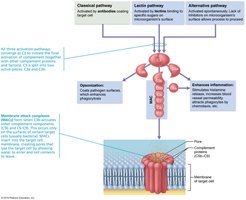
Complement system: A group of plasma proteins that enhance inflammation, promote phagocytosis, and cause cell lysis.
Fever
Fever is an abnormally high body temperature induced by pyrogens released from leukocytes and macrophages. Moderate fever helps inhibit microbial growth and speeds up tissue repair, but high fever can be dangerous as it denatures proteins.
Adaptive (Specific) Defense System
Characteristics of Adaptive Immunity
The adaptive immune system is highly specific, systemic, and has memory. It consists of two main branches:
Humoral immunity: Mediated by B cells and antibodies; targets extracellular pathogens.
Cellular immunity: Mediated by T cells; targets infected or abnormal cells.
Antigens and Antigenic Determinants
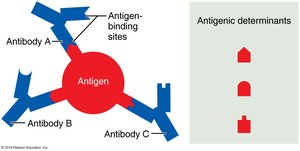
Antigens are substances that trigger adaptive immune responses. They are usually large, complex molecules not normally found in the body. Antigenic determinants are specific regions on antigens that antibodies or lymphocyte receptors recognize and bind to.
Self-Antigens and MHC Proteins
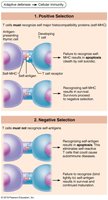
Self-antigens are proteins on cell surfaces that identify cells as "self." Major histocompatibility complex (MHC) proteins are a group of glycoproteins unique to each individual. They present antigen fragments to T cells, which is essential for immune recognition.
Lymphocyte Development and Activation
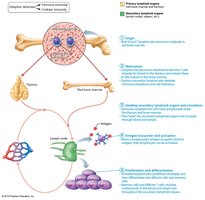
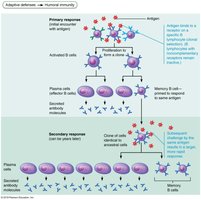
Lymphocytes (B and T cells) originate in red bone marrow and mature in primary lymphoid organs. They undergo education to ensure immunocompetence and self-tolerance. Upon encountering an antigen, lymphocytes undergo clonal selection, proliferating into effector and memory cells.
Antigen-Presenting Cells (APCs)
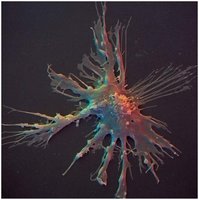
APCs, such as dendritic cells, macrophages, and B cells, engulf antigens and present fragments to T cells, initiating adaptive immune responses.
Humoral Immune Response
B Cell Activation and Antibody Production
B cells are activated when they encounter their specific antigen, leading to clonal selection. Most activated B cells become plasma cells that secrete antibodies, while some become memory B cells for future responses.
Immunological Memory
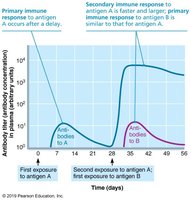
The primary immune response occurs upon first exposure to an antigen and is slower. The secondary response is faster and more robust due to memory cells.
Active and Passive Humoral Immunity
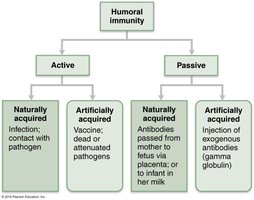
Immunity can be acquired actively (through infection or vaccination) or passively (through transfer of antibodies).
Active immunity: Body produces its own antibodies.
Passive immunity: Antibodies are received from another source.
Antibody Structure and Classes
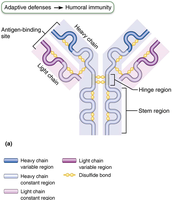
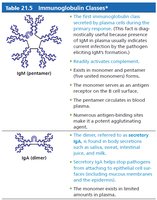
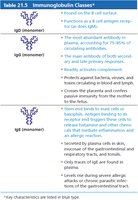
Antibodies (immunoglobulins) are Y-shaped proteins with variable regions for antigen binding and constant regions that determine their class and function. There are five main classes: IgM, IgA, IgD, IgG, and IgE.
Antibody Functions
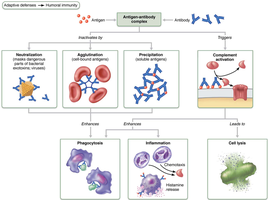
Antibodies inactivate and tag antigens for destruction through mechanisms such as neutralization, agglutination, precipitation, and complement activation.
Cellular Immune Response
T Cell Types and Functions
T cells defend against intracellular pathogens and abnormal cells. Major types include:
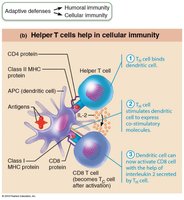
Helper T cells (CD4): Activate B cells, other T cells, and macrophages.
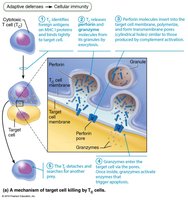
Cytotoxic T cells (CD8): Directly kill infected or abnormal cells.
Regulatory T cells: Suppress immune responses to prevent autoimmunity.
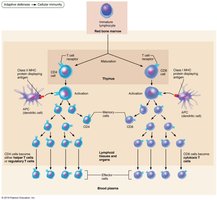
MHC Proteins and Antigen Presentation
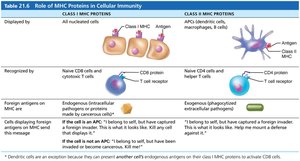
MHC proteins display antigen fragments on cell surfaces. Class I MHC proteins are found on all nucleated cells and present to CD8 T cells, while Class II MHC proteins are found on APCs and present to CD4 T cells.
T Cell Activation and Differentiation
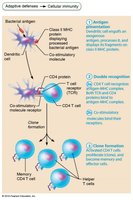
T cell activation requires antigen binding and co-stimulation. Activated T cells proliferate and differentiate into effector and memory cells.
Helper and Cytotoxic T Cells in Immunity
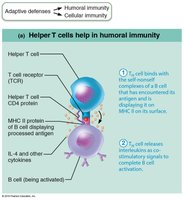
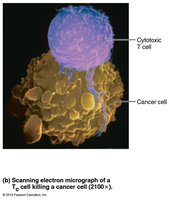
Helper T cells coordinate both humoral and cellular immunity. Cytotoxic T cells kill infected or cancerous cells by releasing perforins and granzymes, inducing apoptosis.
Clinical Connections
Immunodeficiencies
Immunodeficiencies are conditions where immune function is impaired. Examples include severe combined immunodeficiency (SCID), Hodgkin’s disease, and acquired immune deficiency syndrome (AIDS).
Autoimmune Diseases
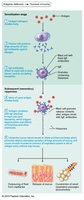
Autoimmunity occurs when the immune system attacks self-tissues. Examples include rheumatoid arthritis, type 1 diabetes, and multiple sclerosis. Treatments focus on suppressing the immune response.
Hypersensitivities
Hypersensitivities are exaggerated immune responses to harmless antigens. Types include:
Type I (Immediate): Allergies mediated by IgE and histamine release.
Type II (Cytotoxic): Antibody-mediated cell destruction (e.g., transfusion reactions).
Type III (Immune Complex): Antigen-antibody complexes cause inflammation (e.g., lupus).
Type IV (Delayed): T cell-mediated responses (e.g., contact dermatitis).