Back
The Integumentary System: Structure and Function
Study Guide - Smart Notes
 Tailored notes based on your materials, expanded with key definitions, examples, and context.
The Integumentary System
Overview
The integumentary system is the body's primary protective barrier, consisting of the skin and its accessory structures. It plays a crucial role in defense, sensation, and homeostasis. This system is covered in Chapter 5 of anatomy and physiology courses.
Primary Layers of the Skin
Skin Structure
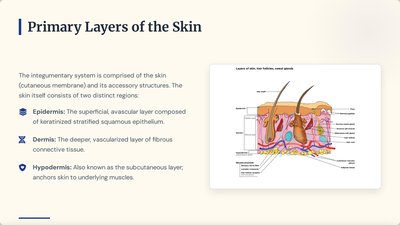
The skin (cutaneous membrane) is composed of three main layers, each with distinct functions and cellular compositions:
Epidermis: The superficial, avascular layer made of keratinized stratified squamous epithelium. It provides a tough, waterproof barrier.
Dermis: The deeper, vascularized layer of fibrous connective tissue. It supports the epidermis and houses blood vessels, nerves, and glands.
Hypodermis: Also called the subcutaneous layer, it anchors the skin to underlying muscles and bones, and stores fat.
The Epidermis: Cellular Composition
Key Cell Types
The epidermis contains several specialized cell types, each contributing to skin function:
Keratinocytes: The most abundant cells (about 90%). They produce keratin, a protein that gives skin its strength and waterproof properties.
Melanocytes: Spider-shaped cells in the deepest layer. They synthesize melanin, the pigment that protects cell nuclei from UV radiation damage.
Langerhans Cells: Star-shaped macrophages that activate the immune system by ingesting foreign substances and presenting them to lymphocytes.
Merkel Cells: Located at the epidermal-dermal junction. These cells are associated with sensory nerve endings and function as touch receptors.
The Hypodermis Layer
Structure and Function
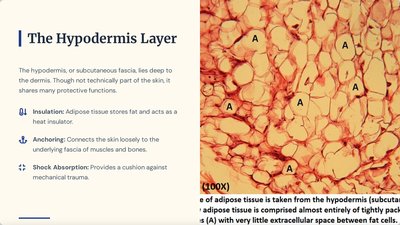
The hypodermis, or subcutaneous fascia, lies deep to the dermis. Although not technically part of the skin, it shares many protective functions:
Insulation: Adipose tissue stores fat and acts as a heat insulator.
Anchoring: Connects the skin loosely to the underlying fascia of muscles and bones.
Shock Absorption: Provides a cushion against mechanical trauma.
Cutaneous Exocrine Glands
Types and Functions
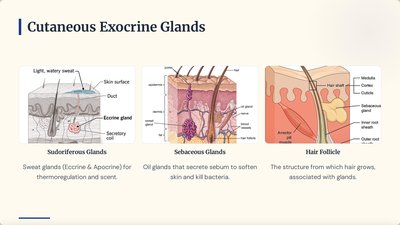
The skin contains several types of exocrine glands, each with specific roles in protection and homeostasis:
Sudoriferous Glands: Sweat glands (eccrine & apocrine) responsible for thermoregulation and scent.
Sebaceous Glands: Oil glands that secrete sebum to soften skin and kill bacteria.
Hair Follicle: The structure from which hair grows, associated with glands.
Physiological Functions
Major Roles of the Integumentary System
The integumentary system performs several essential physiological functions:
First Line of Defense: Acts as a physical, chemical, and biological barrier against pathogens and environmental hazards.
Thermoregulation: Maintains body temperature at approximately 37°C through sweat production and blood vessel dilation/constriction.
Total Surface Area: Covers about 2 square meters in adults, making it the largest organ system.
Chemical & Biological Barrier: Prevents entry of harmful substances and microorganisms.
Cutaneous Sensation: Detects touch, pressure, pain, and temperature via specialized receptors.
Metabolic & Excretion: Synthesizes vitamin D and excretes waste products through sweat.