 Back
BackThe Integumentary System: Structure and Function of the Skin
Study Guide - Smart Notes
 Tailored notes based on your materials, expanded with key definitions, examples, and context.
The Integumentary System
Overview of Skin Structure
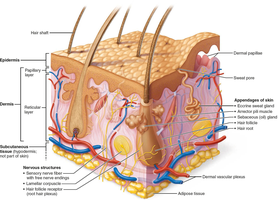
The skin, also known as the integument, is the largest organ of the human body and serves as a protective barrier. It consists of two main layers: the epidermis and the dermis. Beneath these layers lies the subcutaneous tissue (hypodermis), which, while not technically part of the skin, is functionally important.
Epidermis: Outermost layer, composed of epithelial tissue; avascular.
Dermis: Underlies the epidermis; made of dense connective tissue; vascular.
Subcutaneous tissue (Hypodermis): Mostly adipose tissue; anchors skin, provides insulation and shock absorption.
The Epidermis
Cell Types of the Epidermis
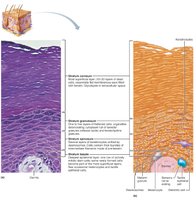
The epidermis is primarily composed of keratinized stratified squamous epithelium and contains four main cell types:
Keratinocytes: Produce keratin, a protein that provides protective properties; most abundant cell type; continuously renewed.
Melanocytes: Located in the deepest layer; produce melanin pigment, which protects against UV radiation.
Dendritic cells (Langerhans cells): Immune cells that patrol the epidermis and ingest foreign substances.
Tactile epithelial cells (Merkel cells): Sensory receptors for touch, found at the epidermal-dermal junction.
Layers of the Epidermis
The epidermis is organized into distinct layers (strata). Thick skin (palms, soles) has five layers; thin skin has four (lacking the stratum lucidum).
Stratum basale: Deepest, single row of mitotically active stem cells; also called stratum germinativum.
Stratum spinosum: Several layers thick; contains pre-keratin filaments and abundant dendritic cells.
Stratum granulosum: Four to six layers; cells flatten, organelles disintegrate, keratinization begins, and glycolipids are released for waterproofing.
Stratum lucidum: Present only in thick skin; thin, clear layer of dead keratinocytes.
Stratum corneum: Outermost, 20–30 layers of dead, keratinized cells; provides protection and prevents water loss.
The Dermis
Structure and Cell Types
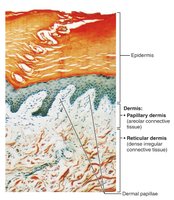
The dermis is a strong, flexible connective tissue layer that supports and nourishes the epidermis. It contains fibroblasts, macrophages, mast cells, and white blood cells. The dermis houses nerves, blood vessels, lymphatics, hair follicles, and glands.
Papillary dermis: Superficial, thin layer of areolar connective tissue; contains dermal papillae with capillaries, nerve endings, and touch receptors.
Reticular dermis: Deeper, thicker layer of dense irregular connective tissue; provides strength, elasticity, and hydration via collagen and elastic fibers.
Papillary Dermis and Friction Ridges
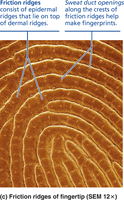
The papillary dermis forms fingerlike projections called dermal papillae that interlock with the epidermis. In thick skin, these form friction ridges (e.g., fingerprints), which enhance grip and tactile sensitivity. The pattern of friction ridges is genetically determined and unique to each individual.
Dermal papillae: Contain capillary loops, free nerve endings, and tactile corpuscles (Meissner’s corpuscles).
Friction ridges: Formed by dermal and epidermal ridges; sweat pores open along these ridges, creating fingerprints.
Reticular Dermis
The reticular dermis makes up the majority of the dermal thickness and is composed of dense irregular connective tissue. Its collagen fibers provide tensile strength and hydration, while elastic fibers allow for stretch and recoil. The dermal vascular plexus supplies blood to the skin and helps regulate temperature.
Collagen fibers: Provide strength and bind water, keeping skin hydrated.
Elastic fibers: Allow skin to stretch and return to its original shape.
Dermal vascular plexus: Network of blood vessels between the reticular layer and subcutaneous tissue.
Summary Table: Layers of the Skin
Layer | Main Tissue Type | Key Features |
|---|---|---|
Epidermis | Keratinized stratified squamous epithelium | Protective barrier, avascular, multiple strata |
Dermis (Papillary) | Areolar connective tissue | Dermal papillae, capillaries, sensory receptors |
Dermis (Reticular) | Dense irregular connective tissue | Collagen and elastic fibers, glands, hair follicles |
Subcutaneous (Hypodermis) | Adipose and areolar connective tissue | Anchors skin, insulation, shock absorption |
