 Back
Ch 5 The Integumentary System: Structure, Function, and Clinical Relevance
Study Guide - Smart Notes
 Tailored notes based on your materials, expanded with key definitions, examples, and context.
The Integumentary System
Overview and Functions
The integumentary system is composed primarily of the skin, which is the largest organ of the human body. It serves several essential functions that are critical for maintaining homeostasis and protecting the body from external harm.
Protection: Acts as a physical barrier against mechanical injury, pathogens, and harmful substances.
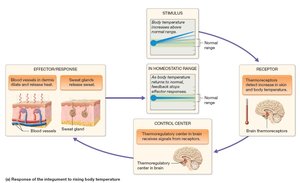
Thermoregulation: Regulates body temperature through sweat production and control of blood flow to the skin.
Sensation: Contains sensory receptors for touch, pain, temperature, and pressure.
Synthesis: Produces vitamin D when exposed to ultraviolet (UV) light.
Excretion: Eliminates small amounts of metabolic waste through sweat.
Skin Structure
Basic Anatomy of the Skin
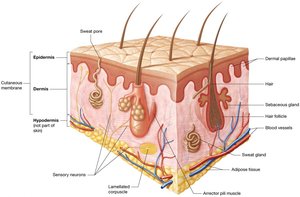
The skin consists of three main layers, each with distinct structures and functions:
Epidermis: The outermost, avascular layer composed of stratified squamous epithelium.
Dermis: The middle, vascular layer made of connective tissue, containing nerves, blood vessels, and glands.
Hypodermis (subcutaneous layer): Not technically part of the skin, but lies beneath the dermis and consists mainly of adipose tissue for insulation and energy storage.
The Epidermis
Layers of the Epidermis
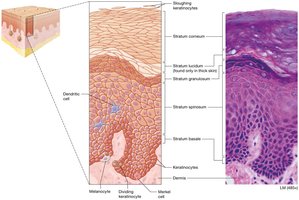
The epidermis is composed of several distinct layers (strata), each with specialized cells and functions. From deepest to most superficial, these layers are:
Stratum basale: The deepest layer, containing dividing keratinocytes and melanocytes.
Stratum spinosum: Several layers of keratinocytes connected by desmosomes; contains Langerhans cells for immune defense.
Stratum granulosum: Cells begin to flatten and accumulate keratohyalin granules, which contribute to waterproofing.
Stratum lucidum: Present only in thick skin (palms, soles); a thin, translucent layer of dead keratinocytes.
Stratum corneum: The outermost layer, consisting of many layers of dead, flattened, keratinized cells that are continuously shed.
Epidermal Growth and Renewal
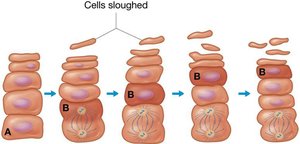
Cells in the stratum basale divide and migrate upward, undergoing differentiation and eventually being sloughed off at the surface. This process ensures the epidermis is continually renewed.
Keratinization: The process by which keratinocytes produce keratin and become more flattened as they move toward the surface.
Turnover time: The entire process from cell division to shedding takes about 4-6 weeks in healthy skin.
The Dermis
Structure and Layers of the Dermis
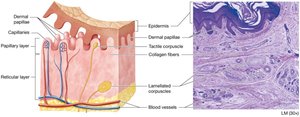
The dermis is a strong, flexible layer of connective tissue that supports and nourishes the epidermis. It contains blood vessels, nerves, hair follicles, and glands. The dermis is divided into two layers:
Papillary layer: The superficial layer, composed of loose areolar connective tissue; contains dermal papillae that interlock with the epidermis and contain capillaries and sensory receptors.
Reticular layer: The deeper, thicker layer made of dense irregular connective tissue; provides strength and elasticity to the skin.
Accessory Structures of the Skin
Overview
Accessory structures are derivatives of the epidermis and include hair, nails, sweat glands, and sebaceous (oil) glands. These structures contribute to the protective and regulatory functions of the skin.
Hair and Hair Follicles
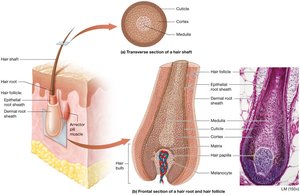
Hair is composed of dead, keratinized cells and serves functions such as protection, sensation, and reducing heat loss. Each hair grows from a hair follicle that extends into the dermis.
Hair shaft: The visible part above the skin surface.
Hair root: The portion below the surface, embedded in the follicle.
Hair bulb: The expanded base of the follicle where hair growth occurs.
Associated structures: Arrector pili muscle (causes hair to stand), sebaceous glands (secrete oil).
Nails
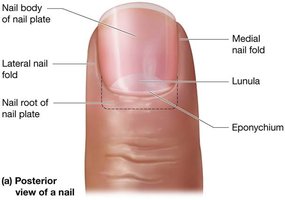
Nails are hard, keratinized plates located at the distal ends of fingers and toes. They protect the tips of digits and aid in manipulation of objects.
Nail plate: The visible, hard part of the nail.
Nail body: The main portion of the nail plate.
Nail root: The proximal part embedded under the skin.
Nail matrix: The region where nail growth occurs.
Lunula: The whitish, crescent-shaped area at the base of the nail.
Sweat Glands (Sudoriferous Glands)
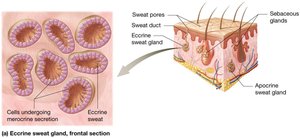
Sweat glands are responsible for thermoregulation and excretion. There are two main types:
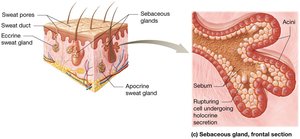
Eccrine sweat glands: Widely distributed; secrete watery sweat directly onto the skin surface for cooling.
Apocrine sweat glands: Located mainly in axillary and genital areas; secrete a thicker fluid into hair follicles, becoming active at puberty.
Sebaceous (Oil) Glands
Sebaceous glands are associated with hair follicles and secrete sebum, an oily substance that lubricates and waterproofs the skin and hair.
Distribution: Found throughout the skin except on palms and soles.
Function: Prevents drying and cracking of the skin; has mild antibacterial properties.
Clinical Relevance: Skin Cancers
Types of Skin Cancer
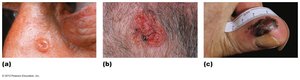
Skin cancer is the abnormal growth of skin cells, often caused by UV exposure. The three main types are:
Basal cell carcinoma: The most common and least dangerous; arises from the stratum basale.
Squamous cell carcinoma: Originates from keratinocytes in the stratum spinosum; can metastasize if untreated.
Melanoma: The most dangerous form; arises from melanocytes and is highly metastatic.
Example: Regular use of sunscreen and protective clothing can significantly reduce the risk of developing skin cancer.
