 Back
The Integumentary System: Structure, Function, and Components
Study Guide - Smart Notes
 Tailored notes based on your materials, expanded with key definitions, examples, and context.
The Integumentary System
Overview and Functions
The integumentary system is the body's largest organ system, primarily composed of the skin and its accessory structures. It serves as the first line of defense against environmental hazards and plays a vital role in homeostasis and protection.
Protection: Shields the body from mechanical injury, pathogens, and harmful substances.
Synthesis and Storage: Synthesizes vitamin D3 and stores lipids.
Immune Response: Coordinates immune defense against pathogens and cancers in the skin.
Sensation: Detects sensory information such as touch, pain, and temperature.
Excretion: Removes metabolic wastes through sweat.
Thermoregulation: Regulates body temperature via sweat and blood flow.
Components of the Integumentary System
Skin and Accessory Structures
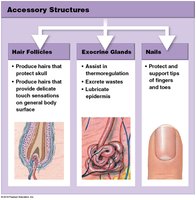
The integumentary system consists of the skin (epidermis and dermis) and accessory structures such as hair follicles, glands, and nails.
Cells of the Epidermis
Major Cell Types
The epidermis is the outermost layer of the skin, composed of several specialized cell types:
Keratinocytes: Most abundant; originate from stem cells in the basal layer and produce keratin, a tough, water-resistant protein.
Langerhans (Dendritic) Cells: Immune cells that detect and process pathogens.
Melanocytes: Produce melanin, the pigment responsible for skin color and UV protection.
Merkel Cells: Sensory cells involved in detecting touch.
Layers of the Epidermis
Thick vs. Thin Skin
The epidermis is a stratified squamous epithelium with varying thickness:
Thick skin: Found on palms and soles; contains more layers and no hair follicles.
Thin skin: Covers the rest of the body; generally contains hair follicles.
A mnemonic for the layers (superficial to deep): "Come, Let's Get Sunburned" (Stratum Corneum, Lucidum, Granulosum, Spinosum, Basale).
Stratum Corneum
Outermost layer of the epidermis; thickest layer.
Composed of dead, keratinized cells.
Acts as a water-resistant barrier due to intercellular lipids.
Stratum Basale
Deepest layer; also called the basal layer.
Contains stem cells that divide to replenish the epidermis.
Location of melanocytes (melanin-producing cells).
Melanin protects stem cells from UV-induced DNA damage.
Dermal Ridges and Fingerprints
Structure and Function
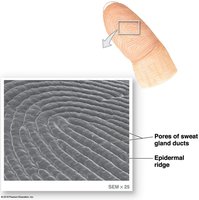
Dermal ridges, especially prominent in thick skin, are formed by the interaction between the stratum basale and the underlying dermal papillae. These ridges create fingerprints, which enhance grip and tactile sensitivity.
Determinants of Skin Color
Blood Supply and Pigments
Dermal blood supply: Hemoglobin in red blood cells gives a reddish hue, especially visible in lighter skin.
Carotene: Orange-yellow pigment from diet, accumulates in subcutaneous fat and stratum corneum.
Melanin: Produced by melanocytes; amount and type are genetically determined but can be influenced by hormones and UV exposure.
Melanin and Melanosomes
Melanin is synthesized in melanocytes and stored in melanosomes.
Melanosomes are transferred to keratinocytes, providing UV protection to underlying cells.
Structure of the Dermis and Subcutaneous Layer
Dermal Layers
Papillary layer: Composed of loose connective tissue; supports and nourishes the epidermis.
Reticular layer: Contains dense irregular connective tissue; provides strength and elasticity.
Accessory Structures of the Skin
Hair Follicles, Glands, and Nails
Accessory structures originate from the epidermis but extend into the dermis and include hair follicles, glands, and nails.
Hair follicles: Produce hair that protects the scalp and provides sensory input.
Nails: Protect and support the tips of fingers and toes; composed of keratinized epithelial cells.
Glands: Include sebaceous (oil) and sweat glands, which aid in lubrication, excretion, and thermoregulation.
Functions of Hair
Protects scalp from UV radiation and physical abrasion.
Filters particles in nostrils and ears.
Provides sensory information about the environment.
Glands in the Skin
Exocrine glands: Release secretions through ducts to the skin surface.
Sebaceous glands: Secrete sebum for lubrication and antibacterial protection.
Sweat glands: Include apocrine (hormone-responsive, found in specific regions) and eccrine (widespread, important for thermoregulation) types.
Nails
Grow from the nail root.
Composed of hard, keratinized plates that protect the distal phalanges.
