 Back
BackThe Lymphatic System and Immunity: ANP College Study Notes
Study Guide - Smart Notes
 Tailored notes based on your materials, expanded with key definitions, examples, and context.
The Lymphatic System
Overview and Functions
The lymphatic system is a vital component of human anatomy and physiology, working closely with the circulatory and immune systems. It consists of lymphatic vessels and lymphatic tissues distributed throughout the body.
Fluid Balance: Collects and returns interstitial fluid, including plasma proteins, to the blood, maintaining fluid equilibrium.
Immunity: Produces lymphocytes and houses phagocytic cells to defend against disease.
Lipid Absorption: Absorbs lipids from the intestine and transports them to the blood.
Relationship to the Circulatory System
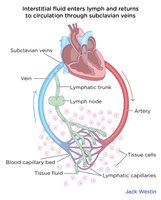
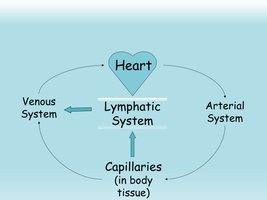
The lymphatic system acts as a drainage network, collecting excess interstitial fluid and returning it to the bloodstream, particularly through the subclavian veins.
Approximately 3 liters of fluid are returned daily.
Plasma proteins are also recovered and returned to circulation.
Lymphatic Vessels
Types of Lymphatic Vessels
Lymphatic vessels are classified into three main types:
Lymph Capillaries: Small, thin-walled vessels that collect interstitial fluid.
Lymphatics (Lymph Veins): Larger vessels formed by the joining of capillaries, with thinner walls and more valves than veins.
Lymph Ducts: Largest vessels that return lymph to the venous system.
Lymph Capillaries
Lymph capillaries are present in most tissues except the CNS and avascular tissues. Their unique structure allows the entry of proteins, cell debris, bacteria, viruses, and even cancer cells.
Overlapping cells act as one-way valves, permitting lymph flow in a single direction.
Branch and interconnect freely, extending into almost all tissues.

Lymphatics and Lymph Nodes
Lymph capillaries join to form lymphatics, which resemble veins but have thinner walls and larger lumens. Lymphatics in the skin follow veins, while those in viscera follow arteries and form plexuses.
Lymph nodes filter lymph, removing bacteria and debris via macrophages.
Lymphocytes are added to lymph as it passes through nodes.
Lymphatic Circulation
Major Lymphatic Vessels and Ducts
Efferent Lymph Vessels: Carry lymph away from nodes.
Lymph Trunks: Drain groups of lymph nodes.
Cisterna Chyli: Dilated vessel in the lumbar region, collecting lymph from the lower body.
Thoracic Duct: Drains lymph from most of the body into the left subclavian vein.
Right Lymphatic Duct: Drains lymph from the upper right quadrant into the right subclavian vein.
Pattern of Lymph Circulation
Lymph capillaries → lymphatics → lymph node → lymphatics → cisterna chyli → thoracic duct
Lymphatic System in Fat Absorption
Role in Lipid Transport
The lymphatic system is essential for the absorption and transport of dietary fats.
Bile salts form micelles to transport fatty acids and monoglycerides.
Triglycerides are packaged into chylomicrons, which enter lymphatic capillaries and are carried to the venous blood via the left subclavian vein.
Lymphatic System in Immunity
Lymph Nodules
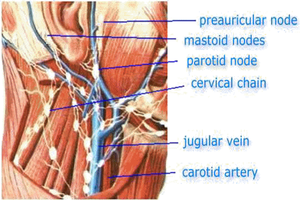
Lymph nodules are small masses of lymphatic tissue found throughout loose connective tissue, especially beneath moist epithelial membranes.
Produce lymphocytes to defend against pathogens.
Strategically placed in areas such as the upper respiratory tract, intestine, and urinary tract.
Some develop germinal centers for lymphocyte proliferation.
Specialized Lymph Nodules
Peyer's Patches: Large masses in the wall of the ileum.
Tonsils: Includes lingual and pharyngeal tonsils.
Vermiform Appendix: Outgrowth from the caecum.
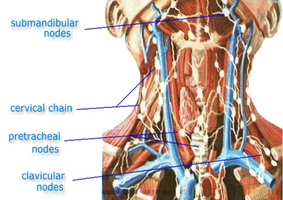
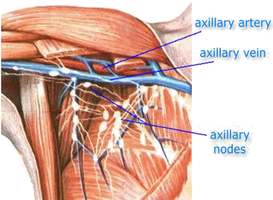
Lymph Nodes
Structure and Function
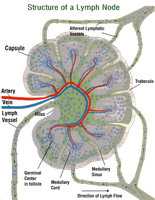
Lymph nodes are encapsulated structures that filter lymph and facilitate immune responses.
Surrounded by a fibrous capsule with partitions (trabeculae).
Multiple afferent vessels bring lymph in; fewer efferent vessels carry lymph out.
Filter and phagocytose pathogens and debris.
Proliferate lymphocytes, including T and B cells.
Lymphoid Organs
Spleen
The spleen is located in the left hypochondriac region and consists of red and white pulp.
Brings blood into contact with lymphocytes.
Removes worn-out blood cells and platelets via macrophages.
Serves as a blood reservoir and stores platelets.
Not vital for life, but performs important functions.
Thymus Gland
The thymus lies in the upper mediastinum and is essential for T-lymphocyte maturation.
Lymphocytes mature into activated T-cells capable of responding to antigens.
Some T-cells remain in circulation, others lodge in lymphoid tissue or stay in the thymus.
Maturation is stimulated by thymosin; thymus is most active at puberty and shrinks thereafter.
Body Defenses
Non-Specific Defenses
First Line: Surface membrane barriers, pH, enzymes, mucus.
Second Line: Phagocytes (macrophages, neutrophils), natural killer cells, inflammatory response.
Specific Defenses
Lymphocytes and macrophages form the immune system, targeting specific pathogens.
Immune system reacts to foreign bodies and antigens, and is involved in allergies and autoimmune diseases.
Pathogens and Immunity
Bacterial and Viral Infections
Bacteria: Simple, single-celled organisms without a nucleus; reproduce rapidly.
Viruses: Not truly alive; consist of DNA in a protective coat; use host cells to replicate.
Antibiotics
Antibiotics target bacterial infections, killing bacteria without harming human cells.
Different antibiotics act on different bacterial machinery, making them effective against specific types.
Summary Table: Major Components of the Lymphatic System
Component | Function | Location |
|---|---|---|
Lymph Capillaries | Collect interstitial fluid | Most tissues except CNS and avascular tissues |
Lymphatics | Transport lymph, contain valves | Skin, viscera |
Lymph Nodes | Filter lymph, produce lymphocytes | Along lymphatic vessels |
Cisterna Chyli | Collects lymph from lower body | Lumbar region |
Thoracic Duct | Drains lymph into left subclavian vein | Thoracic cavity |
Right Lymphatic Duct | Drains lymph into right subclavian vein | Upper right quadrant |
Spleen | Filters blood, stores platelets | Left hypochondriac region |
Thymus | Matures T-lymphocytes | Upper mediastinum |
Key Equations
Fluid Balance Equation
The lymphatic system returns approximately 3 liters of interstitial fluid to the blood daily:
Antibiotic Effectiveness
Antibiotic effectiveness depends on targeting specific bacterial machinery:
References
Betts, J.G. et al. (2022) Anatomy and Physiology. 2nd edn. Houston: OpenStax.
Marieb, E.N. and Hoehn, K. (2019) Human Anatomy & Physiology. 11th edn. Harlow: Pearson.
Tortora, G.J. and Derrickson, B. (2021) Principles of Anatomy and Physiology. 16th edn. Hoboken: Wiley.
Guyton, A.C. and Hall, J.E. (2021) Textbook of Medical Physiology. 14th edn. Philadelphia: Elsevier.
National Institute for Health and Care Excellence (NICE) (2023) Immune System Overview.
NHS (2024) The Immune System.
British Society for Immunology (2024) Introduction to the Immune System.
