 Back
BackThe Lymphatic System and Immunity: Structure, Function, and Clinical Relevance
Study Guide - Smart Notes
 Tailored notes based on your materials, expanded with key definitions, examples, and context.
The Lymphatic System and Immunity
Overview of the Lymphatic System
The lymphatic system is a network of vessels, tissues, and organs that plays a crucial role in fluid balance, absorption of dietary fats, and immune defense. It works closely with the immune system to protect the body from pathogens and maintain homeostasis.
Lymphatic vessels: Open-ended tubes that transport lymph fluid throughout the body.
Lymphatic tissue and organs: Includes lymph nodes, spleen, thymus, tonsils, and mucosa-associated lymphatic tissue (MALT).
Immune system: Consists of cells and proteins in blood and tissues, working to defend against internal and external threats.
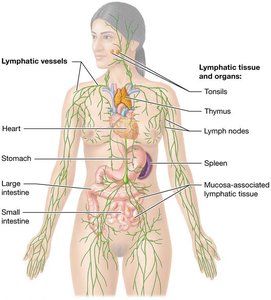
Main Functions of the Lymphatic System
The lymphatic system performs several essential functions:
Regulation of interstitial fluid volume: Returns excess water and proteins from tissues to the bloodstream, preventing edema.
Absorption of dietary fats: Specialized lymphatic capillaries called lacteals absorb fats and fat-soluble vitamins from the digestive tract.
Immune functions: Lymphoid organs filter pathogens from lymph and blood using white blood cells (WBCs).
Lymphatic Circulation and Drainage
Lymph is collected from tissues and transported through a series of vessels and nodes before returning to the bloodstream.
Lymphatic capillaries → lymphatic vessels → lymph nodes → lymphatic trunks → lymphatic ducts → venous circulation.
The right upper quadrant of the body is drained by the right lymphatic duct; the rest by the thoracic duct.
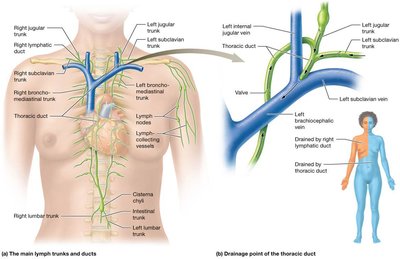
Lymphatic Capillaries and Lymph Nodes
Lymphatic capillaries are highly permeable, allowing the uptake of interstitial fluid, proteins, and pathogens. Lymph nodes are small, bean-shaped structures that filter lymph and house immune cells.
Capillary walls are not tightly joined, making them very leaky.
Lymph nodes are distributed along lymphatic vessels and serve as sites for immune cell activation.

Clinical Relevance: Lymphedema and Edema
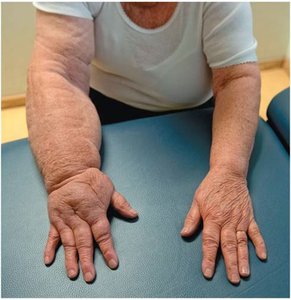
Disruption of lymphatic drainage can lead to accumulation of interstitial fluid, resulting in swelling known as edema. Lymphedema is a specific form caused by lymphatic vessel blockage or removal.
Edema: General swelling due to excess interstitial fluid; can result from trauma, vascular disease, or heart failure.
Lymphedema: Often due to surgical removal or blockage of lymphatic vessels (e.g., by parasites).
Lymphoid Tissue and Organs
Lymphoid organs are specialized structures that house immune cells and facilitate immune responses.
Primary lymphoid organs: Red bone marrow (site of B cell maturation) and thymus (site of T cell maturation).
Secondary lymphoid organs: Lymph nodes, spleen, tonsils, and MALT.
MALT: Mucosa-associated lymphatic tissue protects mucous membranes throughout the body.
Summary Table: Major Lymphatic Structures and Functions
Structure | Main Function |
|---|---|
Lymphatic vessels | Transport lymph fluid |
Lymph nodes | Filter lymph, house immune cells |
Spleen | Filters blood, immune surveillance |
Thymus | T cell maturation |
Tonsils | Protect against inhaled/ingested pathogens |
MALT | Protect mucosal surfaces |
Additional info: The lymphatic system is essential for both innate and adaptive immunity, providing a route for immune cell trafficking and antigen presentation. Disorders of the lymphatic system can compromise immune function and fluid balance.
