 Back
BackThe Lymphatic System and Immunity: Structured Study Notes
Study Guide - Smart Notes
 Tailored notes based on your materials, expanded with key definitions, examples, and context.
The Lymphatic System and Immunity
Overview and Functions
The lymphatic system is a crucial component of human anatomy and physiology, working closely with the circulatory and immune systems. It consists of lymphatic vessels and lymphatic tissues, which collectively maintain fluid balance, defend against disease, and absorb lipids from the intestine.
Fluid Balance: Collects and returns interstitial fluid, including plasma proteins, to the blood.
Immunity: Produces lymphocytes and houses phagocytic cells to resist disease.
Lipid Absorption: Absorbs lipids from the intestine and transports them to the blood.
Relationship to the Circulatory System
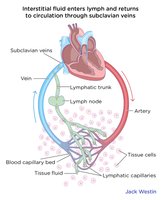
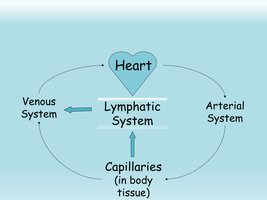
The lymphatic system acts as a drainage system, collecting excess interstitial fluid and returning it to the blood, thus maintaining fluid balance. Approximately 3 liters of fluid are returned daily.
Plasma Proteins: Returned to the blood via lymphatic vessels.
Drainage Pathway: Lymphatic vessels collect fluid from tissues and return it to the venous system.
Lymphatic Vessels
There are three main types of lymphatic vessels: lymph capillaries, lymphatics (lymph veins), and lymph ducts. Lymph capillaries are thin-walled and branch freely, extending into almost all tissues except the CNS and avascular tissues.
Lymph Capillaries: Allow entry of proteins, cell debris, bacteria, viruses, and cancer cells.
Valves: Ensure one-way flow of lymph.
Lymphatics: Larger vessels formed by joining capillaries; resemble veins but have thinner walls and more valves.

Lymph Nodes and Lymphatic Circulation
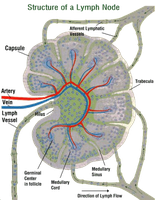
Lymph nodes are structures of lymphatic tissue where lymph is filtered and lymphocytes are added. Macrophages in the nodes remove bacteria and debris. Lymphatics leaving nodes are called efferent lymph vessels, which conduct lymph proximally. Large lymphatics draining groups of nodes are called lymph trunks.
Cisterna Chyli: Dilated lymph vessel in the lumbar region, forming the thoracic duct.
Thoracic Duct: Drains lymph from most of the body into the left subclavian vein.
Right Lymphatic Duct: Drains lymph from the upper right quadrant into the right subclavian vein.
Lymphatic Circulation Example
The typical pathway of lymph circulation is: lymph capillaries → lymphatic vessels → lymph node → lymphatic vessels → cisterna chyli → thoracic duct.
Role in Fat Absorption and Transport
The lymphatic system plays a key role in absorbing and transporting dietary lipids. Bile salts form micelles that transport fatty acids and monoglycerides. These are reassembled into triglycerides and packaged as chylomicrons, which are carried to the venous blood via the left subclavian vein.
Lymphatic Tissue and Immunity
Lymph nodules are small masses of lymphatic tissue where lymphocytes are produced. They are distributed throughout loose connective tissue, especially beneath moist epithelial membranes, and are strategically placed to defend against pathogens.
Germinal Centres: Areas of immature lymphocytes proliferating from stem cells.
Peyer's Patches: Large masses of lymph nodules in the ileum.
Tonsils: Lingual and pharyngeal tonsils.
Vermiform Appendix: Outgrowth from the caecum with lymphatic tissue.
Lymph Nodes: Structure and Function
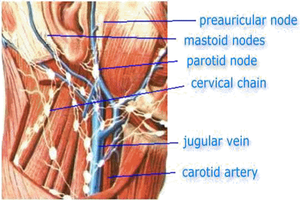
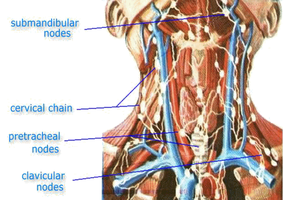
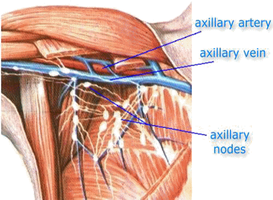
Lymph nodes filter lymph and are sites of lymphocyte proliferation. They have a fibrous capsule, partitions (trabeculae), and multiple afferent and efferent vessels. Lymph drains through several nodes before returning to the blood.
Filtering and Phagocytosis: Macrophages remove pathogens and debris.
Lymphocyte Proliferation: T and B lymphocytes multiply in response to antigens.
The Spleen
The spleen is located in the left hypochondriac region and consists of red pulp and white pulp. It brings blood into contact with lymphocytes, removes worn-out blood cells and platelets, stores platelets, and acts as a blood reservoir. The spleen is not vital to life but performs important functions.
The Thymus Gland
The thymus lies in the upper mediastinum and is essential for the maturation of T-lymphocytes. Thymosin stimulates the maturation of lymphoid tissue. The thymus is most active at puberty and shrinks thereafter.
Body Defences: Non-Specific and Specific
Body defences are divided into non-specific and specific mechanisms. Non-specific defences include surface membrane barriers (skin, pH, enzymes, mucus) and cellular responses (phagocytes, natural killer cells, inflammatory response). Specific defences involve lymphocytes and macrophages, forming the immune system.
Non-Specific Defences: First line (surface barriers), second line (cells and chemicals).
Specific Defences: Immune response targeting specific antigens.
Pathogens: Bacteria and Viruses
Bacteria are single-celled organisms without a nucleus, capable of rapid reproduction. Viruses are fragments of DNA in a protective coat, using host cells to replicate. The immune system reacts to these invaders, and antibiotics are used to treat bacterial infections by targeting bacterial machinery.
Bacteria: Independent, reproduce quickly.
Viruses: Not alive, replicate inside host cells.
Antibiotics: Chemicals that kill bacteria without harming human cells.
References
Betts, J.G. et al. (2022) Anatomy and Physiology. 2nd edn. Houston: OpenStax.
Marieb, E.N. and Hoehn, K. (2019) Human Anatomy & Physiology. 11th edn. Harlow: Pearson.
Tortora, G.J. and Derrickson, B. (2021) Principles of Anatomy and Physiology. 16th edn. Hoboken: Wiley.
Guyton, A.C. and Hall, J.E. (2021) Textbook of Medical Physiology. 14th edn. Philadelphia: Elsevier.
National Institute for Health and Care Excellence (NICE) (2023) Immune System Overview.
NHS (2024) The Immune System.
British Society for Immunology (2024) Introduction to the Immune System.
