 Back
The Lymphatic System: Structure, Function, and Major Organs
Study Guide - Smart Notes
 Tailored notes based on your materials, expanded with key definitions, examples, and context.
The Lymphatic System
Overview
The lymphatic system is a crucial component of the circulatory and immune systems, consisting of lymphatic vessels, lymphoid tissues, and organs. It maintains fluid balance, absorbs dietary fats, and provides immune defense against pathogens.
Lymphatic Vessels
Structure and Function
Lymphatic vessels form a one-way system that returns interstitial fluid and plasma proteins to the bloodstream, preventing tissue swelling (edema).
Fluid forced out of blood capillaries by hydrostatic pressure becomes interstitial fluid; most is reabsorbed, but the remainder enters lymphatic capillaries as lymph.
Lymphatic capillaries are highly permeable, allowing entry of fluid, proteins, pathogens, and cellular debris.
Specialized lymphatic capillaries called lacteals are found in the small intestine and absorb dietary fats, forming a milky fluid called chyle.
Lymphatic vessels progress from capillaries to collecting vessels, trunks, and finally ducts (right lymphatic duct and thoracic duct).
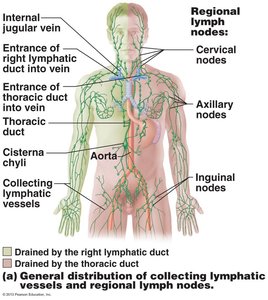
Mechanisms of Lymph Transport
Lymph is transported without a central pump; movement relies on mechanisms similar to venous return:
Respiratory pump (pressure changes during breathing)
Muscular pump (skeletal muscle contractions)
Pulsations of nearby arteries
Rhythmic contractions of smooth muscle in vessel walls
Lymph flow is slower than blood flow; increased tissue movement enhances lymph transport.
Lymphoid Cells
Types and Functions
Lymphocytes: Main immune cells; include T cells (cell-mediated immunity) and B cells (antibody production).
Macrophages: Phagocytize foreign substances and activate T cells.
Dendritic cells: Initiate immune responses by presenting antigens to lymphocytes.
Reticular cells: Produce the reticular fiber network that supports other cell types in lymphoid organs.
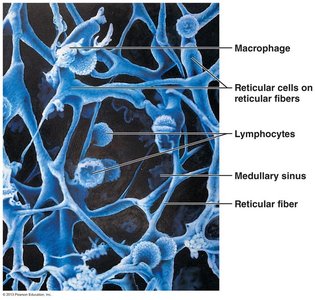
Lymphoid Tissues
Structure and Role
Lymphoid tissue is a specialized form of loose connective tissue (reticular connective tissue) that provides a site for immune cell residence, proliferation, and surveillance.
Macrophages reside on reticular fibers; lymphocytes circulate between blood, lymphoid tissue, and other tissues.
Two main types:
Diffuse lymphatic tissue: Scattered reticular tissue elements found throughout the body, especially in mucous membranes and lymphoid organs.
Lymphatic follicles (nodules): Solid, spherical bodies of tightly packed cells; found in lymphoid organs and as isolated clusters (e.g., Peyer's patches, appendix).
Lymphoid Organs
Lymph Nodes
Lymph nodes are encapsulated structures that filter lymph and mount immune responses. They are distributed along lymphatic vessels and are key sites for immune cell activation.
Functions:
Macrophages remove microorganisms and debris from lymph.
Lymphocytes monitor lymph for antigens and initiate immune responses.
Structure:
Cortex: Contains follicles with lymphocytes.
Medulla: Contains macrophages on reticular fibers.
Lymph flows through a series of nodes; regional swelling can indicate infection or disease spread.
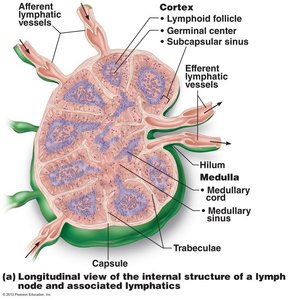
Other Lymphoid Organs
Spleen: Filters blood, removes old blood cells and platelets, and destroys pathogens.
Thymus: Site of T lymphocyte maturation; secretes hormones (thymosin, thymopoietin) for immune development.
Tonsils: Located in the pharyngeal region; trap and remove pathogens from air and food.
Peyer's patches and appendix: Aggregated lymphoid nodules in the intestine; protect against ingested pathogens.
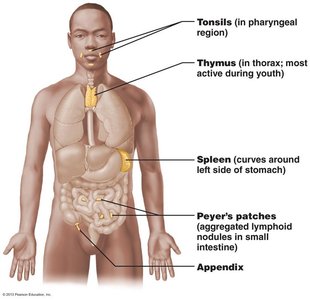
All lymphoid organs are composed of reticular connective tissue and contribute to immune defense.
Only lymph nodes filter lymph; other organs filter blood or monitor mucosal surfaces.
Summary Table: Major Lymphoid Organs and Their Functions
Organ | Main Function | Unique Feature |
|---|---|---|
Lymph Node | Filters lymph, immune surveillance | Only organ to filter lymph |
Spleen | Filters blood, removes old cells | Largest lymphoid organ |
Thymus | T cell maturation | Most active in youth |
Tonsils | Trap pathogens from air/food | Located in pharyngeal region |
Peyer's patches | Protect intestine from pathogens | Aggregated nodules in small intestine |
Appendix | Immune surveillance of gut | Contains lymphoid tissue |
