 Back
The Lymphatic System: Structure, Function, and Immune Roles
Study Guide - Smart Notes
 Tailored notes based on your materials, expanded with key definitions, examples, and context.
The Lymphatic System
Introduction
The lymphatic system is a vital component of the human body, responsible for maintaining fluid balance, transporting dietary lipids, removing foreign particles, and participating in immune defense. It consists of a network of vessels, organs, and tissues that work together to protect the body from infection and disease.
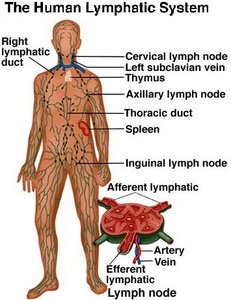
Lymphatic Structures
Lymph
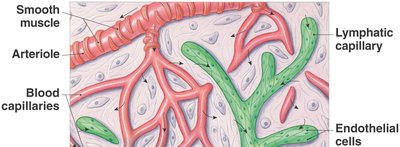
Lymph is a clear fluid derived from blood plasma that escapes from capillaries into the interstitial spaces. It is collected by lymphatic capillaries and eventually returned to the bloodstream. The sequence is: blood plasma → interstitial fluid → lymph.
Function: Returns excess interstitial fluid to the blood, transports dietary lipids, and carries immune cells.
Lymphatic Capillaries
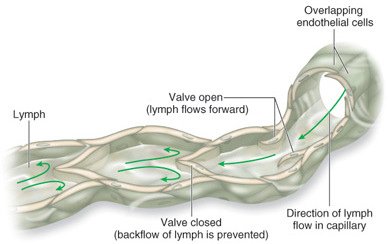
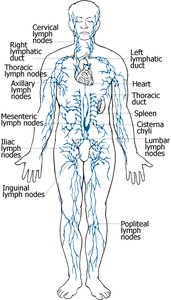
Lymphatic capillaries are closed-ended tubes found among blood capillary networks. Their overlapping endothelial cells act as one-way valves, allowing fluid to enter but preventing backflow. Fluid pressure determines the direction of lymph flow.
Lacteals: Specialized lymphatic capillaries located in the intestinal villi, responsible for absorbing dietary fats.
Lymphatic Vessels
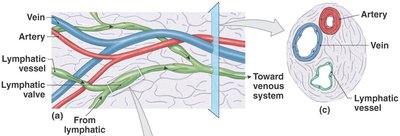
Lymphatic vessels are thin-walled structures with numerous valves to prevent backflow, similar to small veins. They transport lymph from capillaries toward larger ducts.
Valves: Ensure unidirectional flow of lymph toward the heart.
Low Pressure System: Lymph flow depends on the constant addition of interstitial fluid and is aided by skeletal muscle contraction and respiratory movements.
Lymphatic Ducts
There are two main lymphatic ducts that return lymph to the blood circulation:
Right lymphatic duct: Drains the upper right quadrant of the body into the right subclavian vein.
Thoracic duct: Drains the remainder of the body into the left subclavian vein.
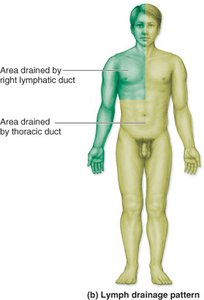
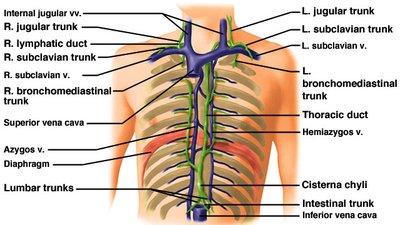
Clinical Note: Approximately 3.6 liters of fluid are returned to the bloodstream daily via the lymphatic system.
Lymphatic Organs
Thymus
The thymus is a bilobed organ located in the mediastinum. It is divided into lobules by septa, each with an outer cortex and inner medulla. The thymus is the site of T-cell maturation, which is essential for adaptive immunity.
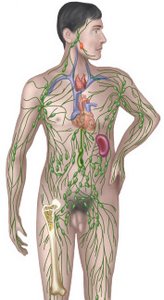
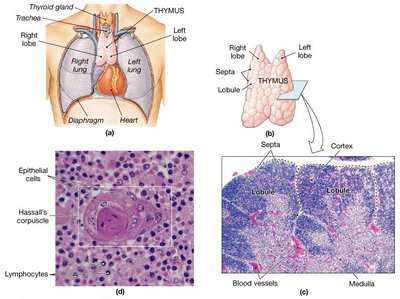
Lymph Nodes
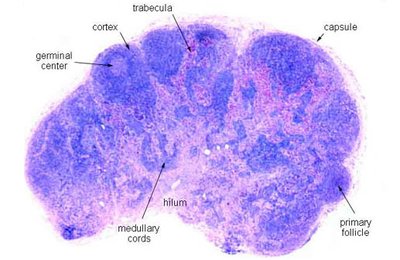
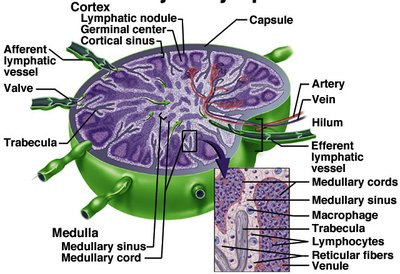
Lymph nodes are small, bean-shaped structures located along lymphatic vessels. They are divided into compartments by trabeculae and have an outer cortex and inner medulla. Lymph nodes filter lymph and initiate immune responses to remove foreign particles.
One-way flow: Lymph enters via afferent vessels, is filtered, and exits via efferent vessels.
Spleen
The spleen is the largest lymphoid organ, located in the upper left abdomen. It filters blood, removes old red blood cells, stores iron, red blood cells, and platelets, and mounts immune responses to blood-borne antigens.
Tonsils
Tonsils are collections of lymphatic nodules in the pharynx. Types include palatine tonsils (pair), pharyngeal tonsil/adenoids (single), and lingual tonsils (pair). They function to protect the body from inhaled or ingested pathogens.
Immune Functions of the Lymphatic System
Production, Maintenance, and Distribution of Lymphocytes
The lymphatic system is involved in the production, maintenance, and distribution of lymphocytes, including T-cells, B-cells, and natural killer (NK) cells. These cells are essential for immune defense.
Types of Immunity
Cell-mediated immunity: Involves T-cells that directly attack infected or abnormal cells.
Antibody-mediated (humoral) immunity: Involves B-cells that produce antibodies to neutralize pathogens.
Lymphatic System Disorders
Lymphedema: Accumulation of lymph fluid in tissues, causing swelling.
Hodgkin's Lymphoma: A type of cancer affecting lymphatic tissue.
Summary Table: Major Lymphatic Structures and Functions
Structure | Location | Function |
|---|---|---|
Lymphatic Capillaries | Throughout tissues, especially near blood capillaries | Collect interstitial fluid and initiate lymph flow |
Lacteals | Intestinal villi | Absorb dietary fats |
Lymphatic Vessels | Throughout the body | Transport lymph toward ducts |
Right Lymphatic Duct | Right upper quadrant | Drains lymph into right subclavian vein |
Thoracic Duct | Left side of body | Drains lymph into left subclavian vein |
Thymus | Mediastinum | T-cell maturation |
Lymph Nodes | Along lymphatic vessels | Filter lymph, initiate immune response |
Spleen | Upper left abdomen | Filters blood, removes old RBCs, immune surveillance |
Tonsils | Pharynx | Protect against inhaled/ingested pathogens |
Key Equations
Fluid balance equation:
Additional info: The lymphatic system is essential for both fluid homeostasis and immune defense. Its failure can result in significant clinical disorders, highlighting its importance in human physiology.
