 Back
The Male Reproductive System: Structure, Function, and Regulation
Study Guide - Smart Notes
 Tailored notes based on your materials, expanded with key definitions, examples, and context.
The Reproductive System: Overview
Introduction
The reproductive system is essential for the continuation of species, responsible for producing gametes, facilitating fertilization, and supporting the development of offspring. Unlike other organ systems, it becomes functional at puberty and is regulated by complex hormonal interactions.
Gametes: Specialized cells for sexual reproduction—sperm in males and ova in females.
Fertilization: Fusion of male and female gametes forms a zygote, the first cell of a new individual.
Gestation and Birth: The system supports fetal development and parturition (birth).
Gonads and Accessory Reproductive Organs
Primary and Accessory Structures
The primary sex organs, or gonads, are the testes in males and ovaries in females. These organs produce gametes and secrete sex hormones. Accessory reproductive organs include ducts, glands, and external genitalia, which facilitate the transport and maturation of gametes.
Homologous Structures: Male and female reproductive organs share a common developmental origin (e.g., testes and ovaries).
Sex Hormones: Testosterone (males), estrogens, and progesterone (females) regulate reproductive function and secondary sexual characteristics.
Regulation of Reproductive Hormone Secretion
The Hypothalamic-Pituitary-Gonadal (HPG) Axis
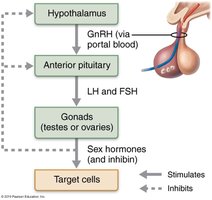
The HPG axis is a hormonal regulatory system involving the hypothalamus, anterior pituitary gland, and gonads. It controls the production of gametes and sex hormones through a sequence of hormonal signals.
GnRH (Gonadotropin-Releasing Hormone): Released from the hypothalamus, stimulates the anterior pituitary.
FSH (Follicle-Stimulating Hormone) and LH (Luteinizing Hormone): Gonadotropins released from the anterior pituitary, act on the gonads.
Sex Hormones: Testosterone, estrogen, and progesterone exert feedback control on the hypothalamus and pituitary.
Inhibin: Released from the gonads, inhibits FSH release.
Activation at Puberty
At puberty, the hypothalamus becomes less sensitive to inhibition by sex hormones, leading to increased GnRH, FSH, and LH secretion, which stimulates gonadal activity and the onset of reproductive capability.
Meiosis
Overview and Significance
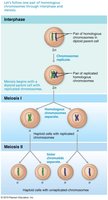
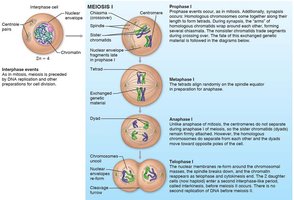
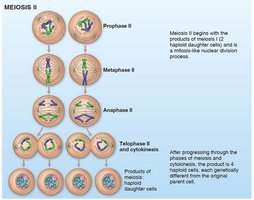
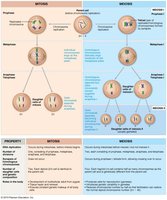
Meiosis is a specialized form of cell division occurring only in the gonads. It reduces the chromosome number by half, ensuring that fertilization restores the diploid state in the zygote. This process is essential for genetic diversity and sexual reproduction.
Meiosis I: Homologous chromosomes separate, reducing chromosome number.
Meiosis II: Sister chromatids separate, similar to mitosis.
Comparison of Mitosis and Meiosis
Mitosis produces genetically identical diploid cells for growth and repair, while meiosis produces genetically unique haploid gametes for reproduction.
Feature | Mitosis | Meiosis |
|---|---|---|
Number of divisions | 1 | 2 |
Number of daughter cells | 2 (diploid) | 4 (haploid) |
Genetic variation | None | High (crossing over, independent assortment) |
Function | Growth, repair | Gamete production |
Anatomy of the Male Reproductive System
Testes and Duct System
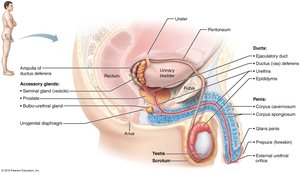
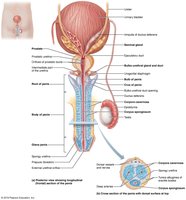
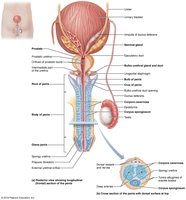
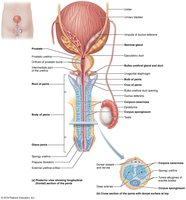
The testes are the male gonads, producing sperm and testosterone. Sperm travels through a series of ducts: epididymis, ductus deferens, ejaculatory duct, and urethra. Accessory glands (seminal vesicles, prostate, bulbo-urethral glands) contribute to semen production.
The Scrotum
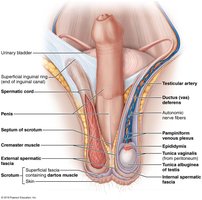
The scrotum is a sac of skin and fascia that houses the testes outside the body, maintaining a temperature optimal for spermatogenesis (about 3°C below core body temperature). Muscles such as the dartos and cremaster regulate testicular position in response to temperature changes.
Structure of the Testis
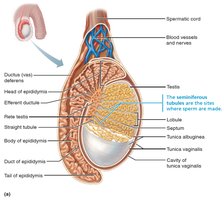
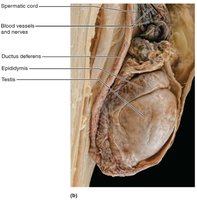
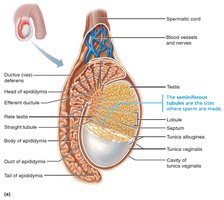
Each testis is surrounded by two tunics: the outer tunica vaginalis and the inner tunica albuginea. The tunica albuginea divides the testis into lobules containing seminiferous tubules, the site of sperm production.
Male Duct System
The duct system transports sperm from the testes to the exterior. The epididymis is the site of sperm maturation and storage. The ductus deferens carries sperm into the pelvic cavity, joining the seminal vesicle duct to form the ejaculatory duct, which empties into the urethra.
Penis and Erectile Tissue
The penis is the male copulatory organ, consisting of the root, shaft, and glans. It contains three columns of erectile tissue: two dorsal corpora cavernosa and one ventral corpus spongiosum, which surrounds the urethra. Erection is achieved by engorgement of these tissues with blood.
Male Accessory Glands
Seminal Vesicles, Prostate, and Bulbo-Urethral Glands
Accessory glands produce the bulk of semen, providing nutrients, enzymes, and substances that enhance sperm motility and viability.
Seminal Vesicles: Produce alkaline fluid with fructose and prostaglandins (70% of semen volume).
Prostate: Secretes milky, slightly acidic fluid with enzymes and PSA, important for sperm activation.
Bulbo-Urethral Glands: Secrete mucus for lubrication and neutralization of acidic urine in the urethra.
Semen
Composition and Function
Semen is a mixture of sperm and glandular secretions. It provides nutrients, protects sperm, neutralizes acidic environments, and contains substances that facilitate sperm movement and fertilization.
Contains 20–150 million sperm/ml
Alkaline pH neutralizes vaginal and urethral acidity
Prostaglandins and enzymes enhance motility and fertilization
Male Sexual Response
Erection and Ejaculation
Erection is a parasympathetic response involving nitric oxide-mediated vasodilation of penile arterioles, leading to engorgement of erectile tissue. Ejaculation is a sympathetic spinal reflex resulting in the propulsion of semen through the urethra, accompanied by orgasm.
Spermatogenesis
Process and Stages
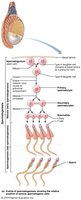
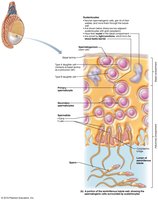
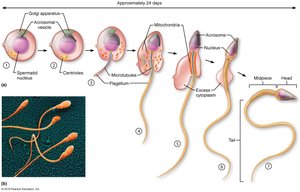
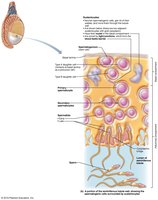
Spermatogenesis is the process of sperm production in the seminiferous tubules, beginning at puberty and continuing throughout life. It involves mitosis, meiosis, and spermiogenesis (maturation of spermatids into spermatozoa).
Mitosis: Spermatogonia divide to maintain the stem cell pool and produce primary spermatocytes.
Meiosis: Primary spermatocytes undergo meiosis I and II to form haploid spermatids.
Spermiogenesis: Spermatids mature into motile spermatozoa.
Role of Sustentocytes (Sertoli Cells)
Sustentocytes support and nourish developing sperm, form the blood-testis barrier, and secrete factors that regulate spermatogenesis (e.g., androgen-binding protein, inhibin).
Regulation of Male Reproductive Function
Hormonal Control
The HPG axis regulates spermatogenesis and testosterone production through feedback mechanisms involving GnRH, FSH, LH, testosterone, and inhibin.
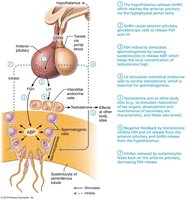
FSH: Stimulates sustentocytes to support spermatogenesis.
LH: Stimulates interstitial cells to produce testosterone.
Testosterone: Promotes spermatogenesis, secondary sex characteristics, and libido; exerts negative feedback on the hypothalamus and pituitary.
Inhibin: Inhibits FSH release when sperm count is high.
Mechanism and Effects of Testosterone
Functions and Secondary Sex Characteristics
Testosterone is synthesized from cholesterol and is essential for spermatogenesis, development of male reproductive organs, and induction of secondary sex characteristics such as increased muscle mass, deepening of the voice, and growth of body hair. Deficiency leads to atrophy of reproductive organs and reduced libido.
Clinical Considerations
Common Disorders
Testicular Cancer: Most common in men aged 15–35; risk factors include cryptorchidism and mumps-related orchitis.
Benign Prostatic Hyperplasia: Age-related prostate enlargement causing urinary difficulties.
Prostate Cancer: Third leading cause of cancer death in males; screening includes digital exam and PSA levels.
Erectile Dysfunction: Inability to attain or maintain erection; causes include vascular, neurological, and psychological factors.
Infertility: Often due to sperm quality/quantity issues; environmental toxins, drugs, and lifestyle factors may contribute.
