 Back
The Male Reproductive System: Structure, Function, and Regulation
Study Guide - Smart Notes
 Tailored notes based on your materials, expanded with key definitions, examples, and context.
The Male Reproductive System
Anatomy of the Male Reproductive System
The male reproductive system is responsible for the production, maturation, and delivery of sperm. It consists of the testes, accessory ducts, glands, and external genitalia.
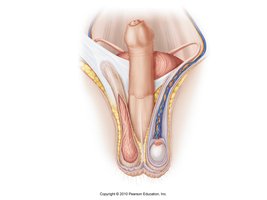
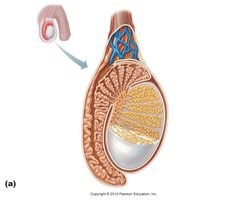
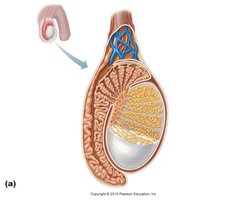
Testes: Located in the scrotum, each testis is divided into lobules by the tunica albuginea. The scrotum provides a temperature about 3°C lower than core body temperature, which is essential for spermatogenesis.
Tunics: The tunica vaginalis is the outer, two-layered covering derived from the peritoneum. The tunica albuginea is the fibrous capsule that divides the testis into lobules.
Lobules: Each lobule contains 1 to 4 coiled seminiferous tubules, where sperm are produced.
Muscles: The dartos and cremaster muscles regulate testicular temperature by contracting or relaxing to move the testes closer or further from the body.
Pathway of Sperm
Sperm are produced in the seminiferous tubules and follow a specific pathway to reach the exterior of the body.
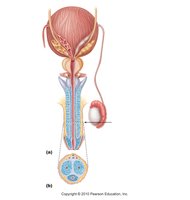
Sperm Pathway: Seminiferous tubules → tubulus rectus → rete testis → efferent ductules → epididymis → ductus (vas) deferens → ejaculatory duct → urethra.
Epididymis: Sperm mature and gain motility here over ~20 days. During ejaculation, the epididymis contracts to expel sperm.
Vas Deferens: A muscular tube (~45 cm) that propels sperm during ejaculation. Vasectomy involves cutting this tube to prevent sperm transport.
Urethra: Terminal duct serving both urinary and reproductive functions, divided into prostatic, intermediate, and spongy regions.
Accessory Glands
Accessory glands produce secretions that combine with sperm to form semen.
Seminal Vesicles: Contribute ~70% of semen volume; secretions are alkaline and rich in fructose, citric acid, and prostaglandins.
Prostate Gland: Encircles the urethra; produces milky fluid containing enzymes and PSA, which activates sperm.
Bulbourethral Glands: Secrete clear mucus to lubricate the urethra before ejaculation.
Structural Organization of the Penis
The penis is the copulatory organ that delivers sperm into the female reproductive tract.
External Genitalia: Includes the penis and scrotum.
Internal Structure: Contains the spongy urethra and three corpora of erectile tissue: two corpora cavernosa and one corpus spongiosum.
Glans Penis: The enlarged tip; covered by the prepuce (foreskin).
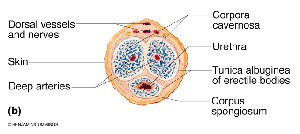
Composition of Semen
Semen is a mixture of sperm and secretions from accessory glands, providing a medium for sperm transport and survival.
Volume: 2-5 ml per ejaculation, with 50-100 million sperm/ml.
Components: Nutrients (fructose, citrate), chemicals (prostaglandins, ATP, antibiotics), and alkaline pH (7.2-7.6) to neutralize vaginal acidity.
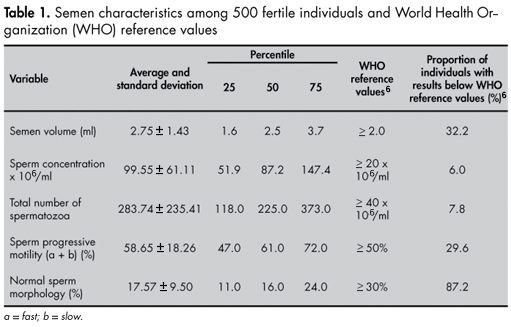
Variable | Average ± SD | WHO Reference | % Below WHO |
|---|---|---|---|
Semen volume (ml) | 2.75 ± 1.43 | ≥ 2.0 | 32.2 |
Sperm concentration (×106/ml) | 99.55 ± 61.11 | ≥ 20 | 6.0 |
Total number of spermatozoa | 283.74 ± 235.41 | ≥ 40 | 7.8 |
Sperm progressive motility (%) | 58.65 ± 18.26 | ≥ 50 | 29.6 |
Normal sperm morphology (%) | 17.57 ± 9.50 | ≥ 30 | 87.2 |
Regulation of Male Reproductive Function
Sperm production and hormone synthesis are tightly regulated by the hypothalamic-pituitary-testicular axis.
Sertoli Cells: Support spermatogenesis within seminiferous tubules.
Leydig Cells: Located in the interstitial space, produce androgens (testosterone).
Blood Supply: Testicular arteries and veins (pampiniform plexus) regulate temperature and supply nutrients.
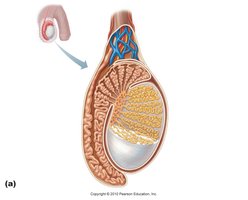
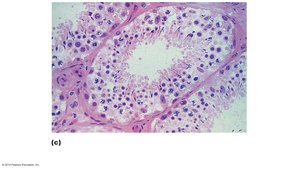
Hormonal Regulation
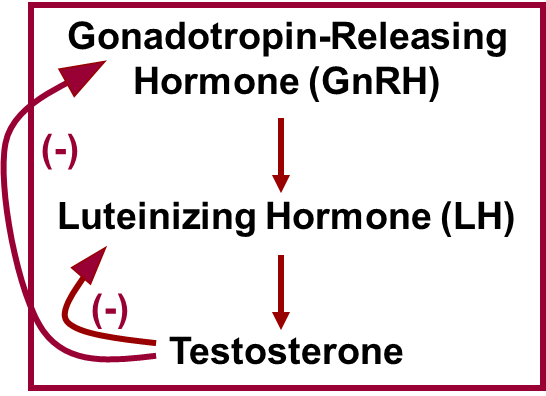
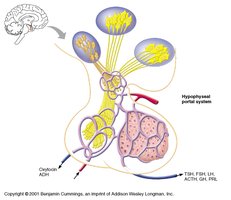
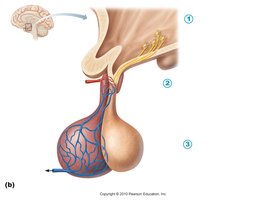
The hypothalamus releases GnRH, stimulating the anterior pituitary to secrete FSH and LH. FSH acts on Sertoli cells, while LH stimulates Leydig cells to produce testosterone.
GnRH: Pulsatile secretion regulates FSH and LH release.
Inhibin: Produced by Sertoli cells, inhibits FSH secretion.
Testosterone: Negative feedback on GnRH and LH.
Steroid Hormones vs. Amino Acid-Based Hormones
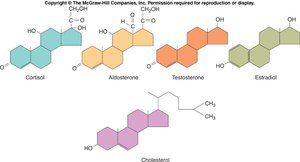
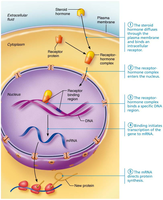
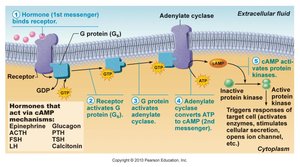
Steroid hormones, such as testosterone, are synthesized from cholesterol and are lipid-soluble, allowing them to cross cell membranes and bind to intracellular receptors. Amino acid-based hormones are water-soluble and act via cell surface receptors and second messengers.
Testosterone: Synthesized by Leydig cells; essential for male development and spermatogenesis.
Actions: Gonadal (growth/maturation), somatic (growth spurts, hair, voice), metabolic (anabolic effects), CNS (libido, aggression).
Spermatogenesis
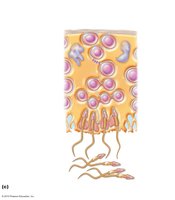
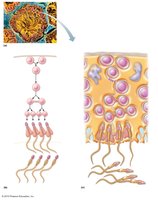
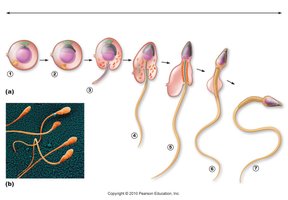
Spermatogenesis is the process by which sperm are produced from spermatogonia in the seminiferous tubules. It involves mitosis, meiosis, and spermiogenesis.
Spermatogonium (2N): Stem cell; divides by mitosis.
Primary Spermatocyte (2N): Undergoes meiosis I to form secondary spermatocytes.
Secondary Spermatocyte (N): Undergoes meiosis II to form spermatids.
Spermatid (N): Round cell; undergoes spermiogenesis to become spermatozoan.
Spermatozoan: Mature sperm released into the lumen; gains motility in the epididymis.
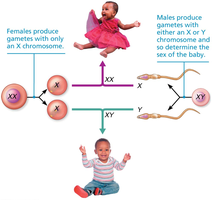
Meiosis vs. Mitosis
Meiosis is the process by which gametes are produced, resulting in four haploid cells from one diploid cell. Mitosis produces two identical diploid cells.
Meiosis: Reduces chromosome number by half; introduces genetic variation.
Mitosis: Maintains chromosome number; produces identical cells.
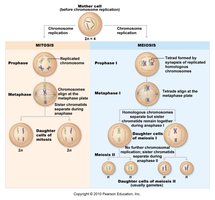
Process | Chromosome Number | Number of Cells Produced | Genetic Variation |
|---|---|---|---|
Mitosis | Diploid (2N) | 2 | No |
Meiosis | Haploid (N) | 4 | Yes |
Summary of Key Concepts
The male reproductive system is specialized for sperm production, maturation, and delivery.
Spermatogenesis is regulated by hormones from the hypothalamus, pituitary, and testis.
Semen composition and quality are essential for fertility.
Steroid hormones, especially testosterone, play critical roles in male development and reproductive function.
