 Back
BackThe Male Reproductive System: Structure, Function, and Clinical Considerations
Study Guide - Smart Notes
 Tailored notes based on your materials, expanded with key definitions, examples, and context.
The Male Reproductive System
Overview
The male reproductive system is responsible for the production, maturation, and delivery of sperm, as well as the secretion of male sex hormones. It consists of primary and secondary sex organs, accessory glands, and external genitalia.
Primary sex organ: Testes
Reproductive tract: Epididymis, ductus (vas) deferens, spermatic cord, urethra
Accessory sex glands: Seminal vesicles, prostate gland, bulbourethral glands
External genitalia: Penis, scrotum
Components of the Male Reproductive System
Scrotum
The scrotum is an outpouching of loose skin and superficial fascia that houses and protects the testes.
Regulates testicular temperature (lacks superficial fat, contains sweat glands)
The left scrotum is typically lower than the right
Contains the Dartos muscle for temperature regulation
Testes
The testes are paired, almond-shaped gonads suspended in the scrotum by the spermatic cord.
Size: ~4 cm long, 2.5 cm wide, 10.5–14 g
Functions:
Spermatogenesis: Production of sperm
Hormone production: Secretion of androgens, primarily testosterone
Common Abnormalities of the Testes
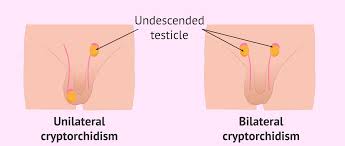
Cryptorchidism: Failure of one or both testes to descend into the scrotum
Epididymis
The epididymis is a single, coiled tubule (~6 meters long) located on the superior and posterior-lateral margins of the testis.
Divided into head, body, and tail (continuous with the ductus deferens)
Functions:
Secretes and absorbs nourishing fluid
Recycles damaged spermatozoa
Stores spermatozoa for up to 2 weeks for maturation
Ductus (Vas) Deferens
The ductus deferens is a muscular tube (~45 cm long) that transports sperm from the epididymis to the ejaculatory duct.
Runs through the spermatic cord and inguinal canal into the pelvic cavity
Terminal part forms the ampulla, which joins the duct of the seminal vesicle to form the ejaculatory duct
Ejaculatory Duct
Formed by the union of the vas deferens and the duct of the seminal vesicle.
~2.5 cm long
Opens into the prostatic urethra
Drains seminal fluid into the prostatic urethra
Urethra
The urethra extends from the base of the urinary bladder to the tip of the penis and is divided into three regions:
Prostatic urethra
Membranous urethra
Spongy (penile) urethra
Accessory Sex Glands
Seminal Vesicles
Paired, elongated glands located posterior and inferior to the urinary bladder, lateral to the vas deferens.
Secrete ~60% of seminal fluid
Prostate Gland
The largest male accessory gland, walnut-sized, located below the neck of the bladder and traversed by the prostatic urethra.
Secretes 20–30% of seminal fluid
Produces enzymes (e.g., acid phosphatase) that:
Activate sperm motility
Degrade mucus
Provide antibiotic action
Neutralize acidity of urine and female reproductive tract (alkaline fluid)
Bulbourethral (Cowper’s) Glands
Small, paired glands at the base of the penis.
Secrete alkaline mucus for neutralization of urinary acids and lubrication
Penis
Structure and Function
The penis serves as both a copulatory and excretory organ.
Penile urethra transmits urine and seminal fluid
Composed of three cylindrical masses of erectile tissue:
Two corpora cavernosa (primary erectile tissue, provide rigidity and length)
One corpus spongiosum (secondary erectile tissue, surrounds urethra, forms glans and bulb of penis)
Common Abnormalities of the Penis
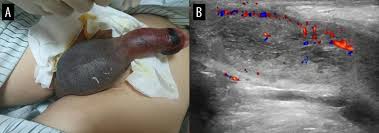
May include structural or vascular disorders (e.g., priapism, penile trauma)
Spermatogenesis
Sperm Structure and Production
Spermatogenesis is the process of sperm production, occurring in the seminiferous tubules of the testes.
About 200 million sperm are produced daily
Sperm structure:
Head: Contains nucleus and acrosome (enzymes for egg penetration)
Middle piece: Packed with mitochondria for energy
Tail: Flagellum for motility
Testosterone Production
Role and Effects of Testosterone
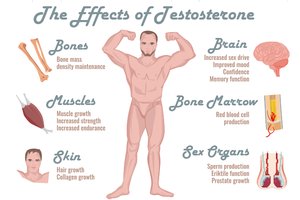
Testosterone is the principal androgen produced by the testes. It is essential for male reproductive function and the development of secondary sexual characteristics.
Promotes maturation of spermatozoa
Maintains accessory sex organs
Responsible for secondary sexual characteristics (e.g., muscle mass, body hair, deep voice)
Stimulates metabolic processes (protein synthesis, muscle and bone growth)
Influences brain development, sexual drive, and behaviors
Nursing Assessment and Red Flag Symptoms
Nursing Assessment
Pain
Swelling or lumps
Urinary changes
Discharge or signs of infection
Sexual function
Red Flag Symptoms
Sudden testicular pain
Urinary retention
Blood in semen (haematospermia)
Persistent erectile dysfunction
Scrotal swelling with fever
Summary Table: Main Structures and Functions
Structure | Main Function(s) |
|---|---|
Testes | Spermatogenesis, testosterone production |
Epididymis | Sperm maturation and storage |
Vas deferens | Transport of sperm |
Seminal vesicles | Secretion of seminal fluid (nutrients for sperm) |
Prostate gland | Secretion of enzymes, alkaline fluid |
Bulbourethral glands | Secretion of mucus for lubrication |
Penis | Copulation, excretion |
Additional info:
Testosterone also plays a role in erythropoiesis (red blood cell production) and influences mood and cognitive function.
Cryptorchidism increases the risk of infertility and testicular cancer if not corrected.
