 Back
BackThe Nervous System: Structure, Divisions, and Functions
Study Guide - Smart Notes
 Tailored notes based on your materials, expanded with key definitions, examples, and context.
The Human Body and Its Systems
Overview of Bodily Systems
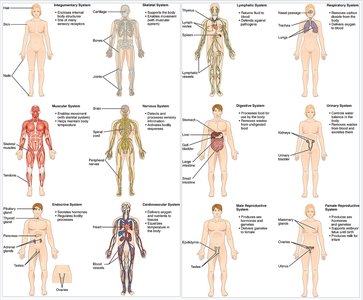
The human body is composed of multiple organ systems, each with specialized functions that contribute to overall health and homeostasis. Bodily systems are groups of organs and tissues that work together to perform vital functions. Examples include the nervous, muscular, skeletal, cardiovascular, respiratory, digestive, endocrine, lymphatic, urinary, and reproductive systems.
Nervous System: Coordinates body activities by transmitting signals to and from different parts of the body.
Muscular System: Enables movement of the body and internal organs.
Digestive System: Breaks down food and absorbs nutrients.
Cardiovascular System: Circulates blood and transports nutrients, gases, and wastes.
Respiratory System: Facilitates gas exchange (oxygen and carbon dioxide).
The Nervous System
General Structure and Function
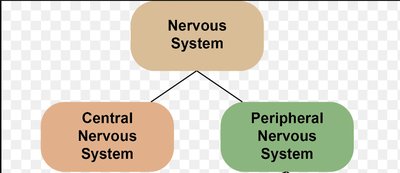
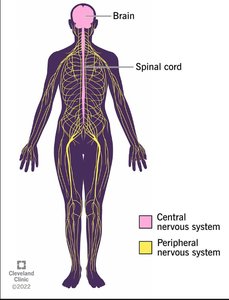
The nervous system is the body's primary communication and control network. It detects changes in the internal and external environment, processes information, and coordinates responses. The nervous system is divided into two main parts: the central nervous system (CNS) and the peripheral nervous system (PNS).
CNS: Consists of the brain and spinal cord; responsible for processing and integrating information.
PNS: Comprises all nerves outside the CNS; transmits signals between the CNS and the rest of the body.
Central Nervous System (CNS)
Structure and Role
The central nervous system includes the brain and spinal cord. It is the main processing center for the entire nervous system and is responsible for integrating sensory information and coordinating bodily functions.
Brain: Controls thought, memory, emotion, touch, motor skills, vision, breathing, and every process that regulates the body.
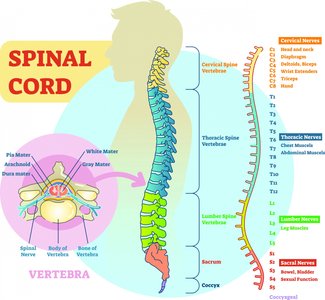
Spinal Cord: Transmits information to and from the brain and controls simple musculoskeletal reflexes without input from the brain.
Peripheral Nervous System (PNS)
Components and Functions
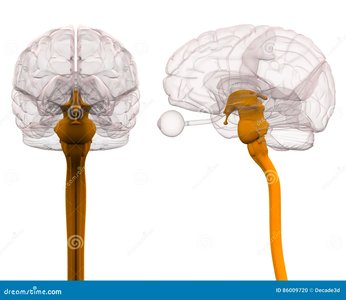
The peripheral nervous system consists of all neural elements outside the CNS, including cranial nerves, spinal nerves, and sensory receptors. It connects the CNS to limbs and organs, serving as a communication relay.
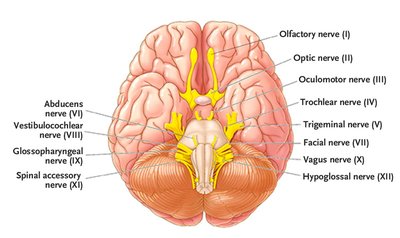
Cranial Nerves: 12 pairs that emerge directly from the brain, serving the head and neck.
Spinal Nerves: 31 pairs that emerge from the spinal cord, serving the rest of the body.
Sensory Receptors: Detect changes in the environment and send information to the CNS.
Divisions of the Peripheral Nervous System
Somatic and Autonomic Nervous Systems
The PNS is further divided into the somatic nervous system and the autonomic nervous system:
Somatic Nervous System (SNS): Controls voluntary movements and transmits sensory information to the CNS. It is responsible for conscious perception and intentional actions.
Autonomic Nervous System (ANS): Regulates involuntary bodily functions such as heart rate, digestion, and respiratory rate. It operates largely outside of conscious awareness.
Somatic Nervous System
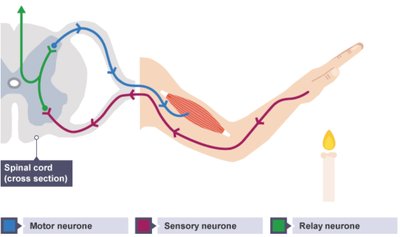
The somatic nervous system is involved in sensing the environment and acting upon it. It includes sensory (afferent) nerves that carry information from sensory receptors to the CNS and motor (efferent) nerves that carry commands from the CNS to skeletal muscles.
Example: Touching a hot object and quickly withdrawing your hand is a somatic reflex involving sensory input and motor output.
Autonomic Nervous System
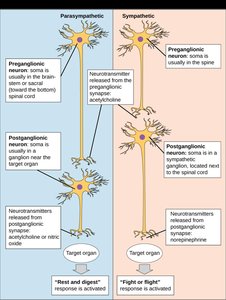
The autonomic nervous system controls involuntary functions and is divided into three branches: the sympathetic, parasympathetic, and enteric nervous systems.
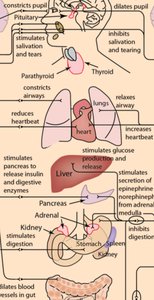
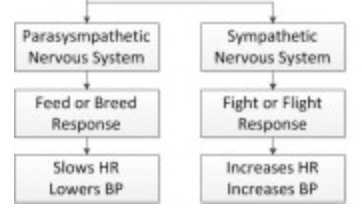
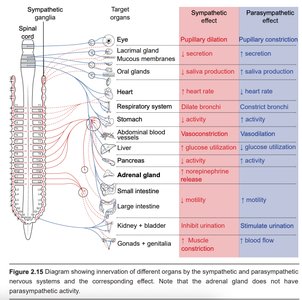
Sympathetic Nervous System: Prepares the body for 'fight or flight' responses by increasing heart rate, dilating pupils, and inhibiting digestion.
Parasympathetic Nervous System: Promotes 'rest and digest' activities by slowing the heart rate, constricting pupils, and stimulating digestion.
Enteric Nervous System: A complex network of neurons governing the function of the gastrointestinal system, sometimes called the 'second brain.'
Sympathetic vs. Parasympathetic Nervous System
The sympathetic and parasympathetic systems often have opposing effects on target organs. The sympathetic system is activated during stress, while the parasympathetic system predominates during restful states.
System | Main Function | Effect on Heart | Effect on Digestion |
|---|---|---|---|
Sympathetic | Fight or Flight | Increases rate | Inhibits |
Parasympathetic | Rest and Digest | Decreases rate | Stimulates |
Enteric Nervous System
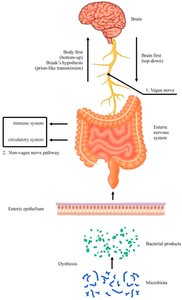
The enteric nervous system (ENS) is a vast network of neurons embedded in the lining of the gastrointestinal tract. It can function independently of the CNS and is responsible for regulating digestive processes such as peristalsis and enzyme secretion.
Contains over 500 million neurons.
Extends from the esophagus to the rectum.
Communicates with the CNS via the vagus nerve.
Brain-Heart Interactions
Intrinsic Cardiac Nervous System
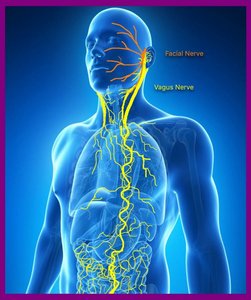
The heart contains its own network of neurons, known as the intrinsic cardiac nervous system, which is part of the autonomic nervous system. This system receives input from the vagus nerve and may play a role in regulating heart function and possibly memory.
Vagus Nerve: A major cranial nerve that conveys sensory information about the state of the body's organs to the brain.
Summary Table: Divisions of the Nervous System
Division | Main Components | Main Functions |
|---|---|---|
Central Nervous System (CNS) | Brain, Spinal Cord | Integration, processing, coordination |
Peripheral Nervous System (PNS) | Cranial nerves, Spinal nerves, Sensory receptors | Communication between CNS and body |
Somatic Nervous System | Motor and sensory nerves | Voluntary movement, conscious sensation |
Autonomic Nervous System | Sympathetic, Parasympathetic, Enteric | Involuntary control of organs |
Additional info: The nervous system is essential for maintaining homeostasis, responding to stimuli, and integrating complex behaviors. The enteric nervous system's role in the gut-brain axis is a growing area of research, highlighting the importance of neural communication beyond the brain and spinal cord.
