 Back
The Reproductive System: Structure, Function, and Regulation
Study Guide - Smart Notes
 Tailored notes based on your materials, expanded with key definitions, examples, and context.
The Reproductive System
Overview and Functions
The reproductive system is responsible for producing offspring and ensuring the continuation of genetic material. It becomes functional at puberty and involves the formation of gametes, fertilization, and support of fetal development.
Gametes: Specialized cells for sexual reproduction—sperm in males and ova (eggs) in females.
Fertilization: Fusion of male and female gametes forms a zygote, the first cell of a new organism.
Gestation and Birth: The system supports fetal development (gestation) and birth (parturition).
Gonads and Accessory Reproductive Organs
Primary Sex Organs and Homology
The gonads (testes in males, ovaries in females) are the primary sex organs, producing gametes and sex hormones. Many reproductive structures are homologous, sharing common origins and functions (e.g., testes and ovaries, penis and clitoris).
Sex Hormones: Steroid hormones—testosterone (males), estrogens and progesterone (females)—regulate organ development, function, and sexual behavior.
Accessory Organs: Ducts, glands, and external genitalia assist in gamete transport and reproductive processes.
Hormonal Regulation of Reproduction
The Hypothalamic-Pituitary-Gonadal (HPG) Axis
The HPG axis coordinates hormone secretion to regulate gamete and sex hormone production.
Gonadotropin-Releasing Hormone (GnRH): Released from the hypothalamus, stimulates the anterior pituitary to secrete FSH and LH.
Follicle-Stimulating Hormone (FSH) and Luteinizing Hormone (LH): Stimulate gamete production and hormone secretion in the gonads.
Sex Hormones: Provide negative feedback to the hypothalamus and pituitary to regulate hormone levels.
Inhibin: Inhibits FSH release, providing additional feedback control.
Meiosis and Gametogenesis
Meiosis: The Basis of Sexual Reproduction
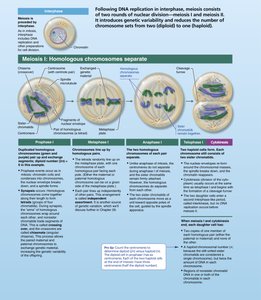
Meiosis is a specialized nuclear division that reduces chromosome number by half, ensuring genetic diversity and stability across generations.
Diploid (2n): Cells with two sets of chromosomes (46 in humans).
Haploid (n): Gametes with one set of chromosomes (23 in humans).
Crossing Over: Exchange of genetic material between nonsister chromatids during prophase I increases genetic variability.
Independent Assortment: Random alignment of tetrads during metaphase I further increases variability.
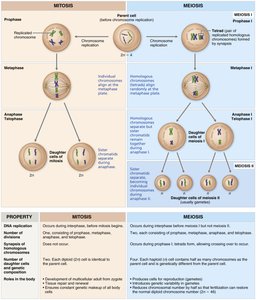
Comparison of Mitosis and Meiosis
Mitosis produces two genetically identical diploid cells for growth and repair, while meiosis produces four genetically unique haploid gametes for reproduction.
Property | Mitosis | Meiosis |
|---|---|---|
DNA Replication | Occurs during interphase before mitosis begins | Occurs during interphase before meiosis I begins |
Number of Divisions | One | Two |
Synapsis of Homologous Chromosomes | Does not occur | Occurs during prophase I |
Number of Daughter Cells | Two (diploid) | Four (haploid) |
Genetic Composition | Identical to parent cell | Genetically different due to crossing over and independent assortment |
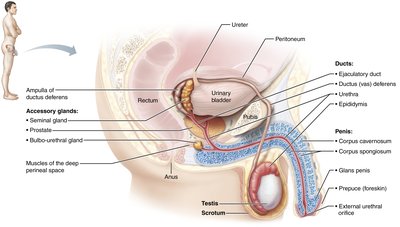
Anatomy of the Male Reproductive System
Testes and Duct System
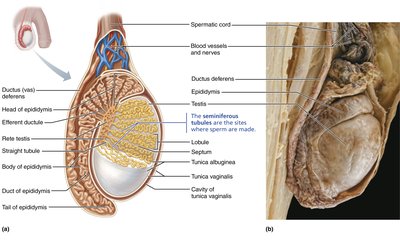
The testes produce sperm and are housed in the scrotum. Sperm travel through a series of ducts: epididymis, ductus deferens, ejaculatory duct, and urethra.
Scrotum: Maintains testes at a temperature lower than body temperature for optimal sperm production.
Seminiferous Tubules: Site of sperm production within the testes.
Accessory Glands and Semen
Accessory glands (seminal vesicles, prostate, bulbo-urethral glands) produce seminal fluid, which nourishes and protects sperm.
Semen: Milky, alkaline fluid containing sperm, nutrients, and enzymes to enhance motility and survival.
Penis and Perineum
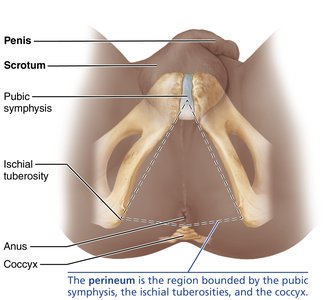
The penis is the male copulatory organ, delivering sperm to the female reproductive tract. The perineum is the diamond-shaped region between the pubic symphysis, coccyx, and ischial tuberosities.
Spermatogenesis
Process and Regulation
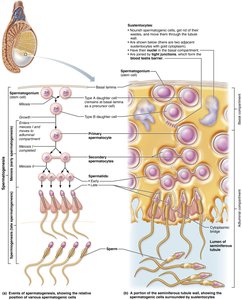
Spermatogenesis is the process of sperm formation in the seminiferous tubules, beginning at puberty and continuing throughout life.
Mitosis of Spermatogonia: Maintains stem cell pool and produces primary spermatocytes.
Meiosis: Primary spermatocytes undergo meiosis to form spermatids.
Spermiogenesis: Spermatids mature into spermatozoa (sperm).
Role of Sustentocytes (Sertoli Cells)
Sustentocytes support and nourish developing sperm, form the blood-testis barrier, and secrete factors that regulate spermatogenesis.
Hormonal Regulation of Male Reproductive Function
HPG Axis in Males
Production of sperm and testosterone is regulated by the HPG axis. LH stimulates testosterone production; FSH stimulates sustentocytes to support spermatogenesis.
Testosterone: Essential for spermatogenesis, development of male secondary sex characteristics, and libido.
Anatomy of the Female Reproductive System
Ovaries and Duct System
The ovaries produce ova and sex hormones. The female duct system includes the uterine tubes (fallopian tubes), uterus, and vagina.
Ovarian Follicles: Structures in the ovary where oocytes mature.
Uterine Tubes: Site of fertilization; transport oocyte to uterus.
Uterus: Receives, retains, and nourishes fertilized egg; site of fetal development.
Vagina: Birth canal and organ of copulation.
External Genitalia (Vulva) and Mammary Glands
The vulva includes the mons pubis, labia, clitoris, and vestibular structures. Mammary glands produce milk in lactating females.
Oogenesis and the Ovarian Cycle
Oogenesis
Oogenesis is the process of ovum (egg) formation, beginning before birth and continuing until menopause.
Primary Oocytes: Arrested in prophase I until puberty.
Secondary Oocytes: Arrested in metaphase II until fertilization.
Polar Bodies: Small cells produced during oogenesis that do not become ova.
Ovarian Cycle
The ovarian cycle consists of the follicular phase (follicle growth and estrogen secretion), ovulation (release of oocyte), and luteal phase (corpus luteum activity and progesterone secretion).
Hormonal Regulation of Female Reproductive Function
HPG Axis in Females
Gonadotropin-releasing hormone, FSH, LH, estrogens, and progesterone interact to regulate the ovarian and uterine cycles.
Estrogens: Promote oogenesis, follicle growth, and secondary sex characteristics.
Progesterone: Prepares uterus for implantation and maintains pregnancy.
The Uterine (Menstrual) Cycle
Phases of the Uterine Cycle
Menstrual Phase (Days 0–4): Shedding of the functional layer of the endometrium.
Proliferative Phase (Days 5–14): Regeneration of the endometrium under estrogen influence.
Secretory Phase (Days 15–28): Endometrium prepares for implantation under progesterone influence.
Sexual Differentiation and Development
Genetic Sex Determination
Sex is determined by the sex chromosome carried by the sperm (X or Y). The SRY gene on the Y chromosome initiates male development.
Sexual Differentiation
Male and female reproductive structures develop from common embryonic tissues, with differentiation directed by the presence or absence of testosterone.
Clinical Considerations
Testicular Cancer: Most common in young males; high cure rate with early detection.
Benign Prostatic Hyperplasia (BPH): Enlargement of the prostate, common in older males.
Infertility: Can result from hormonal imbalances, environmental factors, or anatomical defects.
Sexually Transmitted Infections (STIs): Major cause of reproductive disorders; prevention and early treatment are essential.
Menopause: Cessation of ovarian function and menstruation, typically between ages 46–54.
