 Back
BackThe Respiratory System: Structure, Function, and Clinical Relevance
Study Guide - Smart Notes
 Tailored notes based on your materials, expanded with key definitions, examples, and context.
The Respiratory System
Overview and Functions
The respiratory system is essential for gas exchange, supplying oxygen to the body and removing carbon dioxide. It also plays roles in sound production, olfaction (smell), and protection of the airways.
Oxygen Supply: Delivers oxygen to body tissues for cellular respiration.
Carbon Dioxide Removal: Eliminates CO2, a waste product of metabolism.
Sound Production: Air passing over vocal folds produces sound.
Olfaction: Air carries odorants to olfactory receptors in the nasal cavity.
Protection: Coughing and sneezing expel irritants and pathogens.
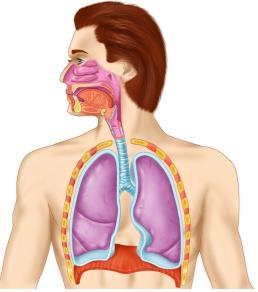
Respiration: Processes and Types
Ventilation and Gas Exchange
Respiration involves several key processes:
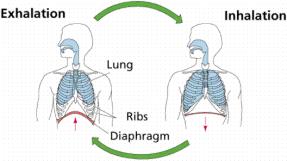
Ventilation: The mechanical movement of air into (inhalation) and out of (exhalation) the lungs.
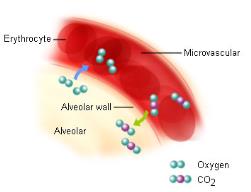
External Respiration: Gas exchange between air in the alveoli and blood in pulmonary capillaries.
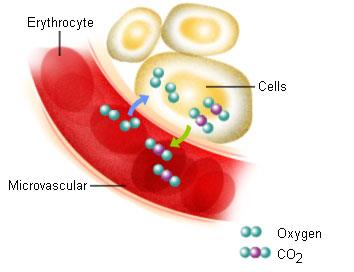
Internal Respiration: Gas exchange between blood in systemic capillaries and body tissues.
Cellular Respiration: Utilization of oxygen by cells to produce ATP, with CO2 as a byproduct.
Gas Exchange: External and Internal Respiration
Gas exchange occurs at two main sites:
External Respiration: Oxygen diffuses from alveoli into blood; CO2 diffuses from blood into alveoli.
Internal Respiration: Oxygen diffuses from blood into tissues; CO2 diffuses from tissues into blood.
Anatomy of the Respiratory System
Conducting Zone vs. Respiratory Zone
The respiratory system is divided into conducting and respiratory zones:
Conducting Zone: Includes nasal cavity, pharynx, larynx, trachea, bronchi, and bronchioles. Functions to transport, warm, humidify, and filter air.
Respiratory Zone: Includes respiratory bronchioles, alveolar ducts, and alveoli. Site of external gas exchange.
Major Structures
Nasal Cavity: Filters, warms, and humidifies air; contains olfactory receptors.
Pharynx: Passageway for air and food; divided into nasopharynx, oropharynx, and laryngopharynx.
Larynx: Air passage and voice production; contains vocal folds.
Trachea: Windpipe supported by C-shaped cartilage rings; lined with pseudostratified ciliated columnar epithelium.
Bronchial Tree: Branching system of bronchi and bronchioles leading to alveoli.
Alveoli: Tiny air sacs where gas exchange occurs; surrounded by capillaries.
Histology of the Respiratory Tract
Respiratory Epithelium
The lining of the respiratory tract varies by region:
Pseudostratified Ciliated Columnar Epithelium: Lines most of the conducting zone; contains goblet cells that secrete mucus to trap debris.
Stratified Squamous Epithelium: Found in areas subject to abrasion, such as the oropharynx and laryngopharynx.
Simple Squamous Epithelium: Lines alveoli to facilitate gas exchange.
Mechanics of Breathing
Inhalation and Exhalation
Breathing is driven by changes in thoracic cavity volume and pressure:
Inhalation: Diaphragm contracts and moves downward, external intercostal muscles elevate ribs, increasing thoracic volume and decreasing pressure, causing air to flow in.
Exhalation: Diaphragm relaxes and moves upward, ribs depress, decreasing thoracic volume and increasing pressure, causing air to flow out.
Gas Exchange and Transport
Alveolar Gas Exchange
Gas exchange in the alveoli is driven by partial pressure gradients:
Oxygen: Moves from alveolar air (high pO2) to blood (low pO2).
Carbon Dioxide: Moves from blood (high pCO2) to alveolar air (low pCO2).
Systemic Gas Exchange
At the tissues, the process is reversed:
Oxygen: Moves from blood (high pO2) to tissues (low pO2).
Carbon Dioxide: Moves from tissues (high pCO2) to blood (low pCO2).
Summary Table: Key Structures and Functions
Structure | Function | Epithelium Type |
|---|---|---|
Nasal Cavity | Filters, warms, humidifies air; olfaction | Pseudostratified ciliated columnar |
Pharynx | Passage for air and food | Stratified squamous (oropharynx, laryngopharynx) |
Larynx | Voice production, air passage | Pseudostratified ciliated columnar (below vocal folds) |
Trachea | Air passage to bronchi | Pseudostratified ciliated columnar |
Bronchi/Bronchioles | Air passage, regulation of airflow | Pseudostratified ciliated columnar to simple cuboidal |
Alveoli | Gas exchange | Simple squamous |
Clinical Relevance
Respiratory Disorders
Emphysema: Destruction of alveolar walls, loss of elasticity, impaired gas exchange.
Asthma: Bronchoconstriction, inflammation, and increased mucus production.
Laryngitis: Inflammation of the larynx, affecting vocal fold vibration and sound production.
Respiratory Distress Syndrome: In premature infants, insufficient surfactant leads to alveolar collapse.
Key Equations
Boyle's Law (Breathing Mechanics):
Partial Pressure Gradient (Gas Exchange):
Additional info: The notes above expand on the original content by providing definitions, clinical context, and a summary table for clarity. All images included are directly relevant to the anatomical and physiological concepts discussed.
