 Back
BackThe Skeletal and Muscular Systems: Medical Terminology, Anatomy, Disorders, and Treatments
Study Guide - Smart Notes
 Tailored notes based on your materials, expanded with key definitions, examples, and context.
The Skeletal and Muscular Systems
Overview of the Musculoskeletal System
The musculoskeletal system is composed of bones, muscles, tendons, and ligaments. It provides structural support, enables movement, and protects vital organs. This system is susceptible to various injuries, inherited disorders, and diseases.
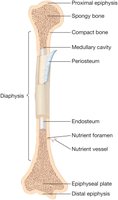
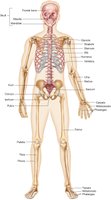
Bones: Provide support, store calcium, and produce blood cells in the bone marrow.
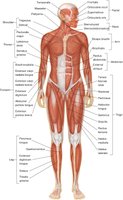
Muscles: Facilitate movement by contracting and relaxing.
Tendons: Connect muscles to bones.
Ligaments: Connect bones to other bones at joints.
Medical Terminology: Word Parts
Common Word Roots, Prefixes, and Suffixes
Understanding medical terms for the skeletal and muscular systems requires knowledge of common word parts:
arthr/o: joint
my/o, myos/o: muscle
oste/o: bone
chondr/o: cartilage
tend/o, ten/o, tendon/o: tendon
-itis: inflammation
-algia, -dynia: pain
-malacia: softening
-plasty: surgical repair
-ectomy: excision, removal
Prefixes such as a- (without), brady- (slow), hyper- (excessive), and dys- (difficult, abnormal) modify the meaning of root words.
Major Diseases and Disorders
Common Conditions Affecting the Skeletal and Muscular Systems
Achondroplasia: A genetic disorder causing abnormal cartilage formation, resulting in dwarfism.
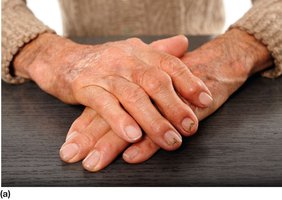
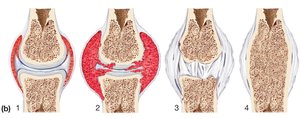
Arthritis: Inflammation of joints. Types include:
Osteoarthritis (OA): Degenerative joint disease due to cartilage breakdown.
Rheumatoid arthritis (RA): Autoimmune inflammation of synovial membrane.
Septic arthritis: Joint infection.
Bursitis: Inflammation of a bursa (fluid-filled sac near joints).
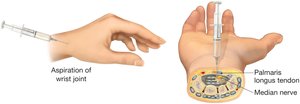
Carpal Tunnel Syndrome (CTS): Compression of the median nerve in the wrist.
Fractures: Breaks in bone, classified as simple, compound, comminuted, compression, greenstick, oblique, pathological, spiral, or transverse.
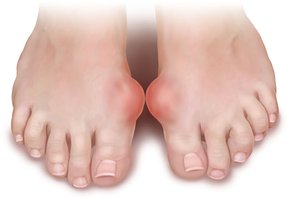
Gout: Accumulation of uric acid crystals in joints, often affecting the big toe.
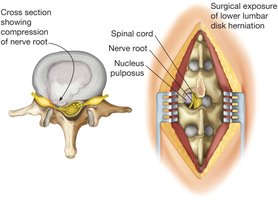
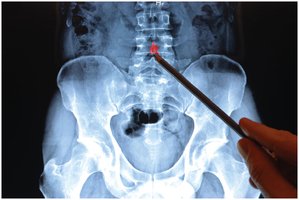
Herniated Disk: Protrusion of an intervertebral disk, causing nerve compression.
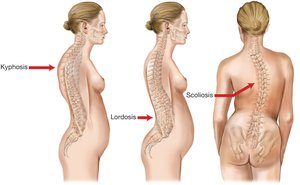
Kyphosis, Lordosis, Scoliosis: Abnormal spinal curvatures.
Osteoporosis: Loss of bone density, increasing fracture risk.
Osteomalacia: Softening of bones due to vitamin D deficiency.
Muscular Dystrophy: Group of genetic diseases causing muscle weakness and degeneration.

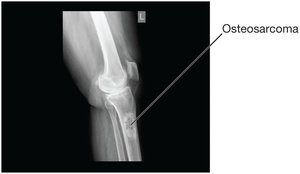
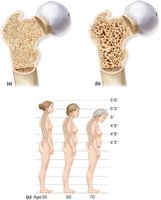
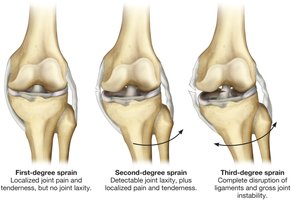
Signs and Symptoms
Common Clinical Manifestations
Arthralgia: Joint pain
Ataxia: Lack of muscle coordination
Atrophy: Wasting away of muscle tissue
Bradykinesia: Slowness of movement
Decalcification: Loss of calcium from bone
Dyskinesia: Difficult or abnormal movement
Dystrophy: Abnormal development, often referring to muscle
Hypertrophy: Increase in muscle size
Myalgia: Muscle pain
Tenodynia: Tendon pain
Treatments, Procedures, and Devices
Common Interventions for Skeletal and Muscular Disorders
Arthrocentesis: Aspiration of fluid from a joint cavity to relieve swelling or obtain fluid for analysis.
Arthrodesis: Surgical fixation of a joint.
Arthroplasty: Surgical repair or replacement of a joint.
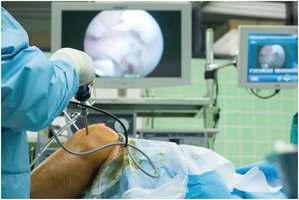
Arthroscopy: Visual examination of a joint using an arthroscope.
Fracture Reduction: Realignment of broken bones, either closed (without surgery) or open (with surgery).
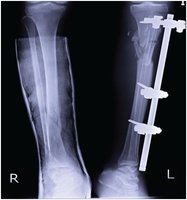
Internal/External Fixation: Use of devices to stabilize fractured bones during healing.
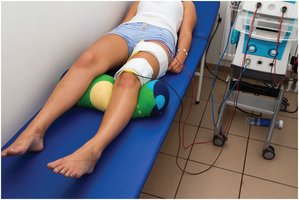
Electromyography (EMG): Recording of muscle electrical activity to diagnose neuromuscular disorders.
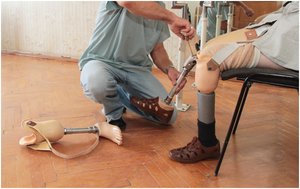
Orthotics and Prosthetics: Devices to support, align, or replace parts of the musculoskeletal system.
NSAIDs: Nonsteroidal anti-inflammatory drugs used to reduce pain and inflammation.
Selected Abbreviations
Abbreviation | Meaning |
|---|---|
ACL | Anterior cruciate ligament |
CTS | Carpal tunnel syndrome |
DJD | Degenerative joint disease |
DMD | Duchenne muscular dystrophy |
EMG | Electromyography |
HNP | Herniated nucleus pulposus |
NSAIDs | Nonsteroidal anti-inflammatory drugs |
OA | Osteoarthritis |
RA | Rheumatoid arthritis |
ROM | Range of motion |
SCI | Spinal cord injury |
THR | Total hip replacement |
TKA/TKR | Total knee arthroplasty/replacement |
TMJ | Temporomandibular joint |
Summary Table: Types of Bone Fractures
Type | Description |
|---|---|
Simple | Bone breaks cleanly but does not penetrate the skin |
Compound | Bone ends penetrate the skin |
Comminuted | Bone shatters into several pieces |
Compression | Bone is crushed |
Greenstick | Bone breaks incompletely, common in children |
Oblique | Break has a curved or sloped pattern |
Pathological | Break caused by disease-weakening bone |
Spiral | Break spirals around the bone, often from twisting injury |
Transverse | Break is straight across the bone |
Key Equations and Concepts
Calcium Homeostasis: Bones act as a reservoir for calcium, which is regulated by hormones such as parathyroid hormone (PTH) and calcitonin.
Muscle Contraction: Involves the sliding filament theory, where actin and myosin filaments slide past each other to shorten the muscle fiber.
Additional info: This guide integrates medical terminology, anatomy, pathology, and clinical procedures relevant to the skeletal and muscular systems, as required for foundational courses in anatomy and physiology (ANP).
