 Back
The Skeletal System: Structure, Function, and Classification
Study Guide - Smart Notes
 Tailored notes based on your materials, expanded with key definitions, examples, and context.
The Skeletal System
Overview and Subdivisions
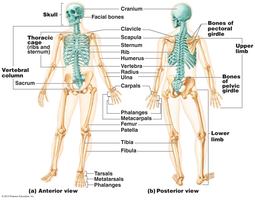
The skeletal system provides the structural framework for the human body and is essential for movement, protection, and mineral storage. It is composed of bones, joints, cartilages, and ligaments, and is divided into two main subdivisions: the axial skeleton and the appendicular skeleton.
Axial skeleton: Forms the longitudinal axis of the body (skull, vertebral column, bony thorax).
Appendicular skeleton: Includes the limbs and girdles that attach them to the axial skeleton.
Functions of Bones
Major Roles of the Skeletal System
Bones perform several critical functions necessary for survival and homeostasis:
Support: Provide the body’s structural framework.
Protection: Shield soft organs (e.g., skull protects the brain, rib cage protects thoracic organs).
Movement: Serve as levers for muscles to act upon.
Mineral and Fat Storage: Store calcium, phosphorus, and fats (yellow marrow).
Blood Cell Formation (Hematopoiesis): Occurs in red marrow cavities.
Classification of Bones
Bone Tissue Types
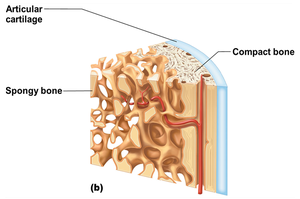
Bones are composed of two main types of osseous tissue:
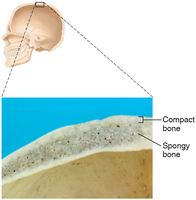
Compact bone: Dense, smooth, and homogeneous tissue.
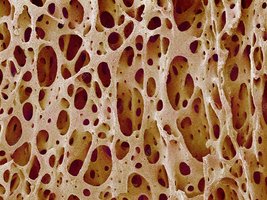
Spongy bone: Composed of small needlelike pieces (trabeculae) and many open spaces.
Bone Shapes
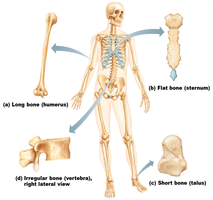
Bones are classified by shape into four groups:
Long bones: Longer than wide, mostly compact bone (e.g., femur, humerus).
Short bones: Cube-shaped, mostly spongy bone (e.g., carpals, tarsals).
Flat bones: Thin, flattened, usually curved, two layers of compact bone with spongy bone between (e.g., skull, ribs, sternum).
Irregular bones: Complex shapes that do not fit other categories (e.g., vertebrae, hip bones).
Structure of Bone
Gross Anatomy of Long Bones
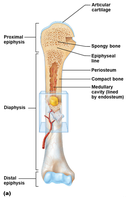
Long bones have a characteristic structure that supports their function:
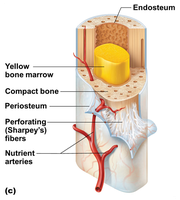
Diaphysis: Shaft, composed of compact bone.
Epiphyses: Ends, mostly spongy bone covered by a thin layer of compact bone.
Periosteum: Fibrous membrane covering the diaphysis, secured by Sharpey’s fibers.
Articular cartilage: Hyaline cartilage covering epiphyses, reduces friction and absorbs shock.
Epiphyseal plate/line: Site of bone growth in length (plate in children, line in adults).
Medullary cavity: Central cavity in diaphysis, contains yellow marrow (fat) in adults and red marrow (blood cell formation) in children.
Endosteum: Membrane lining the inner surface of the shaft.
Microscopic Structure of Bone
Bone tissue is organized into structural units for strength and nutrient delivery:
Osteon (Haversian system): Structural unit of compact bone, consists of a central canal surrounded by concentric lamellae.
Osteocytes: Mature bone cells located in lacunae (small cavities).
Canaliculi: Tiny canals connecting lacunae, allowing nutrient and waste exchange.
Perforating (Volkmann’s) canals: Run perpendicular to central canals, connect blood and nerve supply.
Spongy Bone Structure
Spongy bone is composed of trabeculae, which are needlelike structures that provide strength while reducing weight. The spaces between trabeculae are filled with marrow, blood vessels, and nerves.
Bone Formation, Growth, and Remodeling
Ossification and Growth
Bone formation (ossification) occurs on hyaline cartilage models or fibrous membranes. Long bone growth involves two major phases: osteoblasts cover cartilage with bone matrix, and then cartilage is replaced by bone tissue. Bones grow in length at the epiphyseal plates and in width by appositional growth.
Osteoblasts: Bone-forming cells.
Osteoclasts: Bone-destroying cells, involved in bone remodeling and calcium release.
Hormonal regulation: Growth hormone and sex hormones regulate bone growth.
Bone Remodeling
Bones are continuously remodeled in response to calcium levels in the blood and mechanical stress from muscles and gravity. Parathyroid hormone (PTH) increases blood calcium by stimulating osteoclasts, while high blood calcium promotes storage by osteoblasts.
Bone Fractures and Repair
Types of Fractures
Bone fractures are classified as closed (simple) or open (compound). Treatment involves reduction (realignment) and immobilization. Healing occurs in four stages: hematoma formation, fibrocartilage callus formation, bony callus formation, and bone remodeling.
Axial and Appendicular Skeleton
Axial Skeleton
The axial skeleton forms the central axis of the body and includes the skull, vertebral column, and bony thorax (rib cage).
Appendicular Skeleton
The appendicular skeleton consists of the limbs and girdles (pectoral and pelvic) that attach them to the axial skeleton.
Classification of Joints
Functional and Structural Classification
Joints (articulations) are classified by their function (degree of movement) and structure (type of tissue connecting bones):
Functional: Synarthroses (immovable), amphiarthroses (slightly movable), diarthroses (freely movable).
Structural: Fibrous (immovable), cartilaginous (slightly movable), synovial (freely movable).
Synovial Joints
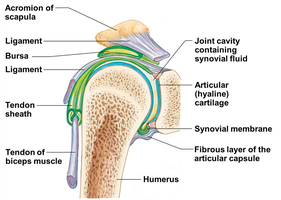
Synovial joints are characterized by a joint cavity filled with synovial fluid, articular cartilage, a fibrous capsule, and reinforcing ligaments. They allow for a wide range of movements and are the most common joint type in the body.
Developmental Aspects of the Skeleton
Growth and Aging
At birth, most of the skeleton is cartilage or fibrous membranes. Ossification converts these to bone. Fontanels in the fetal skull allow for brain growth and skull compression during birth. With aging, bone density decreases, leading to conditions such as osteoporosis, especially in postmenopausal women.
Summary Table: Bone Classification by Shape
Bone Shape | Description | Examples |
|---|---|---|
Long | Longer than wide, shaft with heads at both ends, mostly compact bone | Femur, humerus |
Short | Cube-shaped, mostly spongy bone | Carpals, tarsals |
Flat | Thin, flattened, usually curved, two layers of compact bone with spongy bone between | Skull, ribs, sternum |
Irregular | Complex shapes, do not fit other categories | Vertebrae, hip bones |
