 Back
BackThe Tissue Level of Organization: Structure and Function of Human Tissues
Study Guide - Smart Notes
 Tailored notes based on your materials, expanded with key definitions, examples, and context.
The Tissue Level of Organization
An Introduction to Tissues
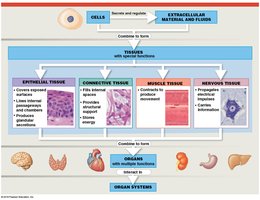
Tissues are collections of specialized cells and cell products that perform specific functions. When combined, tissues form organs such as the heart or liver. The study of tissues is known as histology.
Four Types of Tissue
Overview of Tissue Types
The human body contains four major types of tissues, each with distinct roles:
Epithelial Tissue: Covers exposed surfaces, lines internal passageways, and forms glands.
Connective Tissue: Fills internal spaces, supports other tissues, transports materials, and stores energy.
Muscle Tissue: Specialized for contraction, found in skeletal muscles, the heart, and walls of hollow organs.
Nervous Tissue: Carries electrical signals throughout the body.
Epithelial Tissue
Structure and Function
Epithelial tissue includes layers of cells covering internal or external surfaces (epithelia) and glands that produce secretions. Its main functions are:
Providing physical protection
Controlling permeability
Providing sensation
Producing specialized secretions
Characteristics of Epithelia
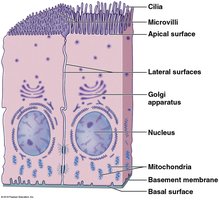
Polarity: Distinct apical (top) and basal (bottom) surfaces
Cellularity: Cells are bound closely together by cell junctions
Attachment: Bound to a basement membrane
Avascularity: Lacks blood vessels
Regeneration: High capacity for renewal
Specializations of Epithelial Cells
Move fluids over the epithelium (protection)
Move fluids through the epithelium (permeability)
Produce secretions (protection and messaging)
Apical surface may have microvilli (increase absorption/secretion) or cilia (move fluids)
Maintaining Epithelial Integrity
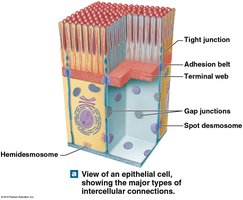
Intercellular connections (cell junctions)
Attachment to the basement membrane
Continuous epithelial maintenance and repair
Types of Cell Junctions
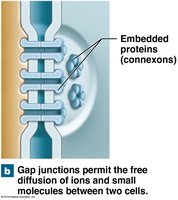
Gap Junctions: Allow rapid communication and passage of ions/small molecules; important in heart muscle coordination.
Tight Junctions: Prevent passage of water and solutes; maintain compartmentalization (e.g., digestive tract).
Desmosomes: Tie cells together, allow bending/twisting; hemidesmosomes attach cells to the basement membrane.
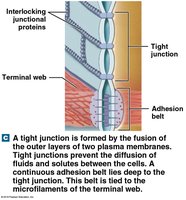
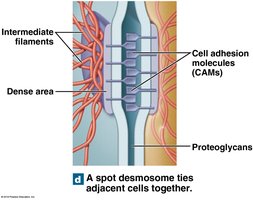
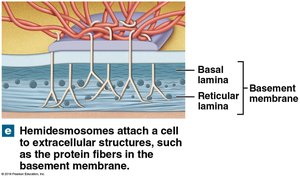
Classification of Epithelia
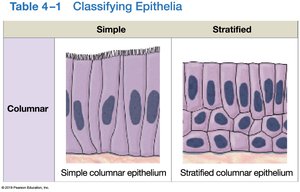
Epithelia are classified by cell shape and number of layers:
Shapes: Squamous (thin, flat), Cuboidal (square), Columnar (tall, slender)
Layers: Simple (single layer), Stratified (multiple layers)
Simple | Stratified | |
|---|---|---|
Squamous | Simple squamous epithelium | Stratified squamous epithelium |
Cuboidal | Simple cuboidal epithelium | Stratified cuboidal epithelium |
Columnar | Simple columnar epithelium | Stratified columnar epithelium |
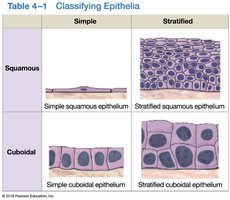
Examples of Epithelia
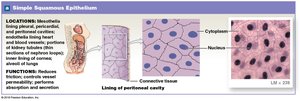
Simple Squamous: Absorption/diffusion (e.g., lining of body cavities, blood vessels)
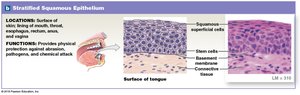
Stratified Squamous: Protection against abrasion (e.g., skin, mouth, esophagus)
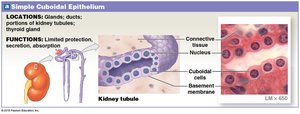
Simple Cuboidal: Secretion/absorption (e.g., kidney tubules, glands)
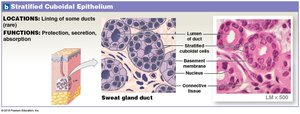
Stratified Cuboidal: Rare, found in ducts of sweat/mammary glands
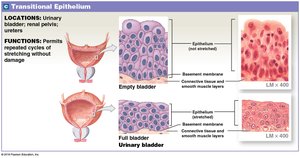
Transitional: Stretches, found in urinary bladder
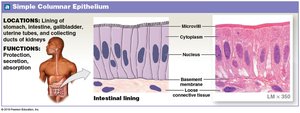
Simple Columnar: Absorption/secretion (e.g., digestive tract)
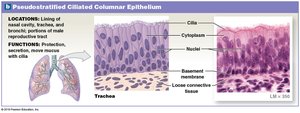
Pseudostratified Columnar: Ciliated, found in respiratory tract
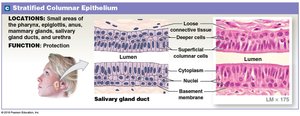
Stratified Columnar: Rare, protection in pharynx, anus, urethra
Glandular Epithelia
Endocrine Glands: Release hormones into the bloodstream (no ducts)
Exocrine Glands: Discharge secretions onto epithelial surfaces through ducts
Gland Structure
Unicellular: Goblet cells (secrete mucin)
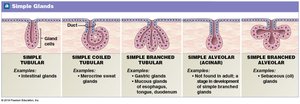
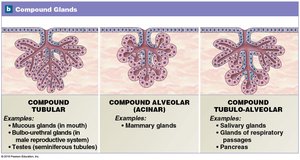
Multicellular: Classified by duct structure (simple/compound) and shape (tubular/alveolar)
Methods of Secretion
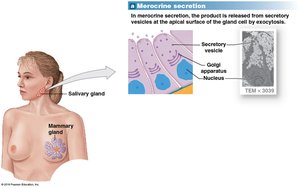
Merocrine: Released by exocytosis (e.g., sweat glands)
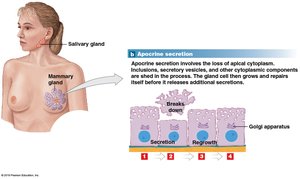
Apocrine: Released by shedding cytoplasm (e.g., mammary glands)
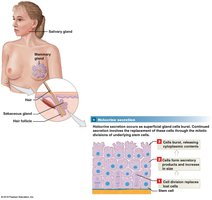
Holocrine: Released by cell bursting (e.g., sebaceous glands)
Connective Tissue
Structure and Function
Connective tissues consist of specialized cells, extracellular protein fibers, and ground substance. The matrix (fibers + ground substance) makes up most of the tissue volume and determines its function.
Establish structural framework
Transport fluids and dissolved materials
Protect delicate organs
Support, surround, and interconnect tissues
Store energy (triglycerides)
Defend against microorganisms
Categories of Connective Tissue
Connective tissue proper (connect and protect)
Fluid connective tissues (transport)
Supporting connective tissues (structural strength)
Connective Tissue Proper
Loose connective tissue: More ground substance, fewer fibers (e.g., adipose tissue)
Dense connective tissue: More fibers, less ground substance (e.g., tendons)
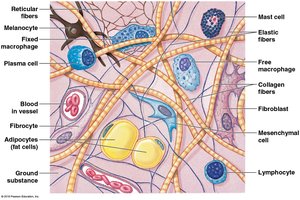
Cells of Connective Tissue Proper
Fibroblasts (produce fibers/ground substance)
Fibrocytes (maintain fibers)
Adipocytes (store fat)
Mesenchymal cells (stem cells)
Melanocytes (produce melanin)
Macrophages (phagocytosis)
Mast cells (inflammation)
Lymphocytes (immune response)
Microphages (phagocytic blood cells)
Connective Tissue Fibers
Collagen fibers: Strong, resist force in one direction (tendons, ligaments)
Reticular fibers: Network, resist forces in many directions (sheaths around organs)
Elastic fibers: Stretch and return to original length (elastic ligaments)
Ground Substance
Clear, colorless, viscous
Fills spaces between cells, slows pathogen movement
Loose Connective Tissues
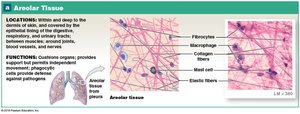
Areolar tissue: Least specialized, open framework, holds capillary beds
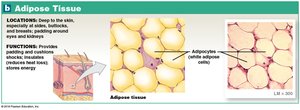
Adipose tissue: Fat storage, insulation, energy reserve
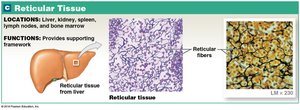
Reticular tissue: Supportive framework for organs
Dense Connective Tissues
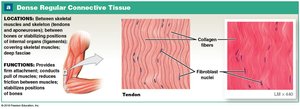
Dense regular: Parallel collagen fibers (tendons, ligaments)
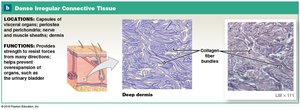
Dense irregular: Interwoven fibers (dermis, organ capsules)
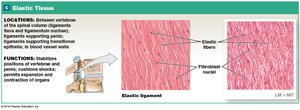
Elastic: Elastic fibers (vertebral ligaments)
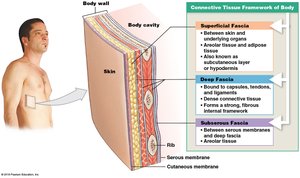
Fasciae
Superficial fascia: Separates skin from underlying tissues
Deep fascia: Dense regular connective tissue, forms strong, fibrous framework
Subserous fascia: Between deep fascia and serous membranes
Fluid Connective Tissues: Blood and Lymph
Blood
Watery matrix: plasma
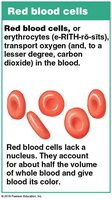
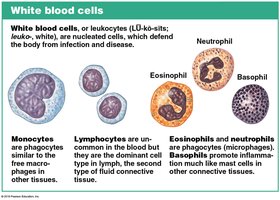
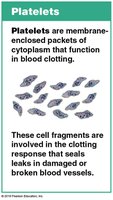
Formed elements: red blood cells (erythrocytes), white blood cells (leukocytes), platelets
Lymph
Forms as interstitial fluid enters lymphatic vessels
Monitored by immune system
Returned to veins near the heart
Supporting Connective Tissues: Cartilage and Bone
Cartilage
Matrix: firm gel with chondroitin sulfates
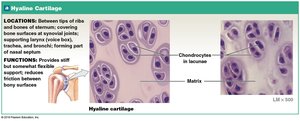
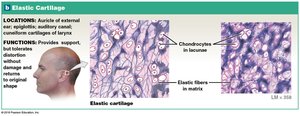
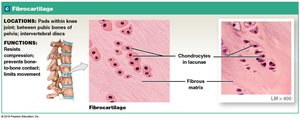
Cells: chondrocytes in lacunae
Avascular, covered by perichondrium
Types of Cartilage
Hyaline: Tough, flexible, reduces friction (joints, ribs, sternum, trachea)
Elastic: Supportive, bends easily (external ear, epiglottis)
Fibrocartilage: Durable, limits movement, prevents bone-to-bone contact (joints, vertebrae)
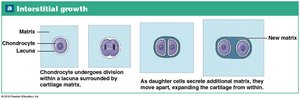
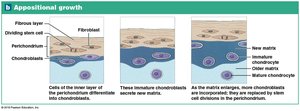
Cartilage Growth
Interstitial growth: From within
Appositional growth: At surface
Bone (Osseous Tissue)
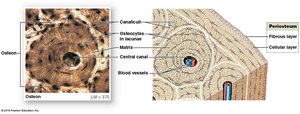
Matrix: calcified with calcium salts, flexible collagen fibers
Cells: osteocytes in lacunae, arranged around central canals
Covered by periosteum (fibrous and cellular layers)
Tissue Membranes
Types of Tissue Membranes
Mucous membranes: Line passageways with external connections (digestive, respiratory, urinary, reproductive tracts)
Serous membranes: Line cavities not open to outside; secrete serous fluid (peritoneum, pleura, pericardium)
Cutaneous membrane: Skin; thick, waterproof, dry
Synovial membranes: Line joint cavities; produce synovial fluid for lubrication
Muscle Tissue
Types of Muscle Tissue
Skeletal muscle: Large, striated, voluntary, responsible for body movement
Cardiac muscle: Striated, involuntary, found only in heart, connected by intercalated discs
Smooth muscle: Non-striated, involuntary, found in walls of hollow organs
Nervous Tissue
Structure and Function
Specialized for conducting electrical impulses
Located in brain and spinal cord
Two main cell types: neurons (conduct impulses) and neuroglia (supporting cells)
Parts of a Neuron
Cell body: Contains nucleus
Dendrites: Receive signals
Axon: Sends signals
Tissue Injuries and Repair
Response to Injury
Inflammation: Triggered by trauma or infection; involves release of prostaglandins, proteins, and potassium ions
Regeneration: Restores normal function; varies among tissue types
Epithelia, most connective tissues, and smooth muscle regenerate well; skeletal muscle, cardiac muscle, and nervous tissue regenerate poorly.
Aging, Regeneration, and Cancer
Effects of Aging
Decreased speed and effectiveness of tissue regeneration
Thinner epithelia, fragile connective tissues, increased bruising, brittle bones, cardiovascular disease, mental deterioration
Cancer incidence increases with age; most cancers are due to environmental factors
