 Back
BackMastering the Quotient Rule for Exponents
Study Guide - Smart Notes
 Tailored notes based on your materials, expanded with key definitions, examples, and context.
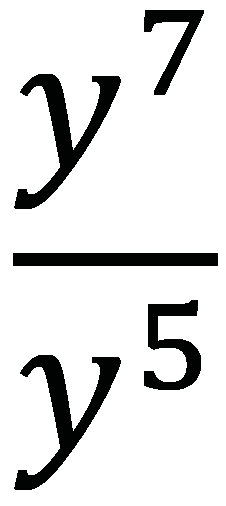
Q1. Simplify the expression:
Background
Topic: Quotient Rule for Exponents
This question tests your understanding of how to simplify expressions with exponents when dividing terms with the same base.
Key Terms and Formulas
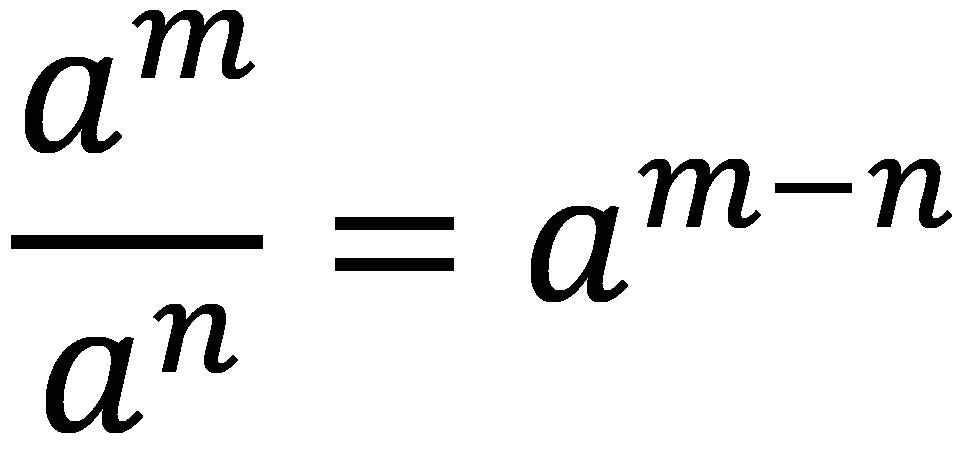
Quotient Rule for Exponents: When dividing like bases, subtract the exponents.
Step-by-Step Guidance
Identify the base in both the numerator and denominator. Here, the base is .
Check the exponents: The numerator has and the denominator has .
Apply the quotient rule: Subtract the exponent in the denominator from the exponent in the numerator.
Set up the subtraction: .
Try solving on your own before revealing the answer!
Final Answer:
Using the quotient rule, .
This means you subtract the exponents because the bases are the same.
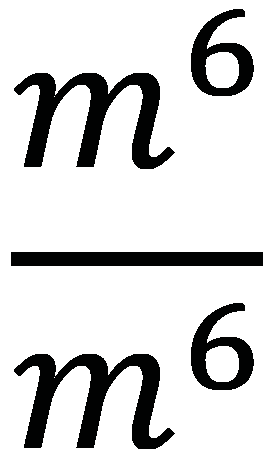
Q2. Simplify the expression:
Background
Topic: Zero Exponent Rule and Quotient Rule for Exponents
This question tests your understanding of what happens when you divide a term by itself, especially with exponents.
Key Terms and Formulas
Quotient Rule for Exponents:
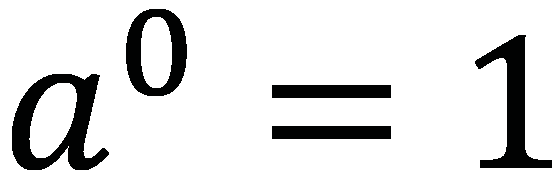
Zero Exponent Rule: (for )
Step-by-Step Guidance
Notice that the numerator and denominator have the same base and exponent: .
Apply the quotient rule: Subtract the exponents in the denominator from the numerator.
Set up the subtraction: .
Recall the zero exponent rule: Any nonzero number to the zero power equals 1.
Try solving on your own before revealing the answer!
Final Answer: $1$
(as long as ).
Any nonzero number raised to the zero power is 1.
