Back

Cofactor definitions

Control buttons has been changed to "navigation" mode.
1/15
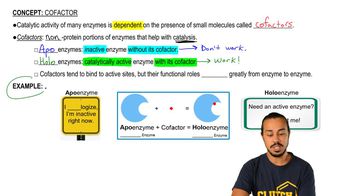
  • Cofactor

    Non-protein molecule or ion required for enzyme activity, often binding at the active site and influencing catalysis.
  • Apoenzyme

    Inactive enzyme form lacking its essential non-protein component, unable to catalyze reactions.
  • Holoenzyme

    Active enzyme form with its required non-protein component bound, capable of catalyzing reactions.
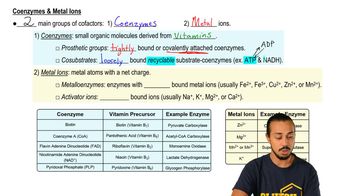
  • Coenzyme

    Organic molecule, often vitamin-derived, assisting enzyme function and classified as prosthetic group or cosubstrate.
  • Metal Ion

    Charged metal atom, either tightly or loosely bound, crucial for enzyme structure or catalytic activity.
  • Prosthetic Group

    Tightly or covalently attached organic molecule aiding enzyme function, often remaining bound during catalysis.
  • Cosubstrate

    Loosely bound organic molecule, chemically altered during reaction and quickly regenerated, acting as a recyclable helper.
  • Metalloenzyme

    Enzyme containing a tightly bound transition metal ion, essential for catalytic activity.
  • Activator Ion

    Loosely bound alkali or alkaline earth metal ion, temporarily associated with enzymes to enhance activity.
  • Active Site

    Region on an enzyme where non-protein components bind and catalysis occurs, determining specificity and function.
  • Vitamin Precursor

    Nutrient molecule serving as the source for organic helpers in enzyme reactions, often converted to coenzymes.
  • Transition Metal

    Element such as iron, copper, or zinc, commonly found as tightly bound ions in enzyme complexes.
  • Alkali Metal

    Element like sodium or potassium, often loosely associated with enzymes as temporary helpers.
  • Alkaline Earth Metal

    Element such as magnesium or calcium, sometimes acting as loosely bound helpers in enzyme activity.
  • Biotin

    Organic molecule functioning as a tightly bound helper in specific enzyme reactions, derived from vitamin B7.