Back

Gluconeogenesis 1 definitions

Control buttons has been changed to "navigation" mode.
1/15
  • Gluconeogenesis

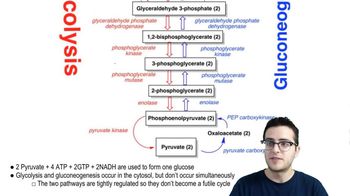
    Pathway synthesizing glucose from non-carbohydrate precursors, requiring more energy than glycolysis and sharing many enzymes with it.
  • Glycolysis

    Process breaking down glucose into pyruvate, yielding ATP and NADH, and sharing reversible steps with gluconeogenesis.
  • Pyruvate

    Three-carbon molecule produced from glucose in glycolysis and used as a starting material for glucose synthesis in gluconeogenesis.
  • ATP

    Energy currency molecule consumed in gluconeogenesis and produced in glycolysis, essential for cellular metabolic reactions.
  • GTP

    Nucleotide required in gluconeogenesis for glucose synthesis, distinct from ATP but similarly used for energy transfer.
  • NADH

    Electron carrier generated in glycolysis and consumed in gluconeogenesis, crucial for redox reactions in metabolism.
  • Cytosol

    Cellular compartment where both glycolysis and gluconeogenesis occur, housing the necessary enzymes for these pathways.
  • Glycerol

    Fat-derived molecule that can enter gluconeogenesis, unlike fatty acids, serving as a substrate for glucose production.
  • Amino acids

    Building blocks of proteins, most of which can serve as substrates for gluconeogenesis except lysine and leucine.
  • Ketogenic amino acids

    Subset of amino acids contributing only specific carbons to gluconeogenesis, with others forming ketone bodies.
  • Futile cycle

    Situation where glycolysis and gluconeogenesis operate simultaneously, leading to energy waste without net metabolic gain.
  • Regulation

    Mechanism ensuring only one pathway, glycolysis or gluconeogenesis, is active at a time to prevent energy loss.
  • Enzymes

    Proteins catalyzing metabolic reactions, with some shared between glycolysis and gluconeogenesis and others unique to each.
  • Delta G

    Measure of reaction energetics, with highly negative values indicating steps in glycolysis that require unique enzymes in gluconeogenesis.
  • Glucose

    Six-carbon sugar synthesized in gluconeogenesis and broken down in glycolysis, central to cellular energy metabolism.