Back

Lipid Vitamins definitions

Control buttons has been changed to "navigation" mode.
1/15
  • Isoprenoid

    Compound built from isoprene units, forming the structural basis of lipid vitamins A, D, E, and K.
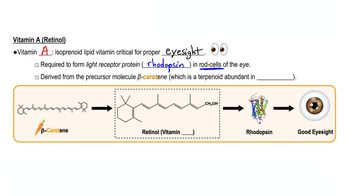
  • Retinol

    Molecule essential for vision, derived from beta carotene, and forms the light receptor protein in rod cells.
  • Beta Carotene

    Terpenoid precursor abundant in carrots, converted into retinol for visual function.
  • Rhodopsin

    Light receptor protein in rod cells, enabling vision by utilizing retinol as a component.
  • Cholesterol

    Steroid precursor molecule required for the synthesis of vitamin D upon exposure to ultraviolet light.
  • Ultraviolet Light

    Radiation from sunlight necessary for activating vitamin D synthesis from cholesterol.
  • Calcium

    Mineral regulated by vitamin D, crucial for bone strength and healthy skeletal structure.
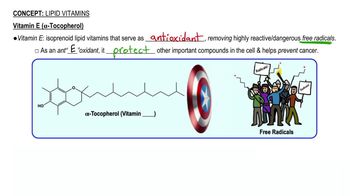
  • Alpha Tocopherol

    Antioxidant form of vitamin E, protects cells from free radicals and reduces cancer risk.
  • Antioxidant

    Compound that neutralizes highly reactive free radicals, preventing cellular damage.
  • Free Radical

    Highly reactive molecule with unpaired electrons, capable of causing cellular damage and cancer.
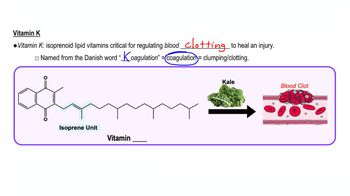
  • Coagulation

    Process regulated by vitamin K, enabling blood to clot and heal injuries.
  • Kale

    Vegetable rich in vitamin K, supporting blood clotting and injury recovery.
  • Rod Cell

    Specialized eye cell containing rhodopsin, responsible for vision in low light conditions.
  • Phosphorus

    Mineral regulated alongside calcium by vitamin D, important for bone health.
  • Fat Soluble Vitamin

    Class of vitamins including A, D, E, and K, stored in body tissues and requiring dietary intake.