Pearson+ LogoPearson+ Logo
Back

Nucleic Acids quiz #3

Control buttons has been changed to "navigation" mode.
1/40
  • What is the function of hydrogen bonds in the double helix?

    They hold the two DNA strands together.
  • What is the difference in the number of nucleotides between DNA and RNA molecules?

    DNA has millions of nucleotides; RNA has hundreds to thousands.
  • What is the function of nucleic acids in storing genetic information?

    They encode the instructions for building and maintaining an organism.
  • What is the difference in the types of bonds that link nucleotides in nucleic acids?

    Phosphodiester bonds link nucleotides in both DNA and RNA.
  • What is the function of the 5' to 3' directionality in nucleic acids?

    It determines the direction of synthesis and reading of genetic information.
  • What is the difference in the ability of DNA and RNA to act as enzymes?

    RNA can act as an enzyme (ribozyme); DNA cannot.
  • What is the function of nucleic acids in transmitting genetic information?

    They pass genetic information from parent to offspring.
  • What is the difference in the types of secondary structures formed by DNA and RNA?

    DNA forms a double helix; RNA forms various loops and folds.
  • What is the function of nucleic acids in the synthesis of proteins?

    They provide the template and machinery for translating genetic code into proteins.
  • What is the difference in the stability of DNA and RNA molecules?

    DNA is more stable due to its double-stranded structure and lack of 2' hydroxyl group.
  • What is the function of nucleic acids in the regulation of gene expression?

    They control when and how genes are expressed.
  • What is the difference in the occurrence of double-stranded and single-stranded forms between DNA and RNA?

    DNA is usually double-stranded; RNA is usually single-stranded.
  • What is the function of nucleic acids in catalysis?

    Some RNA molecules (ribozymes) can catalyze chemical reactions.
  • What is the difference in the types of information encoded by DNA and RNA?

    DNA encodes long-term genetic information; RNA encodes information for immediate use in protein synthesis and regulation.
  • What is the function of nucleic acids in the cell nucleus?

    DNA is stored in the nucleus and contains the genetic blueprint.
  • What is the difference in the location of DNA and RNA in eukaryotic cells?

    DNA is mainly in the nucleus; RNA is found in the nucleus and cytoplasm.
  • What is the function of nucleic acids in the transmission of hereditary traits?

    They carry genetic information that determines inherited characteristics.
  • What is the difference in the types of pentose sugars in DNA and RNA?

    DNA contains deoxyribose; RNA contains ribose.
  • What is the function of nucleic acids in the storage of genetic information?

    They store the instructions needed for the development and functioning of living organisms.
  • What is the difference in the types of nitrogenous bases between DNA and RNA?

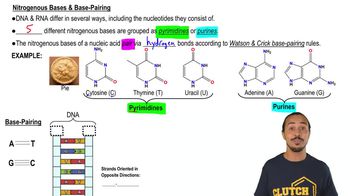
    DNA uses thymine; RNA uses uracil.
  • What is the function of nucleic acids in the replication of genetic material?

    They ensure accurate copying and transmission of genetic information during cell division.
  • What is the difference in the ability of DNA and RNA to form hydrogen bonds?

    Both can form hydrogen bonds, but DNA forms them between complementary strands, while RNA can form them within a single strand.
  • What is the function of nucleic acids in the expression of genetic information?

    They direct the synthesis of proteins and regulate gene activity.
  • What type of biomolecule is ATP?

    ATP is a nucleic acid-derived molecule, specifically a nucleotide.
  • Which type of biomolecule is ATP?

    ATP is a nucleotide, which is a type of nucleic acid monomer.
  • For which enzyme are nucleotides the substrate?

    Nucleotides are substrates for enzymes such as DNA polymerase and RNA polymerase, which synthesize nucleic acids.
  • What enzyme joins individual nucleotides together during nucleic acid synthesis?

    DNA polymerase or RNA polymerase joins individual nucleotides together during nucleic acid synthesis.
  • Is ATP a nucleic acid?

    ATP is not a nucleic acid itself, but it is a nucleotide, which is the monomer of nucleic acids.
  • What macromolecule class does ATP belong to?

    ATP belongs to the nucleic acid class of macromolecules.
  • What are the three parts of an ATP molecule?

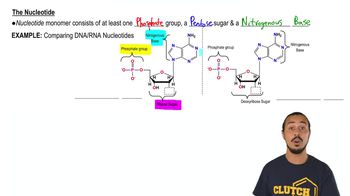
    The three parts of an ATP molecule are a phosphate group, a pentose sugar (ribose), and a nitrogenous base (adenine).
  • What is the name of the sugar in ATP?

    The sugar in ATP is ribose.
  • What are the components of ATP?

    ATP is composed of a phosphate group, a ribose sugar, and an adenine base.
  • What are the three parts of ATP?

    The three parts of ATP are a phosphate group, a ribose sugar, and an adenine base.
  • How is ADP different from ATP?

    ADP (adenosine diphosphate) has two phosphate groups, while ATP (adenosine triphosphate) has three phosphate groups.
  • What biomolecule is ATP?

    ATP is a nucleotide, which is a type of nucleic acid monomer.
  • What type of macromolecule is ATP?

    ATP is a nucleotide, which is a component of nucleic acids.
  • Which is a key component of the energy molecule ATP?

    A key component of ATP is its three phosphate groups.
  • What enzyme adds new nucleotides during nucleic acid synthesis?

    DNA polymerase or RNA polymerase adds new nucleotides during nucleic acid synthesis.
  • What is the sugar that helps make up ATP?

    The sugar in ATP is ribose.
  • List the three parts of an ATP molecule.

    The three parts of an ATP molecule are a phosphate group, a ribose sugar, and an adenine base.