Back

Practice: Amino Acid Oxidation 1 definitions

Control buttons has been changed to "navigation" mode.
1/14
  • Serum Glutamate Pyruvate Transaminase

    Enzyme measured in blood; elevated levels signal liver injury due to increased release from damaged liver cells.
  • Serum Glutamate Oxaloacetate Transaminase

    Blood enzyme whose concentration rises with liver damage, reflecting cellular leakage from hepatic injury.
  • Serum Creatine Kinase

    Enzyme found in blood; high levels indicate heart tissue damage, commonly used in cardiac diagnostics.
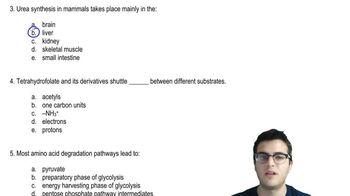
  • Urea Synthesis

    Process mainly in liver cells, involving both mitochondrial and cytosolic steps to convert nitrogen into a waste product.
  • Mitochondria

    Organelle in liver cells where part of the urea cycle occurs, crucial for nitrogen processing.
  • Cytosol

    Cellular compartment where several urea cycle reactions take place, complementing mitochondrial steps.
  • Glutamine

    Amino acid transported from muscle to liver, serving as a nitrogen carrier for urea production.
  • Alanine

    Amino acid sent from muscle to liver, providing pyruvate for glucose synthesis during fasting.
  • Gluconeogenesis

    Metabolic pathway in the liver that generates glucose from non-carbohydrate sources, including alanine.
  • Tetrahydrofolate

    Cofactor that transfers single carbon units between molecules, essential for amino acid and nucleotide metabolism.
  • Biotin

    Vitamin-derived cofactor involved in single carbon transfers, supporting various metabolic reactions.
  • S-Adenosyl Methionine

    Methyl group donor used in one-carbon transfer reactions, vital for biosynthetic and regulatory processes.
  • Citric Acid Cycle

    Central metabolic pathway where most amino acid degradation products enter, linking energy and nitrogen metabolism.
  • Transaminase

    Enzyme class facilitating amino group transfer between molecules, key in amino acid metabolism and clinical diagnostics.