 Back
BackAmino Acids and Peptides: Structure, Properties, and Biological Relevance
Study Guide - Smart Notes
 Tailored notes based on your materials, expanded with key definitions, examples, and context.
Amino Acids: Structure and Classification
General Structure of Amino Acids
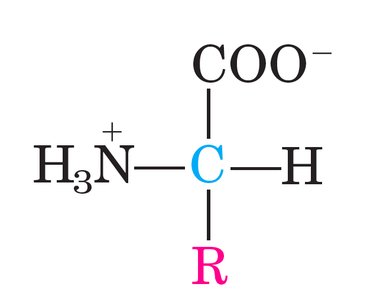
Amino acids are the fundamental building blocks of proteins. Each amino acid contains a central (α) carbon atom bonded to four different groups: an amino group (–NH3+), a carboxyl group (–COO−), a hydrogen atom, and a variable side chain (R group) that determines the amino acid's properties.
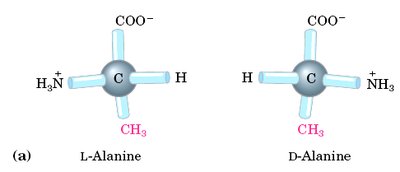
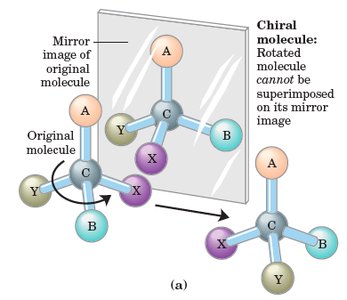
Chirality: With the exception of glycine, all amino acids are chiral, meaning they exist as L- and D-stereoisomers. Proteins in living organisms are composed almost exclusively of L-amino acids.
α-Carbon: The central carbon is a stereocenter, giving rise to optical activity.
Classification of Amino Acids
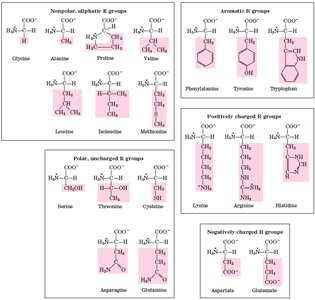
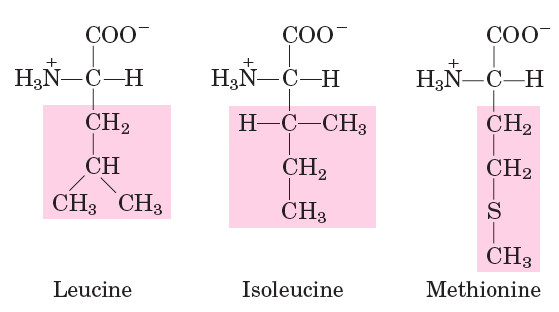
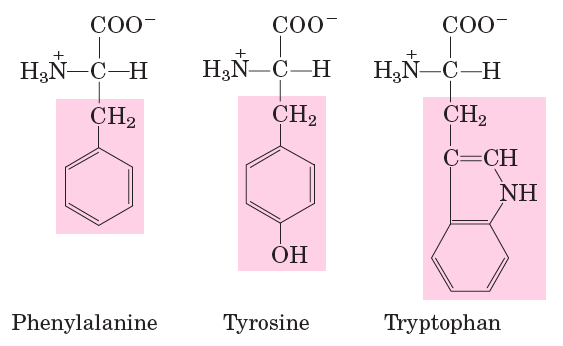
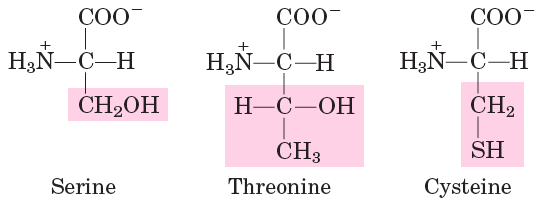
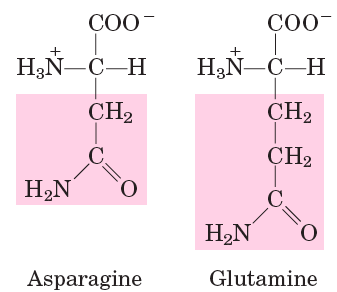
The 20 standard amino acids are classified based on the properties of their side chains (R groups):
Nonpolar, aliphatic: Glycine, Alanine, Proline, Valine, Leucine, Isoleucine, Methionine
Aromatic: Phenylalanine, Tyrosine, Tryptophan
Polar, uncharged: Serine, Threonine, Cysteine, Asparagine, Glutamine
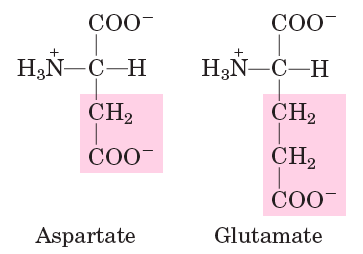
Negatively charged (acidic): Aspartate, Glutamate
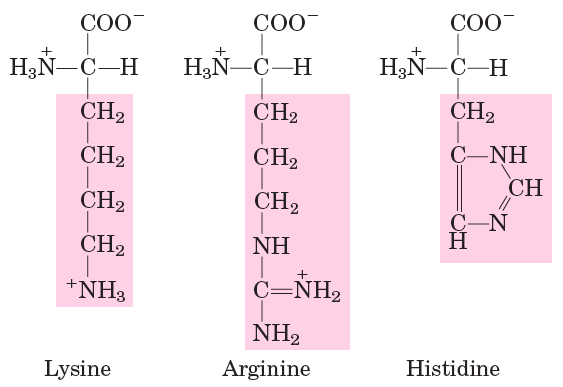
Positively charged (basic): Lysine, Arginine, Histidine

Properties of Amino Acid Side Chains
The chemical nature of the side chain determines the solubility, reactivity, and role of each amino acid in proteins:
Hydrophobic (nonpolar) side chains tend to cluster in the interior of proteins, stabilizing structure via hydrophobic interactions.
Polar and charged side chains are often found on protein surfaces, interacting with water or forming salt bridges and hydrogen bonds.
Aromatic side chains can participate in stacking interactions and absorb UV light.
Sulfur-containing side chains (Cys, Met) can form disulfide bonds or participate in methyl group transfer.
Special Properties and Modifications
Disulfide Bonds
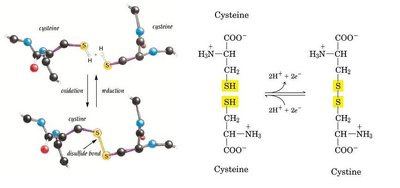
Cysteine residues can form covalent disulfide bonds (–S–S–) through oxidation, stabilizing protein tertiary and quaternary structures.
Phosphorylation
Serine, threonine, and tyrosine residues can be phosphorylated, introducing a negative charge and altering protein function, especially in signaling pathways.
Uncommon Amino Acids
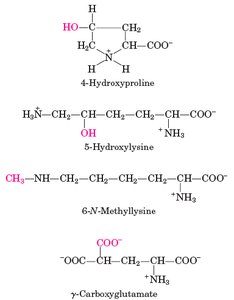
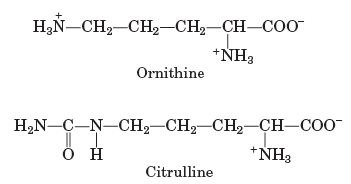
Some proteins contain amino acids derived from the standard 20 by post-translational modification (e.g., hydroxyproline, methyllysine, γ-carboxyglutamate, ornithine, citrulline).
Peptides and Proteins
The Peptide Bond
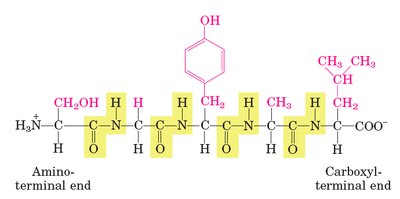
Amino acids are linked by peptide bonds, formed via a condensation reaction between the α-carboxyl group of one amino acid and the α-amino group of another, releasing water.
Peptide bond: Has partial double-bond character, restricting rotation and conferring planarity.
Directionality: Peptides have an amino (N-) terminus and a carboxyl (C-) terminus.
Levels of Protein Structure
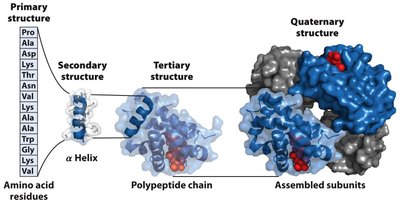
Proteins exhibit hierarchical levels of structure:
Primary structure: Linear sequence of amino acids.
Secondary structure: Local folding patterns (α-helix, β-sheet).
Tertiary structure: Overall 3D shape of a single polypeptide chain.
Quaternary structure: Assembly of multiple polypeptide subunits.
Diversity and Variability in Proteins
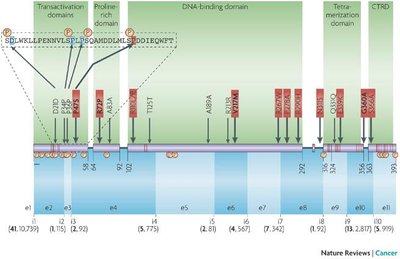
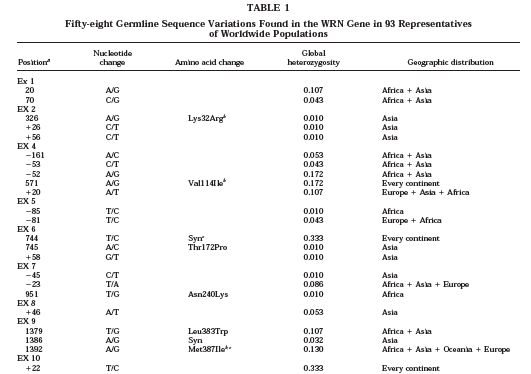
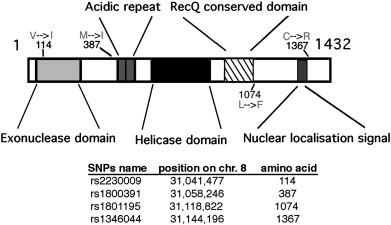
Proteins vary greatly in size, sequence, and function. Many proteins are polymorphic, meaning they exist in multiple sequence variants within a population. This variability can affect protein function and is relevant in health and disease (e.g., p53 polymorphisms and cancer risk).
Examples of Peptides and Proteins
Insulin: A peptide hormone with two chains linked by disulfide bonds, showing sequence variation among species.
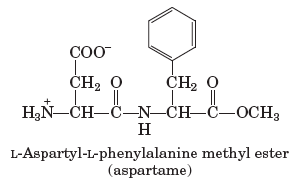
Aspartame: An artificial sweetener composed of two amino acids (aspartic acid and phenylalanine) in peptide linkage.
Protein Size and Complexity
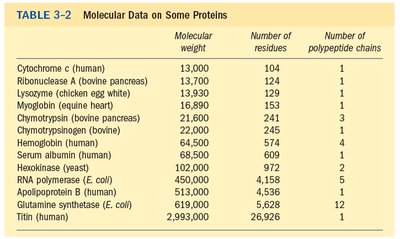
Proteins range from small peptides to massive macromolecules. The number of amino acid residues and polypeptide chains varies widely among proteins.
Protein | Molecular Weight | Number of Residues | Number of Polypeptide Chains |
|---|---|---|---|
Cytochrome c (human) | 13,000 | 104 | 1 |
Hemoglobin (human) | 64,500 | 574 | 4 |
Serum albumin (human) | 68,500 | 609 | 1 |
Titin (human) | 2,993,000 | 26,926 | 1 |
Summary Table: Amino Acid Classification
Group | Amino Acids | Key Properties |
|---|---|---|
Nonpolar, aliphatic | Gly, Ala, Pro, Val, Leu, Ile, Met | Hydrophobic, interior of proteins |
Aromatic | Phe, Tyr, Trp | Hydrophobic, absorb UV, stacking interactions |
Polar, uncharged | Ser, Thr, Cys, Asn, Gln | Hydrophilic, H-bonding, reactive groups |
Negatively charged (acidic) | Asp, Glu | Hydrophilic, acidic, form salt bridges |
Positively charged (basic) | Lys, Arg, His | Hydrophilic, basic, form salt bridges |
Key Equations
Peptide bond formation:
Disulfide bond formation:
Additional info: This guide covers the structure, classification, and properties of amino acids, peptide bond formation, protein structure levels, and the biological significance of sequence variability and post-translational modifications. For further details on uncommon amino acids and advanced protein techniques, consult your textbook.
