 Back
Biochemistry and the Organization of Cells: Chapter 1 Study Notes
Study Guide - Smart Notes
 Tailored notes based on your materials, expanded with key definitions, examples, and context.
Biochemistry and the Organization of Cells
Basic Themes in Biochemistry
Biochemistry is a multidisciplinary science that combines biology and chemistry to study the molecular nature of life processes. All living organisms utilize the same types of biomolecules and energy, making it possible to analyze them using methods from chemistry and physics.
Biochemistry: The study of the chemical processes and substances that occur within living organisms.
Biomolecules: Molecules such as proteins, nucleic acids, carbohydrates, and lipids that are essential for life.
Energy: Required for cellular processes; derived from the sun or consumed molecules.
Chemical Foundations of Biochemistry
Organic chemistry forms the basis of biochemistry, as living organisms are composed primarily of carbon compounds. The reactions of biomolecules are described using organic chemistry principles.
Organic Chemistry: Study of carbon-containing compounds.
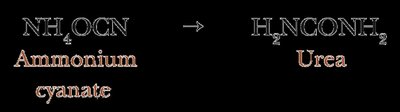
Friedrich Wöhler's Experiment (1828): Demonstrated the synthesis of urea from ammonium cyanate, showing that organic compounds can be formed from inorganic substances.
Major Groups of Biochemicals
Biomolecules are classified into four major groups: amino acids, carbohydrates, nucleotides, and lipids. Each group has distinct structures and functions in cells.
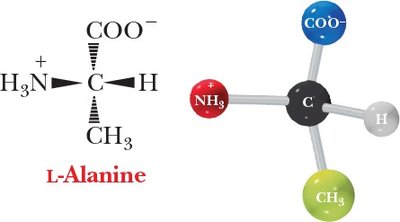
Amino Acids: Building blocks of proteins; contain a central carbon bonded to a carboxyl group, amino group, hydrogen, and an R group.
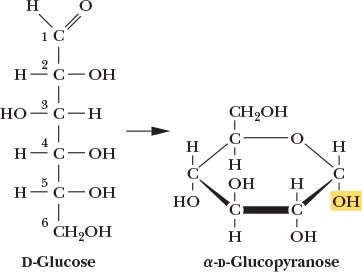
Carbohydrates: Composed of carbon, hydrogen, and oxygen; general formula ; glucose is the most common monosaccharide.
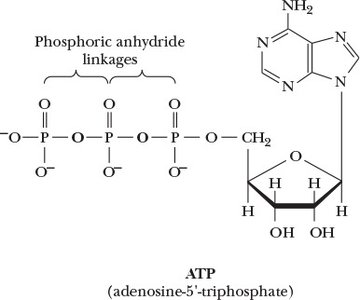
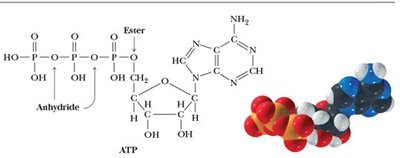
Nucleotides: Basic units of DNA and RNA; consist of a five-carbon sugar, a nitrogenous base, and phosphate groups; ATP is a key nucleotide for energy transfer.
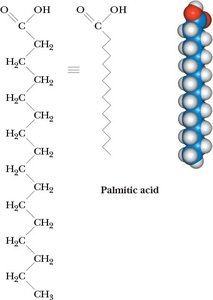
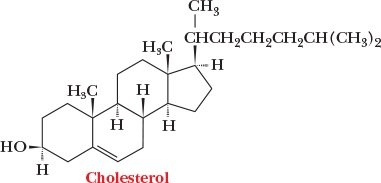
Lipids: Poorly soluble in water; composed of long hydrocarbon chains; examples include palmitic acid and cholesterol.
Functional Groups in Biochemistry
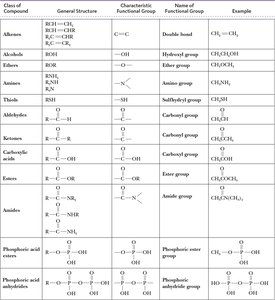
Functional groups are specific groups of atoms within molecules that are responsible for characteristic chemical reactions. Esters and anhydrides of phosphoric acid are especially important in biochemistry, as seen in ATP.
Functional Groups: Include hydroxyl, carboxyl, amino, sulfhydryl, ester, amide, and phosphoric acid derivatives.
ATP: Contains ester and anhydride linkages involving phosphoric acid.
Origins of Life and Biomolecules
The fundamental similarity of cells suggests a common origin. Simple molecules such as H2O, CH4, CO2, NH3, N2, and H2 were present on early Earth and could form biomolecules under abiotic conditions.
Abiotic Synthesis: Formation of proteins and nucleic acids from simple molecules in early Earth's atmosphere and oceans.
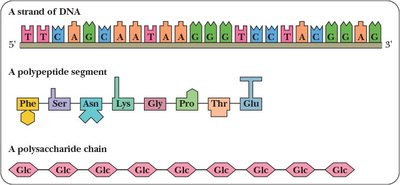
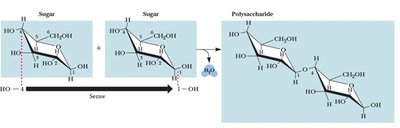
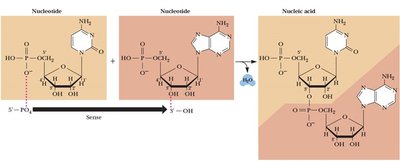
Monomers and Polymers: Small molecules (monomers) bond to form macromolecules (polymers).
Examples: Amino acids → proteins; nucleotides → nucleic acids; monosaccharides → polysaccharides; glycerol and fatty acids → lipids.
Informational Macromolecules and Directionality
Proteins and nucleic acids are informational macromolecules, meaning their sequence encodes biological information. Macromolecules have directionality, which is crucial for their function.
Proteins: Polymers of amino acids.
Nucleic Acids: Polymers of nucleotides; DNA and RNA.
Directionality: Refers to the orientation of the polymer chain (e.g., 5' to 3' in DNA).
Enzymes and Genetic Code
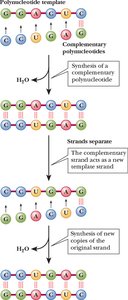
Enzymes are proteins that catalyze biochemical reactions, increasing their rate. The genetic code links nucleotide sequences in nucleic acids to amino acid sequences in proteins. DNA serves as the primary coding material.
Enzymes: Catalysts that speed up chemical reactions.
Genetic Code: Relationship between DNA/RNA sequences and protein sequences.
DNA: Deoxyribonucleic acid; stores genetic information.
RNA World and Evolution of Cells
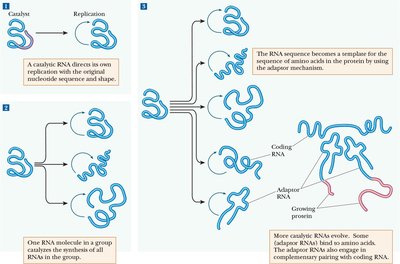
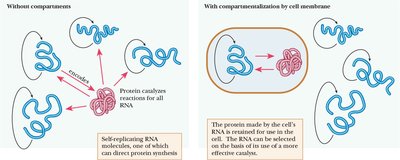
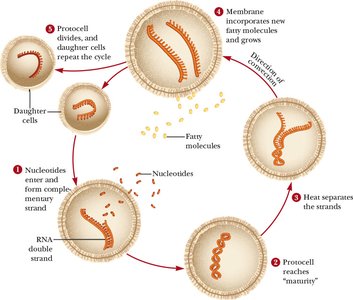
The RNA-world theory proposes that RNA was the original coding and catalytic molecule. Over time, DNA became the primary genetic material, and RNA took on intermediary roles. The formation of cell membranes was a key step in the development of living cells.
RNA: Can catalyze its own processing; considered the original coding material.
RNA-world Theory: Suggests self-replicating RNA was pivotal in the origin of life.
Double-Origin Theory: Catalysis and coding systems developed separately and later combined.
Prokaryotes and Eukaryotes
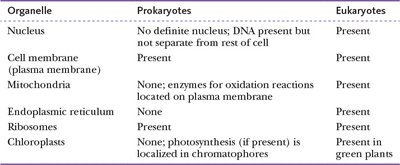
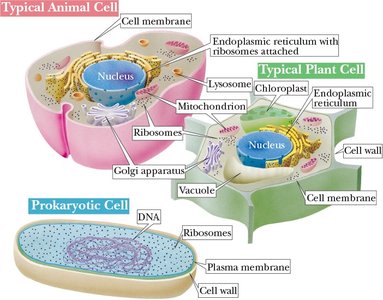
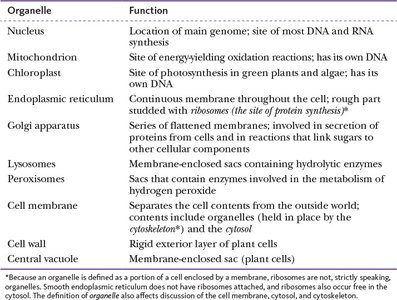
Cells are classified as prokaryotic or eukaryotic based on the presence of a nucleus and membrane-bound organelles. Prokaryotes include bacteria and cyanobacteria, while eukaryotes include animals, plants, fungi, and protists.
Prokaryotes: Lack a distinct nucleus and membrane-enclosed organelles.
Eukaryotes: Have a well-defined nucleus and organelles.
Organelle: Membrane-enclosed structure with a specific function.
Classification of Living Organisms
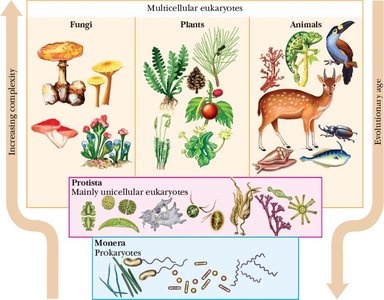
Living organisms are classified using the five-kingdom system and the three-domain system. The five-kingdom system distinguishes between prokaryotes and eukaryotes, while the three-domain system uses ribosomal RNA sequences.
Five-Kingdom System: Monera, Protista, Fungi, Plantae, Animalia.
Three-Domain System: Bacteria, Archaea, Eukaryotes.
Symbiosis
Symbiosis refers to the association between two organisms, which can be mutualistic, parasitic, or hereditary. These relationships can lead to new organisms with combined characteristics.
Mutualism: Both species benefit.
Parasitic Symbiosis: One species benefits at the expense of the other.
Hereditary Symbiosis: Host contains a genetically determined number of smaller organisms.
Biochemical Energetics and Thermodynamics
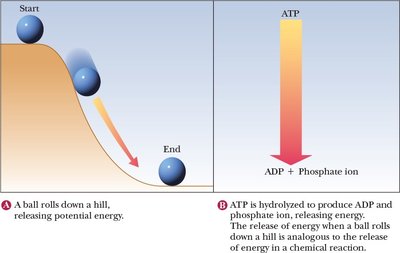
All cells require energy, which is ultimately derived from the sun. Thermodynamics studies energy transformations, and the spontaneity of reactions is determined by changes in free energy.
Free Energy (G): Diagnostic for spontaneity; is spontaneous (exergonic), is nonspontaneous (endergonic), is equilibrium.
First and Second Laws of Thermodynamics: Related to free energy by the equation:
\Delta H: Change in enthalpy (heat at constant pressure).
\Delta S: Change in entropy (disorder).
T: Temperature in Kelvin.
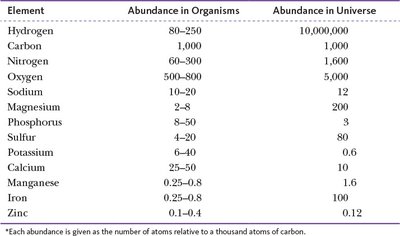
Abundance of Elements
The abundance of elements in organisms and the universe varies, with hydrogen, carbon, nitrogen, and oxygen being most prevalent in living systems.
Element | Abundance in Organisms | Abundance in Universe |
|---|---|---|
Hydrogen | 80–250 | 10,000,000 |
Carbon | 1,000 | 1,000 |
Nitrogen | 60–300 | 1,600 |
Oxygen | 500–800 | 5,000 |
Sodium | 10–20 | 12 |
Magnesium | 2–8 | 200 |
Phosphorus | 8–50 | 3 |
Sulfur | 4–20 | 80 |
Potassium | 8–40 | 0.5 |
Calcium | 25–50 | 1.6 |
Manganese | 0.25–0.8 | 0.12 |
Iron | 0.25–0.8 | 0.12 |
Zinc | 0.1–0.4 | 0.12 |
 Additional info: These notes expand on brief points from the original slides, providing academic context and definitions for clarity and completeness.
