 Back
BackBiochemistry Foundations: Structure, Function, and Energetics of Biomolecules
Study Guide - Smart Notes
 Tailored notes based on your materials, expanded with key definitions, examples, and context.
Biochemistry and the Language of Chemistry
Introduction to Biochemistry
Biochemistry is the study of the molecular basis of life, focusing on the structure and function of biomolecules and the chemical reactions that sustain living organisms. - Key Goal 1: Understanding the molecular structures of biomolecules. - Key Goal 2: Understanding how molecular manipulations affect organisms through biochemical reactions.
Major Elements and Macromolecules
All living organisms are primarily composed of four elements: oxygen, hydrogen, carbon, and nitrogen. These elements form the backbone of four major classes of biological macromolecules: proteins, nucleic acids, carbohydrates, and lipids.
Proteins
- Made from 20 amino acids linked by peptide bonds. - Serve as signaling molecules, structural components, and catalysts (enzymes). - Catalysts enhance reaction rates without being permanently altered.
Nucleic Acids
- Composed of nucleotides linked by phosphodiester bonds. - DNA stores genetic information; RNA transfers and implements instructions.
Carbohydrates
- Chains of monosaccharides like glucose. - Function as fuel and in cell communication. 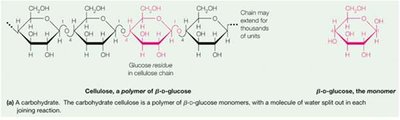
Lipids
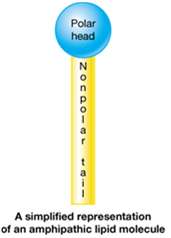
- Amphipathic molecules (hydrophobic and hydrophilic regions). - Form membrane barriers, store energy, and act as signaling molecules. 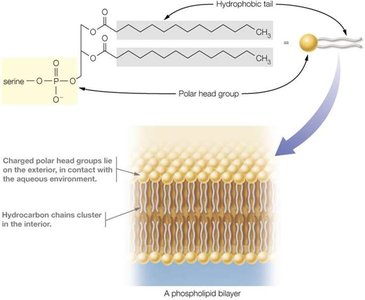
Cellular Organization
Cells maintain order in a chaotic environment through membranes, which are lipid bilayers.
Types of Cells
- Prokaryotic: Lack nucleus and membrane-bound organelles. 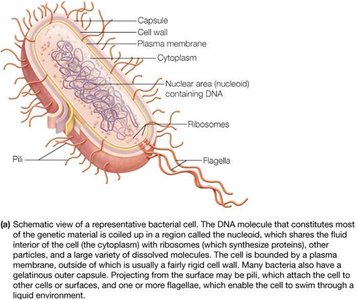 - Eukaryotic: Contain nucleus and organelles.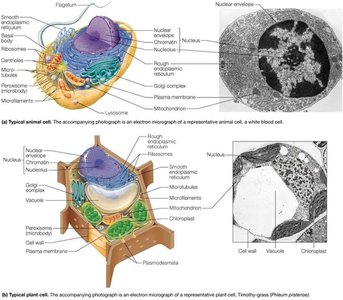
The Chemical Foundation of Life
Chemical Bonds
- Covalent bonds: Strong, stable, involve electron sharing. - Noncovalent bonds: Weaker, include charge-charge, dipole, van der Waals, and hydrogen bonds. 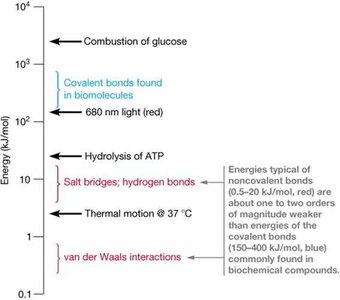
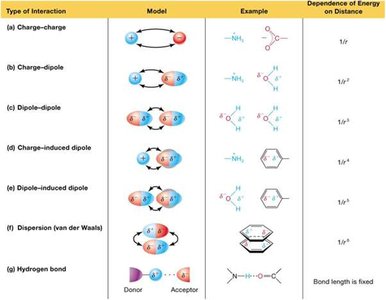
Charge-Charge Interactions
- Electrostatic interactions between ions (ionic bonds/salt bridges). - Governed by Coulomb’s Law: 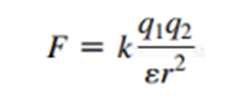
Dipole Interactions
- Polar molecules have uneven charge distribution, creating dipole moments. 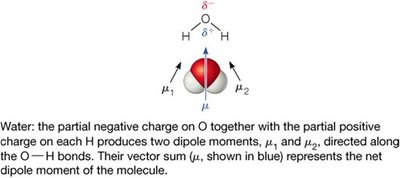
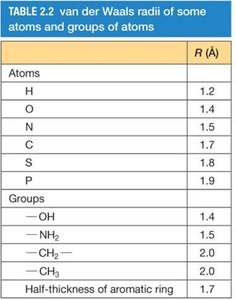
Van der Waals Interactions
- Weak, short-range forces between molecules. 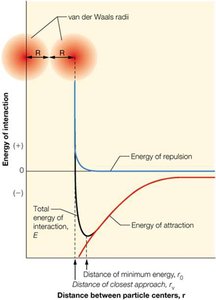
Hydrogen Bonds
- Occur between a hydrogen atom covalently bonded to an electronegative atom and another electronegative atom. 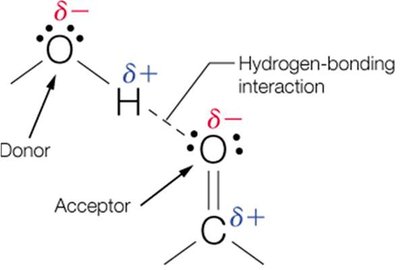
Properties of Water
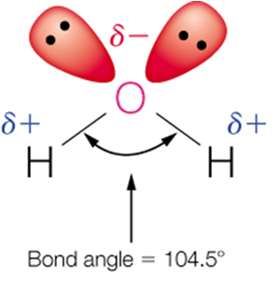
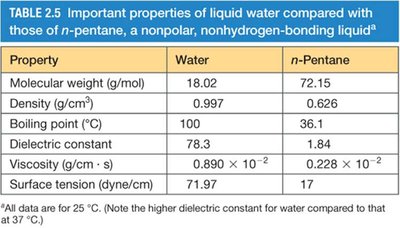
Water’s unique properties (high boiling point, ability to form multiple hydrogen bonds) make it an excellent solvent for biochemical reactions. 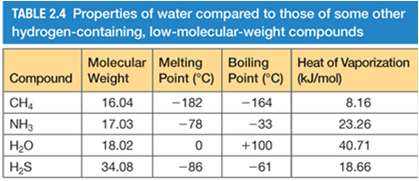
Solubility
- Hydrophilic substances dissolve in water; hydrophobic substances do not. - Amphipathic molecules (e.g., lipids) have both hydrophilic and hydrophobic regions. 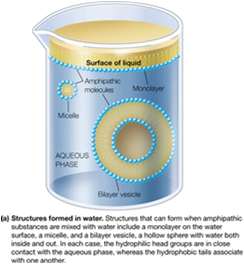
Acids, Bases, and pH
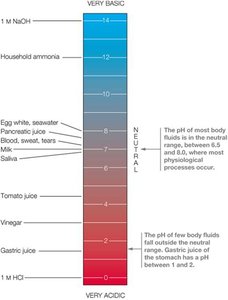
- Acid: Proton donor. - Base: Proton acceptor. - pH is a measure of hydrogen ion concentration. 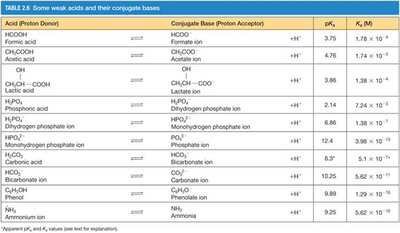
The Energetics of Life
Bioenergetics and Thermodynamics
Life requires energy, which is captured, transformed, stored, and utilized by cells. 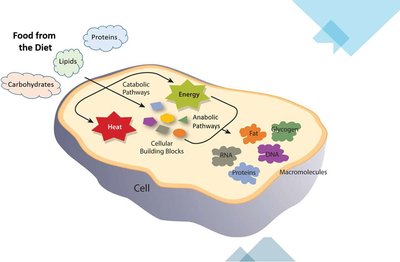
First Law of Thermodynamics
- Energy is conserved; it can be transferred but not created or destroyed.
Enthalpy (H)
- Total heat content; change in enthalpy () reflects energy released or absorbed.
Types of Reactions
- Exothermic: Release energy ( negative). - Endothermic: Absorb energy ( positive).
Entropy (S)
- Measure of disorder; systems tend to increase in entropy. 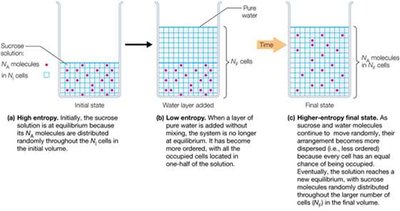
Second Law of Thermodynamics
- Entropy of an isolated system increases to a maximum value.
Gibbs Free Energy (G)
- Determines spontaneity of a process: - Negative : Spontaneous (exergonic). - Positive : Non-spontaneous (endergonic).
Nucleic Acids
Structure and Function
Nucleic acids (DNA and RNA) are informational macromolecules essential for genetic storage and expression. - DNA: Stores and transmits genetic information. - RNA: Facilitates protein synthesis and gene regulation.
Monomer Structure
- DNA: 2-deoxyribose sugar, nucleobase, phosphate group. - RNA: Ribose sugar, nucleobase, phosphate group.
Phosphodiester Linkage
- Connects 5’ phosphate of one nucleotide to 3’ hydroxyl of another, forming the backbone.
Nucleobases
- Purines: Adenine (A), Guanine (G) - Pyrimidines: Cytosine (C), Thymine (T, DNA), Uracil (U, RNA)
Primary Structure
- Linear sequence of nucleotides; directionality from 5’ to 3’.
Secondary Structure
- Double helix; base pairing; major and minor grooves.
Tertiary Structure
- Supercoiling allows DNA to fit into the cell nucleus.
Central Dogma
- Flow of genetic information: DNA → RNA → Protein.
Introduction to Proteins
Protein Structure
Proteins are polymers of amino acids, each with a unique sequence and structure.
α-Amino Acids
- Amino group attached to α carbon, carboxylic acid group, hydrogen, and side chain (R group). - Exist as zwitterions at neutral pH.
Stereochemistry
- Only L-amino acids are found in proteins; chirality is important for function.
Side Chain Properties
- Nonpolar aliphatic/aromatic: Hydrophobic. - Polar: Hydrophilic, often on protein surfaces. - Charged: Acidic (negative), basic (positive).
Essential Amino Acids
- Nine must be obtained from diet; others can be synthesized.
Peptide Bond Formation
- Amide bond between α-carboxylic acid and α-amino group; releases water.
Protein Nomenclature
- Sequence written N-terminus to C-terminus.
Primary Sequence
- Determines 3D structure and function; mutations can cause disease.
The Three-Dimensional Structure of Proteins
Secondary Structure
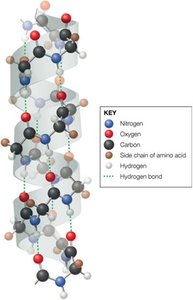
- α-helix: Side chains point outward; stabilized by hydrogen bonds. 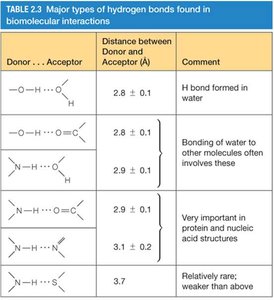 - β-sheet: Side chains on opposite faces; can be parallel or antiparallel.
Tertiary Structure
- Folding of secondary structures; defines function. - Stabilized by charge-charge, hydrogen bonds, van der Waals, hydrophobic effect.
Quaternary Structure
- Complexes of multiple polypeptide chains; stabilized by same interactions as tertiary structure.
Protein Function and Evolution
Functional Groups of Proteins
- Antibodies: Immune response, specific binding to antigens. - Globins: Oxygen transport (myoglobin, hemoglobin), allosteric effects, cooperative binding. - Motility Proteins: Actin and myosin, ATP hydrolysis for movement. - Enzymes: Biological catalysts, highly specific.
Enzymes: Biological Catalysts
Enzyme Structure and Function
- Catalysts accelerate reactions by lowering activation energy. - Specificity due to 3D structure and substrate binding.
Cofactors
- Essential for enzyme activity; can be organic (coenzymes) or metal ions.
Enzyme Kinetics
- Michaelis-Menten: - Km: Michaelis constant, describes ES interaction. - Vmax: Maximal velocity when all enzyme is bound to substrate.
Enzyme Inhibition
- Competitive: Inhibitor binds active site. - Uncompetitive: Inhibitor binds ES complex. - Noncompetitive: Inhibitor binds elsewhere.
Lipids, Membranes, and Cellular Transport
Lipid Structure and Function
- Hydrophobic molecules, soluble in organic solvents. - Roles: Energy storage, membrane structure, signaling.
Classes of Lipids
- Free Fatty Acids: Simplest, amphipathic. - Triacylglycerols: Fat storage, energy, insulation. - Phospholipids: Membrane formation. - Glycolipids: Membrane components. - Steroids: Signaling, membrane structure.
Membrane Structure
- Lipid bilayer forms barriers; fluid mosaic model. - Membranes are asymmetric and fluid.
Membrane Proteins
- Peripheral: Exposed on one side. - Integral: Span membrane, involved in transport/signaling.
Transport Across Membranes
- Diffusion: Random movement. - Facilitated Transport: Through channels/carriers. - Active Transport: Requires energy input.
Carbohydrates: Structure and Function
Monomers and Polymers
- Monosaccharides: Aldose (aldehyde), ketose (ketone), rich in hydroxyl groups. - Polysaccharides: Storage (starch, glycogen), structural (cellulose, chitin).
Isomerism
- Tautomers: Same formula, different connectivity. - Enantiomers: Mirror images (D and L forms). - Diastereomers: Not mirror images. - Anomers: Differ at carbonyl carbon (α, β). - Epimers: Differ at one carbon.
Cyclic Forms
- Five or six membered rings (pentose, hexose).
Modifications
- Sugar phosphate esters: Metabolic intermediates. - Lactones/acids: Oxidation products. - Alditols: Reduction products. - Amino sugars: Amino acid derivatives. - Glycosides: O-glycosidic bonds.
Oligosaccharides and Polysaccharides
- Disaccharides: Sucrose, lactose, maltose. - Polysaccharides: Amylose, amylopectin, glycogen, cellulose, chitin.
Glycoproteins
- Proteins with covalently attached carbohydrate chains; important for cell recognition and signaling.
Mechanisms of Signal Transduction
Hormones and Cellular Communication
- Hormones: Peptides, steroids, amino acid derivatives. - Mechanisms: Enzyme activity modulation, gene expression, membrane permeability. - Membrane-bound receptors: Influence second messenger synthesis, ion channels, intrinsic enzyme activity.
Summary Table: Major Biomolecules
Class | Monomer | Bond Type | Main Functions |
|---|---|---|---|
Proteins | Amino acids | Peptide (amide) | Structure, catalysis, signaling |
Nucleic Acids | Nucleotides | Phosphodiester | Genetic information, regulation |
Carbohydrates | Monosaccharides | Glycosidic | Energy, structure, signaling |
Lipids | Fatty acids, glycerol | Noncovalent | Membranes, energy storage, signaling |
Additional info:
- Academic context was added to clarify the role of each biomolecule, the types of chemical bonds, and the energetics of biochemical reactions. - Images were included only when directly relevant to the explanation of the adjacent paragraph.
