 Back
Carbon Pathways: Glycogen Metabolism, Gluconeogenesis, and the Pentose Phosphate Pathway
Study Guide - Smart Notes
 Tailored notes based on your materials, expanded with key definitions, examples, and context.
Glycogen Metabolism
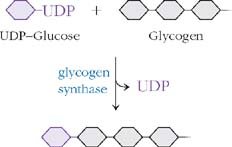
Glycogen Biosynthesis
Glycogen biosynthesis is the process by which glucose units are added to glycogen, a storage polysaccharide found in animals. This pathway is essential for maintaining blood glucose levels during fasting and for storing excess glucose after meals.
Key Enzyme: Glycogen synthase catalyzes the transfer of glucose from UDP-glucose to the growing glycogen chain.
Substrate: UDP-glucose is the activated form of glucose used in glycogen synthesis.
Regulation: Glycogen synthase activity is regulated by phosphorylation, ATP/AMP levels, and glucose-6-phosphate.
Hormonal Regulation: Insulin stimulates glycogen synthesis, while epinephrine and glucagon inhibit it.
Reaction:
Example: After a carbohydrate-rich meal, insulin promotes glycogen synthesis in liver and muscle cells.
Glycogen Breakdown (Glycogenolysis)
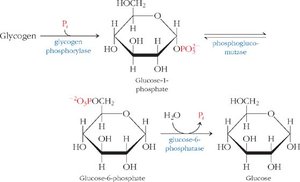
Glycogenolysis is the process of breaking down glycogen to release glucose-1-phosphate, which can be converted to glucose for energy production. This pathway is activated during fasting or exercise.
Key Enzyme: Glycogen phosphorylase catalyzes the phosphorolysis of glycogen to produce glucose-1-phosphate.
Conversion: Glucose-1-phosphate is converted to glucose-6-phosphate by phosphoglucomutase.
Final Step: In liver, glucose-6-phosphatase converts glucose-6-phosphate to free glucose, which can be released into the bloodstream.
Regulation: Glycogen phosphorylase is regulated by phosphorylation and hormonal signals (glucagon, epinephrine).
Reaction:
Example: During fasting, glucagon stimulates glycogen breakdown in the liver to maintain blood glucose levels.
Gluconeogenesis
Pathway Overview
Gluconeogenesis is the synthesis of glucose from non-carbohydrate precursors such as pyruvate, lactate, glycerol, and amino acids. It is crucial for maintaining blood glucose during prolonged fasting or intense exercise.
Key Steps: Several steps in gluconeogenesis bypass the irreversible steps of glycolysis.
Bypass of Pyruvate Kinase:
Pyruvate carboxylase catalyzes:
PEP carboxykinase catalyzes:
Regulation: Gluconeogenesis is reciprocally regulated with glycolysis, primarily by adenine nucleotides (ATP, AMP) and key metabolites.
Example: During starvation, gluconeogenesis in the liver provides glucose for the brain and red blood cells.
Regulation of Glycolysis and Gluconeogenesis
These pathways are tightly regulated to prevent futile cycling and ensure efficient energy use. Regulation occurs at both local (allosteric) and global (hormonal) levels.
Local Control:
Phosphofructokinase (PFK, glycolysis) is inhibited by ATP and stimulated by AMP.
Fructose-1,6-bisphosphatase (gluconeogenesis) is inhibited by AMP.
Global Control:
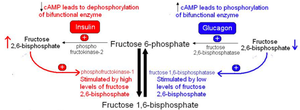
Glucagon increases cAMP, activating protein kinase A, which phosphorylates and activates fructose-2,6-bisphosphatase, lowering F26BP and stimulating gluconeogenesis.
Insulin decreases cAMP, activating phosphofructokinase-2, increasing F26BP and stimulating glycolysis.
Bifunctional Enzyme: The enzyme responsible for F26BP regulation has both kinase and phosphatase activities.
Example: After a meal, insulin promotes glycolysis; during fasting, glucagon promotes gluconeogenesis.
Pentose Phosphate Pathway (PPP)
Pathway Overview
The pentose phosphate pathway (PPP) is a metabolic pathway parallel to glycolysis. It generates NADPH for biosynthetic reactions and ribose-5-phosphate for nucleotide synthesis.
Two Phases:
Oxidative Phase: Produces NADPH and ribulose-5-phosphate.
Non-Oxidative Phase: Interconverts sugars for glycolysis and nucleotide synthesis.
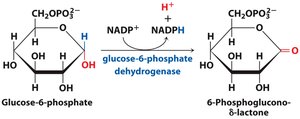
Key Enzyme: Glucose-6-phosphate dehydrogenase catalyzes the first committed step, producing NADPH.
Metabolite Connections: Ribulose-5-phosphate can be converted to ribose-5-phosphate (for nucleotides) or fructose-6-phosphate/glyceraldehyde-3-phosphate (for glycolysis).
Example: NADPH is essential for fatty acid synthesis and for protecting cells from oxidative damage.
Oxidative and Non-Oxidative Arms
The oxidative arm generates NADPH and ribulose-5-phosphate, while the non-oxidative arm recycles pentose phosphates back to glycolytic intermediates.
Oxidative Phase:
Glucose-6-phosphate is oxidized to 6-phosphoglucono-δ-lactone, producing NADPH.
Further steps produce ribulose-5-phosphate, CO2, and additional NADPH.
Non-Oxidative Phase:
Transketolase and transaldolase enzymes convert pentose phosphates to fructose-6-phosphate and glyceraldehyde-3-phosphate.
Allows recycling of pentose sugars for glycolysis or nucleotide synthesis.
Example: Rapidly dividing cells use PPP for ribose-5-phosphate to synthesize DNA and RNA.
Connections Between Pathways
Metabolite Interconnections
Glycogen metabolism, gluconeogenesis, glycolysis, and PPP are interconnected by shared metabolites such as glucose-6-phosphate, fructose-6-phosphate, and glyceraldehyde-3-phosphate. These connections allow cells to adapt to changing energy and biosynthetic demands.
Glucose-6-phosphate: Central metabolite connecting glycolysis, gluconeogenesis, glycogen metabolism, and PPP.
Fructose-6-phosphate: Links glycolysis, gluconeogenesis, and PPP.
Glyceraldehyde-3-phosphate: Shared by glycolysis and PPP.
Example: During oxidative stress, cells divert glucose-6-phosphate to PPP to generate NADPH.
End of Section Questions
The concentration of fructose-2,6-bisphosphate (F26BP) is regulated by a bifunctional enzyme with kinase and phosphatase activities. a. Under fasting conditions, the phosphatase activity is expected to be active, reducing F26BP levels and promoting gluconeogenesis. b. Glucagon is the hormone responsible for inducing this activity. c. Mechanism: Glucagon increases cAMP, activating protein kinase A, which phosphorylates the bifunctional enzyme, enhancing phosphatase activity.
Glucagon signaling results in phosphorylation of glycogen synthase. The phosphorylated form of glycogen synthase is inactive, preventing glycogen synthesis during fasting.
