 Back
BackCHEM 3660 Biochemistry I Exam III Study Guidance
Study Guide - Smart Notes
 Tailored notes based on your materials, expanded with key definitions, examples, and context.
Q1. Water molecules can pass through membranes, but the process is very slow. This process known as osmosis follows the concentration gradient of water and is primarily responsible for maintaining cellular osmotic pressure.
Background
Topic: Membrane Transport and Osmosis
This question tests your understanding of membrane permeability, osmosis, and the role of aquaporins in cellular osmotic regulation.
Key Terms:
Osmosis: Movement of water across a semipermeable membrane following its concentration gradient.
Membrane permeability: The ability of molecules to cross the lipid bilayer.
Aquaporin: A protein channel that facilitates rapid water transport across membranes.
Step-by-Step Guidance
Consider the types of molecules that can easily pass through the lipid bilayer. Think about their polarity and size.
Identify molecules that cannot pass through the membrane and explain why (e.g., charge, size, polarity).
For aquaporin, review the types of transport (uniport, symport, antiport), and whether it is active or passive. Consider the driving force (diffusion vs. ATP hydrolysis).
Think about the structural classification of membrane proteins (peripheral, amphitrophic, integral).
For the mutation scenario, consider how changing an arginine (charged) to alanine (neutral) in the pore might affect pH and water transport.
Try solving on your own before revealing the answer!
Q1f. Hydropathy plot analysis: Predict whether aquaporin is monotopic, bitopic, or polytopic. Include the number of transmembrane helices predicted by the plot.
Background
Topic: Membrane Protein Structure
This question tests your ability to interpret hydropathy plots to predict membrane protein topology.
Key Terms:
Hydropathy plot: A graphical representation of the hydrophobicity of amino acid residues along a protein sequence.
Transmembrane helix: A segment of a protein that spans the lipid bilayer.
Monotopic, bitopic, polytopic: Terms describing the number of times a protein crosses the membrane.
Step-by-Step Guidance
Examine the hydropathy plot for peaks above a threshold (usually positive values) indicating hydrophobic regions.
Count the number of significant hydrophobic peaks, as each typically corresponds to a transmembrane helix.
Determine if the protein is monotopic (one helix), bitopic (two helices), or polytopic (multiple helices) based on the number of peaks.
Consider how the number of helices relates to the protein's classification and function.
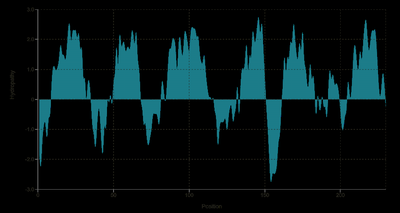
Try solving on your own before revealing the answer!
Q2a. Draw a phosphatidylserine membrane lipid containing one hexadecanoic acid acyl chain and one 20:1 (Δ9) acyl chain.
Background
Topic: Membrane Lipid Structure
This question tests your ability to construct and recognize the structure of phospholipids, including their fatty acid composition.
Key Terms:
Phosphatidylserine: A phospholipid with a serine head group.
Hexadecanoic acid: Also known as palmitic acid (16:0).
20:1 (Δ9) acyl chain: A fatty acid with 20 carbons and one double bond at the 9th carbon.
Step-by-Step Guidance
Draw the glycerol backbone and attach the phosphatidylserine head group.
Add the hexadecanoic acid (palmitic acid) to one of the glycerol's hydroxyl groups via an ester bond.
Add the 20:1 (Δ9) fatty acid to the other hydroxyl group, indicating the position of the double bond.
Label all parts of the molecule clearly.
Try solving on your own before revealing the answer!
Q2b. Identify the lipid class for the lipid shown on the right. Predict whether it can be incorporated into a lipid bilayer. Explain your reasoning based on structure.
Background
Topic: Lipid Classes and Membrane Incorporation
This question tests your ability to classify lipids and predict their behavior in membranes based on structural features.
Key Terms:
Lipid class: Categories such as sterols, phospholipids, sphingolipids, etc.
Lipid bilayer: The double layer of lipids forming biological membranes.
Step-by-Step Guidance
Examine the structure for characteristic features (e.g., ring structure, hydroxyl group).
Identify the lipid class based on these features.
Consider whether the molecule is amphipathic (has both hydrophobic and hydrophilic regions) and if it can integrate into a bilayer.
Explain your reasoning based on the structure.
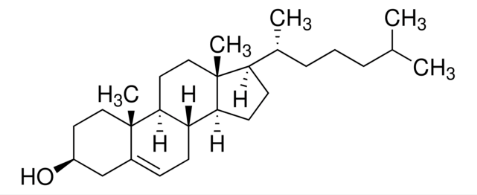
Try solving on your own before revealing the answer!
Q3a. Organize the steps of the insulin signaling pathway in the correct order (7 steps).
Background
Topic: Signal Transduction Pathways
This question tests your understanding of the sequence of molecular events in insulin signaling via receptor tyrosine kinases (RTKs).
Key Terms:
RTK: Receptor Tyrosine Kinase
Autophosphorylation: Addition of phosphate groups to the receptor itself.
SH2 domain: Protein domain that binds phosphorylated tyrosines.
GEF: Guanine nucleotide exchange factor
RAS: Small GTPase involved in signaling
Step-by-Step Guidance
Identify the initial event (insulin binding to its receptor).
Determine the sequence of receptor activation (dimerization, autophosphorylation).
Follow the recruitment of signaling proteins (SH2 domain binding).
Trace the activation of GEF and subsequent steps involving RAS and kinase cascades.
Conclude with transcription factor activation and gene expression.
Try solving on your own before revealing the answer!
Q3b. Explain why rapid inactivation of G-proteins is essential to cell survival, including cancer in your explanation.
Background
Topic: G-Protein Regulation and Cell Signaling
This question tests your understanding of the importance of signal termination in cellular regulation and disease prevention.
Key Terms:
GTP hydrolysis: Conversion of GTP to GDP, inactivating G-proteins.
Signal termination: Ending a signaling event to prevent overactivation.
Cancer: Disease characterized by uncontrolled cell growth, often due to dysregulated signaling.
Step-by-Step Guidance
Explain how G-proteins switch between active (GTP-bound) and inactive (GDP-bound) states.
Discuss why rapid inactivation prevents prolonged or inappropriate signaling.
Relate this to cancer, where failure to inactivate signals can lead to uncontrolled cell growth.
Try solving on your own before revealing the answer!
Q3c. Identify and describe a feature of signal transduction related to regulation (not limited to RTKs).
Background
Topic: Signal Transduction Regulation
This question tests your knowledge of regulatory mechanisms in cell signaling pathways.
Key Terms:
Feedback inhibition: A process where the end product of a pathway inhibits an earlier step.
Phosphorylation/dephosphorylation: Addition/removal of phosphate groups to regulate activity.
Step-by-Step Guidance
Choose a regulatory feature (e.g., negative feedback, phosphorylation).
Briefly describe how it modulates signal transduction.
Try solving on your own before revealing the answer!
Q4. Multiple Choice: Membrane Transport, Lipid Structure, Signal Transduction, and Fatty Acid Properties
Background
Topic: Biochemistry Fundamentals
This section tests your knowledge of key concepts in membrane transport, lipid structure, signal transduction, and fatty acid properties.
Key Terms:
Facilitated diffusion: Passive transport of molecules across membranes via protein channels.
Carbohydrate residues: Sugar groups attached to lipids or proteins.
Neutral fats: Triacylglycerols with three fatty acids linked to glycerol.
RTKs vs. GPCRs: Differences in receptor structure and signaling mechanisms.
Fatty acid melting point: Influenced by chain length and degree of unsaturation.
G-protein activation: Exchange of GDP for GTP.
Steroid hormones: Derived from cholesterol.
Membrane lipid types: Triacylglycerol, ganglioside, glycerophospholipid, sphingolipid, sterol.
Active vs. passive transport: Energy requirements and directionality.
Lipid bilayer features: Lateral diffusion, flip-flop, head group orientation.
Signal transduction systems: Ion-gated, ligand-gated, receptor-enzyme, G-protein, voltage-gated.
Step-by-Step Guidance
For each question, carefully read the options and recall relevant concepts.
Eliminate choices that contradict known biochemistry principles.
Identify key features in the question stem (e.g., "driven by concentration gradient" for facilitated diffusion).
Use process of elimination and your knowledge to narrow down to the most likely answer.
Try solving on your own before revealing the answer!
