Back
Chemical Changes, Chemical Reactions, and Reaction Rates: Foundations for Biochemistry
Study Guide - Smart Notes
 Tailored notes based on your materials, expanded with key definitions, examples, and context.
Chemical and Physical Changes
Distinguishing Chemical and Physical Changes
Chemical and physical changes are fundamental concepts in chemistry, forming the basis for understanding biochemical processes. A chemical change alters the identity or composition of a substance, resulting in the formation of new substances. In contrast, a physical change affects only the form or state of a substance without changing its chemical identity.
Chemical Change: Involves breaking and forming chemical bonds, producing new substances.
Physical Change: Alters the physical state (e.g., solid, liquid, gas) or appearance, but the chemical formula remains unchanged.
Example: Boiling water is a physical change; tearing paper is a physical change; rusting iron is a chemical change.
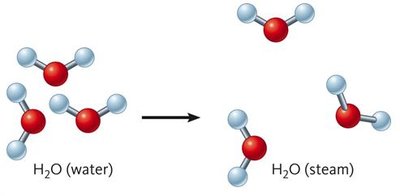
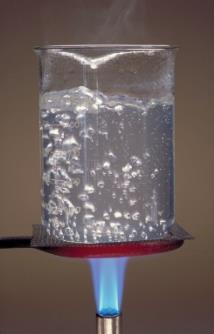


Additional info: Physical changes are often reversible, while chemical changes typically are not.
Chemical Reactions and Chemical Equations
Introduction to Chemical Reactions
A chemical reaction is the process by which one or more substances (reactants) are transformed into new substances (products). Chemical reactions are represented by chemical equations, which describe the reactants, products, and conditions of the reaction.
Reactants: Substances present at the start of the reaction (left side of the equation).
Products: Substances formed as a result of the reaction (right side of the equation).
Example: (Iron rusting)
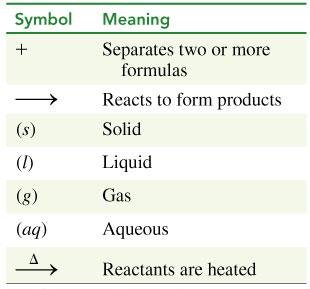

Additional info: Chemical equations use symbols to indicate physical states: (s) for solid, (l) for liquid, (g) for gas, (aq) for aqueous.
Collision Theory and Requirements for Chemical Reactions
Collision Theory
Collision theory explains how chemical reactions occur and why reaction rates vary. For a reaction to take place, reactant particles must collide with sufficient energy and proper orientation.
Requirement 1: Reactants must collide.
Requirement 2: Collisions must have the correct orientation.
Requirement 3: Collisions must have enough energy (activation energy).
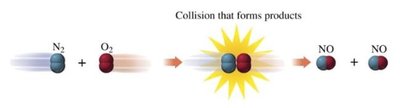
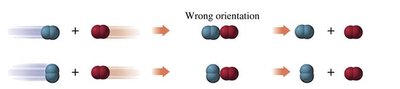
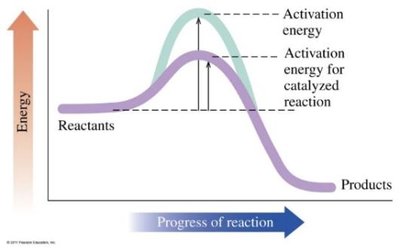
Activation Energy (Ea): The minimum energy required to break bonds and initiate a reaction.
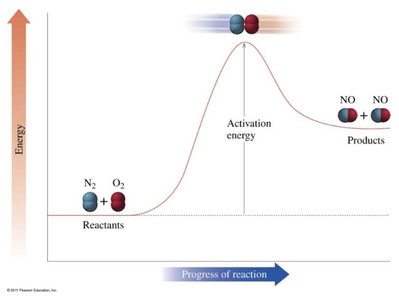
Additional info: Not all collisions result in a reaction; only those with sufficient energy and correct orientation do.
Reaction Rates and Factors Affecting Them
Defining Reaction Rate
The rate of a chemical reaction is the speed at which reactants are converted to products. It can be measured by the change in concentration of reactants or products over time.
Formula:
Example: Measuring the time for magnesium to react with hydrochloric acid.
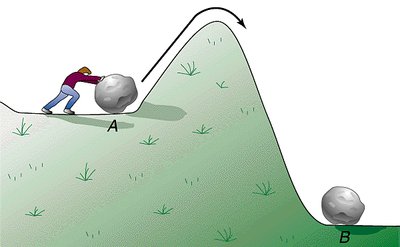
Additional info: A lower activation energy results in a faster reaction rate.
Factors Affecting Reaction Rate
Several factors influence the rate of a chemical reaction:
Concentration: Higher concentration of reactants increases the rate.
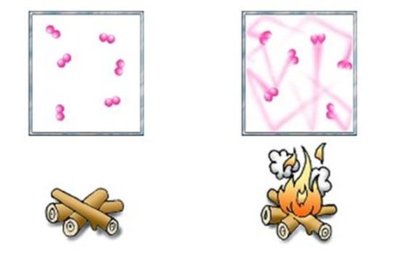
Temperature: Higher temperature increases kinetic energy, leading to more frequent and energetic collisions.
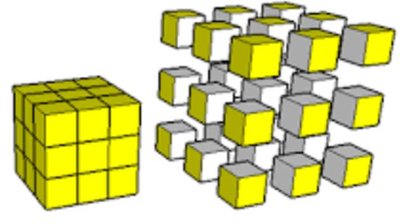
Surface Area: Greater surface area of reactants increases exposure and reaction rate.
Catalysts: Catalysts speed up reactions by lowering activation energy without being consumed.
Additional info: The nature of the reactants also affects reaction rates; some substances react faster than others due to their chemical properties.
Energy in Chemical Reactions: Endothermic and Exothermic Reactions
Endothermic Reactions
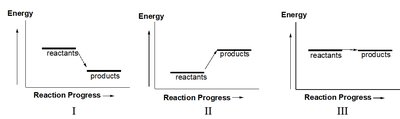
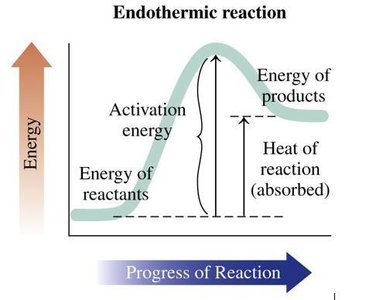
In endothermic reactions, energy is absorbed from the surroundings. The products have higher energy than the reactants, and the energy term appears on the reactant side of the equation.
Example:
Additional info: Endothermic reactions are common in photosynthesis and other biochemical processes.
Exothermic Reactions
Exothermic reactions release energy to the surroundings. The products have lower energy than the reactants, and the energy term appears on the product side of the equation.
Example:
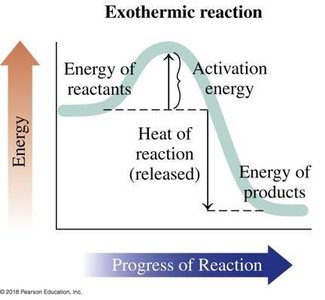
Additional info: Exothermic reactions are typical in cellular respiration and combustion.
Summary Table: Factors Affecting Reaction Rate
Factor | Effect on Rate | Example |
|---|---|---|
Concentration | Higher concentration increases rate | Mg + HCl reaction |
Temperature | Higher temperature increases rate | NaHCO3 + HCl at different temperatures |
Surface Area | Greater surface area increases rate | Crushed vs. whole marble chips |
Catalyst | Lowers activation energy, increases rate | MnO2 in H2O2 decomposition |
Practice Questions: Energy in Chemical Reactions
Ca(OH)2 + 65.3 kJ → CaO + H2O: Endothermic
2Al + Fe2O3 → Al2O3 + 2Fe + 850 kJ: Exothermic
Which diagrams illustrate an endothermic reaction? (See energy diagrams for identification)