 Back
BackChemical Logic of Metabolism: Biochemistry Study Notes
Study Guide - Smart Notes
 Tailored notes based on your materials, expanded with key definitions, examples, and context.
Chapter 11: Chemical Logic of Metabolism
11.1 A First Look at Metabolism
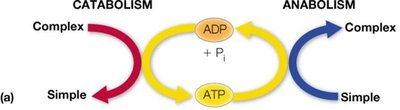
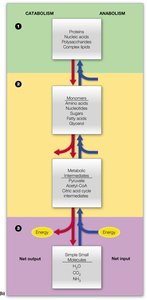
Metabolism encompasses all chemical reactions occurring in living organisms, divided into two main categories: anabolic (biosynthetic) and catabolic (degradative) pathways. These reactions are essential for energy production, growth, and maintenance of cellular functions.
Intermediary metabolism: Refers to the synthesis and degradation of small molecules (metabolic intermediates).
Energy metabolism: Involves pathways that generate or store energy, such as ATP.
Central pathways: Pathways with the highest mass transfer and energy generation, highly conserved across organisms.
Autotrophs: Organisms that synthesize all organic metabolites from CO2.
Heterotrophs: Organisms that require reduced carbon compounds from external sources.
11.2 Freeways on the Metabolic Road Map
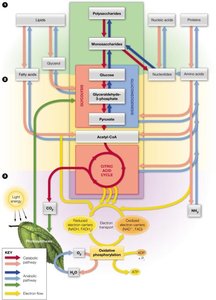
Central metabolic pathways are the main routes for energy and mass transfer in cells. These include glycolysis, citric acid cycle, electron transport, fatty acid metabolism, gluconeogenesis, and photosynthesis.
Glycolysis: The breakdown of glucose to pyruvate, generating ATP and NADH.
Citric acid cycle (Krebs/TCA cycle): Oxidizes acetyl-CoA to CO2, producing NADH and FADH2.
Electron transport/oxidative phosphorylation: Uses NADH and FADH2 to generate ATP.
Fatty acid oxidation (β-oxidation): Degrades fatty acids to acetyl-CoA.
Gluconeogenesis: Synthesis of glucose from non-carbohydrate precursors.
Fatty acid synthesis: Formation of fatty acids from acetyl-CoA.
Photosynthesis: Conversion of light energy to chemical energy in plants.
In aerobic organisms, all pathways funnel into the citric acid cycle.
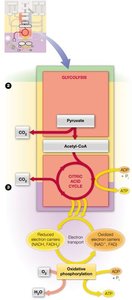
Glycolysis – The Initial Phase of Carbohydrate Catabolism
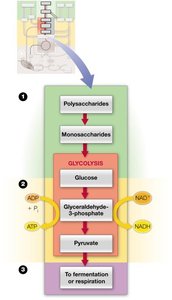
Glycolysis is the first step in carbohydrate catabolism, converting glucose to pyruvate and generating ATP and NADH.
Oxidative Metabolism
Oxidative metabolism involves the citric acid cycle and electron transport chain, leading to ATP production.
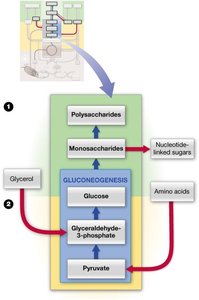
Carbohydrate Anabolism
Carbohydrate anabolism includes gluconeogenesis, the synthesis of glucose from precursors such as amino acids and glycerol.
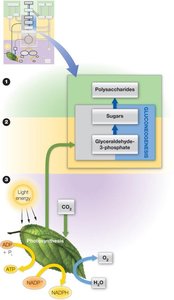
Photosynthesis
Photosynthesis is the process by which plants convert light energy into chemical energy, producing glucose and oxygen.
11.3 Biochemical Reaction Types
Biochemical reactions in metabolism can be classified into five main types:
Nucleophilic substitutions
Nucleophilic additions
Carbonyl condensations
Eliminations
Oxidations/reductions
Carbonyl carbons are common electrophiles in nucleophilic substitution reactions. Common nucleophiles include oxyanions, thiolates, carbanions, deprotonated amines, and imidazole.
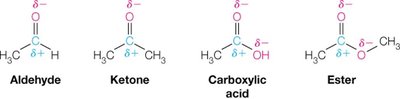
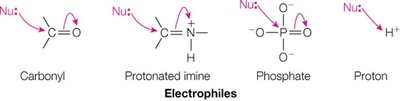
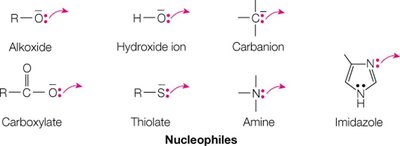
Nucleophilic Substitution Reactions
Acyl substitution involves a tetrahedral intermediate, often seen in peptide bond formation and hydrolysis.
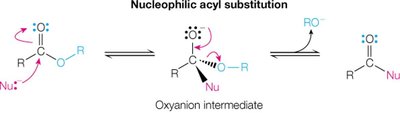
Oxidation–Reduction Reactions
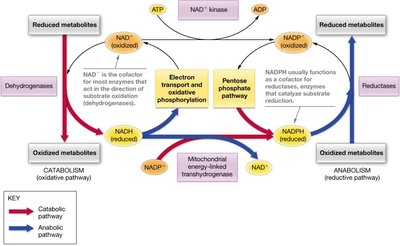
Oxidation-reduction reactions are central to energy metabolism. NAD+ is a widely used redox coenzyme, acting via reversible hydride ion transfer. Dehydrogenases use NAD+ as the electron acceptor, while oxidases use oxygen. If the reaction proceeds in reverse, the enzyme is called a reductase.
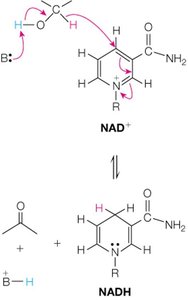
11.4 Bioenergetics of Metabolic Pathways
Oxidation of glucose is a major biological energy source. Aerobic organisms break down glucose through glycolysis, citric acid cycle, and oxidative phosphorylation. Fermentation is an energy-yielding process that does not involve a change in oxidation state.
Some bacteria ferment glucose to acetate and CO2, others to ethanol.
Anaerobic bacteria may use alternate electron acceptors, such as sulfate.
Nicotinamide Adenine Dinucleotide (Phosphate)
NAD+/NADH and NADP+/NADPH are important redox pairs with identical standard reduction potentials. Cells maintain high NAD+/NADH and NADPH/NADP+ ratios to support their roles as electron acceptors and donors.
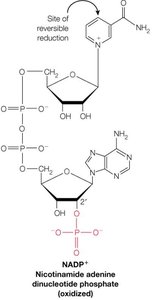
Nicotinamide Dinucleotide in Catabolism and Biosynthesis
NAD+ is a major oxidant in catabolic pathways, while NADPH is a major reductant in anabolic pathways.
11.5 Major Metabolic Control Mechanisms
Metabolic pathways are regulated by several mechanisms:
Control of enzyme levels: Genetic regulation determines enzyme abundance.
Control of enzyme activity: Includes substrate-level regulation, allosteric regulation, and covalent modification.
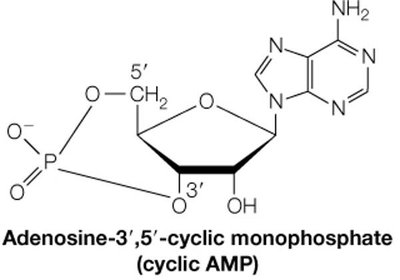
Signal transduction: Hormones and growth factors act through second messengers (e.g., cyclic AMP).
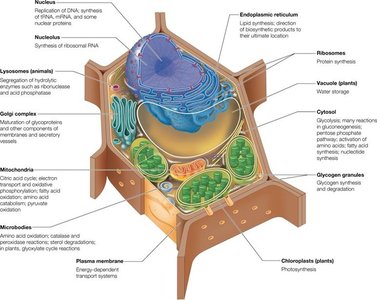
Compartmentation: Physical separation of metabolic processes, often involving membranes.
11.6 Experimental Analysis of Metabolism
Experimental analysis aims to identify enzymes, reactants, products, cofactors, and stoichiometry of each reaction, as well as regulation and physiological function.
Metabolism is studied at multiple levels: isolated organs, whole cells, organelles, purified enzymes, and metabolomics.
Metabolomics measures intracellular concentrations of metabolites, which vary in physical and chemical properties.
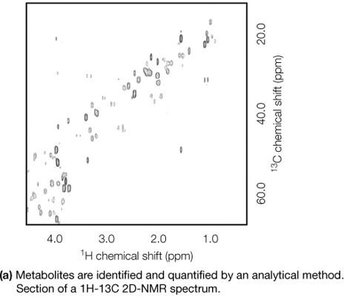
11.7 Tools of Biochemistry
Metabolic Profiling
Metabolic profiling uses analytical methods such as 2D NMR to identify metabolites and visualize their levels under different conditions. Informatics approaches reveal patterns in the data.
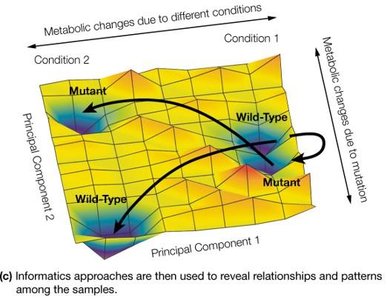
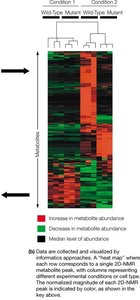
Nuclear Magnetic Resonance (NMR)
NMR is a powerful tool for studying biochemical compounds. Commonly used nuclei include 1H, 2H, 13C, 15N, 19F, and 31P. Applications range from structure determination to metabolic profiling.
Isotope | Spin | Natural Abundance (%) | Relative Sensitivity | Applications |
|---|---|---|---|---|
1H | 1/2 | 99.98 | 1.000 | Almost every kind of biochemical study |
2H | 1 | 0.02 | 0.0096 | Studies of selectively deuterated compounds; structure determination of proteins > 20kDa |
13C | 1/2 | 1.11 | 0.0159 | Multidimensional NMR; residue assignment |
15N | 1/2 | 0.37 | 0.0104 | Multidimensional NMR; residue assignment; protein backbone dynamics |
19F | 1/2 | 100.00 | 0.834 | Substituted for H to probe local structure |
31P | 1/2 | 100.00 | 0.0664 | Studies of nucleic acids and phosphorylated compounds |
Additional info: NMR spectra can be used to monitor metabolic changes in tissues, such as muscle during exercise.
----------------------------------------
