 Back
Citric Acid Cycle: Pathways, Regulation, and Clinical Connections
Study Guide - Smart Notes
 Tailored notes based on your materials, expanded with key definitions, examples, and context.
Citric Acid Cycle (TCA Cycle) and Mitochondrial Carbon Pathways
Introduction to the TCA Cycle
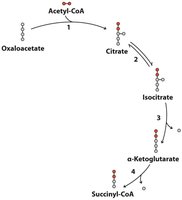
The tricarboxylic acid (TCA) cycle, also known as the citric acid cycle or Krebs cycle, is a central metabolic pathway in mitochondria that oxidizes acetyl-CoA to CO2 and generates high-energy electron carriers (NADH, FADH2) for ATP production. It serves as a metabolic hub, connecting carbohydrate, fat, and protein metabolism, and is tightly regulated to meet cellular energy demands.
Metabolic Reprogramming and Disease
Metabolic reprogramming refers to the alteration of metabolic pathways in response to cellular needs or disease states, such as cancer. The TCA cycle is subject to local, global, and metabolic control, and its reprogramming is implicated in various diseases, including cancer.
IDH Enzymes: Isocitrate dehydrogenases (IDH1, IDH2, IDH3) play distinct roles in the TCA cycle and cellular metabolism.
IDH1: Generates cytosolic NADPH for lipid biosynthesis and antioxidant defense.
IDH2: Mitochondrial, NADP-dependent; produces NADPH to maintain reduced glutathione and protect against ROS.
IDH3: Catalyzes the first oxidative reaction in the TCA cycle, generating NADH.
Oncometabolite: Mutant IDH1/2 can produce 2-hydroxyglutarate, leading to DNA hypermethylation and altered gene expression.
Clinical Application: IDH inhibitors (ivosidenib, enasidenib) are approved for treating AML with IDH mutations.
Fates of Carbons and Anaplerotic Reactions
Fates of Carbons in the TCA Cycle
During the TCA cycle, the two carbons released as CO2 in the first round do not originate from the acetyl group just added, but from oxaloacetate and previous cycle intermediates. This highlights the cycle's complexity in carbon flow and tracing.
Anaplerotic Reactions
Anaplerotic reactions replenish TCA cycle intermediates that are withdrawn for biosynthetic purposes. The most important anaplerotic reaction is catalyzed by pyruvate carboxylase, which converts pyruvate to oxaloacetate, ensuring the cycle's continuity.
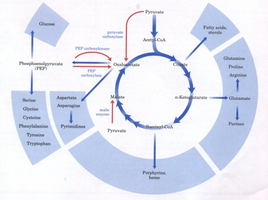
Other Anaplerotic Inputs: Amino acids (e.g., glutamine, aspartate) and odd-chain fatty acids can also replenish TCA intermediates.
Cataplerotic Reactions: Removal of intermediates for biosynthesis (e.g., amino acids, nucleotides, heme).
Energy Generation and ATP Yield
ATP Yield from the TCA Cycle
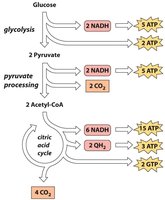
The TCA cycle is a major source of cellular energy. Each turn of the cycle generates NADH and FADH2, which donate electrons to the electron transport chain (ETC) for ATP synthesis.
ATP Equivalents:
1 NADH ≈ 2.5 ATP
1 QH2 (FADH2) ≈ 1.5 ATP
Overall Yield from Glucose Oxidation:
Electron Transport Chain (ETC) and Reactive Oxygen Species (ROS)
ETC and Proton Motive Force
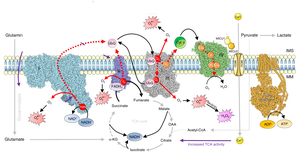
The ETC, located in the inner mitochondrial membrane, uses electrons from NADH and FADH2 to pump protons, creating a proton gradient (proton motive force) that drives ATP synthesis via ATP synthase.
ROS: Signaling and Damage
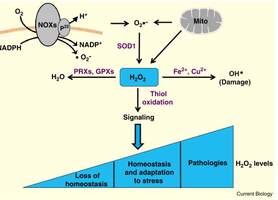
Reactive oxygen species (ROS) such as superoxide (O2-), hydrogen peroxide (H2O2), and hydroxyl radicals (OH*) are byproducts of mitochondrial respiration and NADPH oxidase activity. While low levels of ROS act as signaling molecules, excessive ROS cause oxidative damage to proteins, lipids, and DNA.
Control Mechanisms: Enzymes like superoxide dismutase (SOD) and catalase detoxify ROS.
Signaling: H2O2 can reversibly oxidize cysteine thiol groups, modulating signaling pathways.
Shuttle Mechanisms
Aspartate-Malate Shuttle
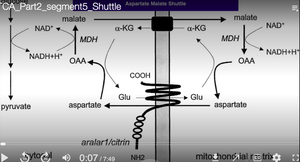
The aspartate-malate shuttle transfers reducing equivalents (NADH) from the cytosol into the mitochondria, enabling efficient ATP production from cytosolic NADH generated during glycolysis.
Key Steps: Malate is transported into the mitochondria, where it is oxidized to oxaloacetate, regenerating NADH inside the matrix. Aspartate and glutamate are exchanged to maintain balance.
Citrate Transport System
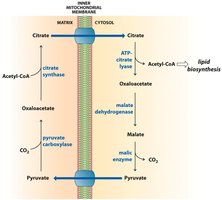
Citrate and pyruvate can cross the mitochondrial membrane via specific transport proteins. This system is crucial for exporting acetyl-CoA equivalents to the cytosol for fatty acid and cholesterol biosynthesis.
Citrate: Exported to the cytosol, where ATP-citrate lyase converts it to acetyl-CoA and oxaloacetate.
Pyruvate: Re-imported into mitochondria for continued TCA cycle activity.
End of Section Questions (Selected)
CO2 Generation in Glucose Oxidation
CO2 is produced during pyruvate processing (pyruvate dehydrogenase) and at two steps in the TCA cycle: isocitrate dehydrogenase and α-ketoglutarate dehydrogenase reactions.
Regulation of TCA Cycle Flux
Substrate Availability: Acetyl-CoA and oxaloacetate concentrations regulate entry into the cycle.
Product Inhibition: NADH and ATP inhibit key enzymes (e.g., citrate synthase, isocitrate dehydrogenase).
Feedback Inhibition: Succinyl-CoA and citrate inhibit earlier steps in the cycle.
Clinical and Pathological Connections
Hyperoxia: Decreases aconitase activity, leading to accumulation of citrate and other intermediates, and shifts metabolism toward glycolysis and the pentose phosphate pathway for NADPH production.
Fumarase Deficiency: Causes lactic acidosis due to impaired TCA cycle flux, leading to increased reliance on anaerobic glycolysis.
α-Ketoglutarate Dehydrogenase Deficiency: Results in elevated lactate/pyruvate ratio due to impaired NADH production and increased conversion of pyruvate to lactate.
Anaplerotic Reactions and Gluconeogenesis
Pyruvate Carboxylase: The most important anaplerotic enzyme, replenishing oxaloacetate for the TCA cycle and gluconeogenesis. Activated by acetyl-CoA, ensuring balance between energy production and biosynthesis.
Net Synthesis of Glucose from Various Compounds
Palmitate (16:0): No net glucose synthesis (acetyl-CoA cannot yield net oxaloacetate in mammals).
Pentadecanoate (15:0): Propionyl-CoA can be converted to succinyl-CoA, allowing some glucose synthesis.
Glyceraldehyde-3-phosphate: Yes, can be converted to glucose.
Leucine: No, yields only acetyl-CoA and acetoacetate.
Tryptophan: Alanine can be converted to pyruvate (gluconeogenic), acetoacetate is not.
Phenylalanine: Fumarate (gluconeogenic), acetoacetate is not.
Pathways in Phagosome-Resident Mycobacterium tuberculosis
Glyoxylate Shunt: Increases isocitrate lyase and malate synthase activity, allowing survival on fatty acids and bypassing CO2-generating steps of the TCA cycle.
Drug Targets: Inhibitors of isocitrate lyase, malate synthase, citrate synthase, and malate dehydrogenase are potential therapies.
