 Back
BackComprehensive Study Notes on Evolutionary Biology
Study Guide - Smart Notes
 Tailored notes based on your materials, expanded with key definitions, examples, and context.
History and Foundations of Evolutionary Theory
Taxonomy and Classification
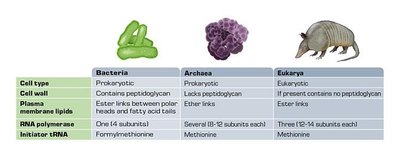
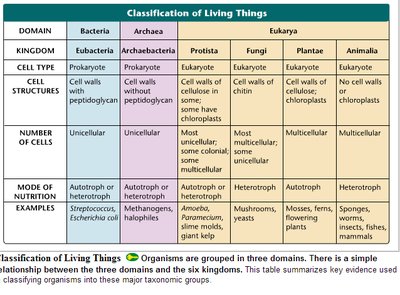
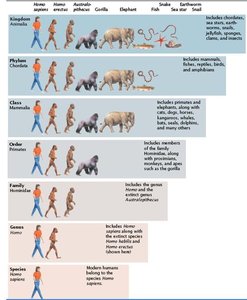
Taxonomy is the science of classifying organisms based on shared characteristics and evolutionary relationships. The modern system is hierarchical, with each level called a taxon. The main ranks are Domain, Kingdom, Phylum, Class, Order, Family, Genus, and Species. Binomial nomenclature assigns each species a two-part Latin name (Genus species), with the genus capitalized and the species lowercase and italicized.
Domain: Most inclusive, least specific (Bacteria, Archaea, Eukarya).
Species: Least inclusive, most specific; organisms that can interbreed and produce fertile offspring.
Modern classification is based on evolutionary relationships, not just morphology.
Major Contributors to Evolutionary Theory
Carolus Linnaeus: Developed the binomial nomenclature and early classification system.
Charles Lyell: Proposed uniformitarianism—geological processes occurring now also shaped the past, implying an ancient Earth.
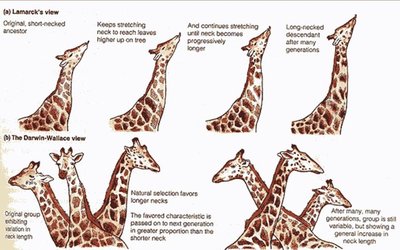
Jean Baptiste Lamarck: Suggested evolution via inheritance of acquired traits (now disproven).
Charles Darwin & Alfred Wallace: Proposed natural selection as the mechanism of evolution.
Mechanisms of Evolution
Natural Selection
Natural selection is the process by which organisms with advantageous traits survive and reproduce more successfully, passing those traits to the next generation. It requires genetic variability, overproduction of offspring, differential survival, and heritable adaptations.
Fitness: The ability to survive, find a mate, and reproduce; measured by reproductive success.
Fecundity: Actual reproductive rate of an organism or population.
Microevolution: Small-scale changes in allele frequencies within a population.
Macroevolution: Large-scale changes that can result in new species.
Patterns of Selection
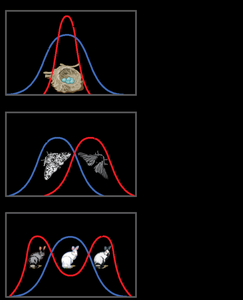
Stabilizing Selection: Favors intermediate phenotypes, reducing variation.
Directional Selection: Favors one extreme phenotype, shifting the population mean.
Disruptive Selection: Favors both extremes, increasing variation and possibly leading to speciation.
Artificial Selection
Humans select for desirable traits in other species, leading to rapid evolutionary changes (e.g., dog breeds, crop plants). This can also lead to unintended consequences, such as antibiotic resistance.
Population Genetics and Hardy-Weinberg Equilibrium
Population Genetics
Population genetics studies allele frequency changes in populations over time. Evolution is defined as a change in allele frequencies.
Population: Same species, same location, same time, capable of reproduction.
Hardy-Weinberg Equilibrium
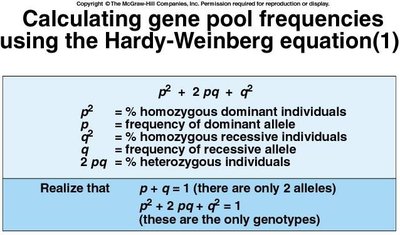
The Hardy-Weinberg principle states that allele and genotype frequencies remain constant in a non-evolving population if five conditions are met: no mutations, no gene flow, large population size, no selection, and random mating.
Equations:
(allele frequencies) (genotype frequencies)
: Frequency of homozygous dominant genotype
: Frequency of heterozygous genotype
: Frequency of homozygous recessive genotype
Genetic Drift
Genetic drift is random fluctuation in allele frequencies, especially in small populations. It can lead to reduced genetic variation and increased differences between populations.
Founder Effect: New population started by a few individuals, leading to reduced genetic diversity.
Bottleneck Effect: Population size drastically reduced, resulting in loss of genetic variation.
Speciation and Patterns of Evolution
Speciation
Speciation is the formation of new species, typically through reproductive isolation.
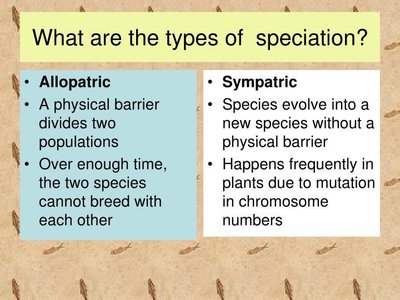
Allopatric Speciation: Physical barrier separates populations.
Sympatric Speciation: New species arise without physical separation, often via polyploidy in plants.
Parapatric Speciation: Populations are adjacent but experience different selective pressures.
Adaptive Radiation
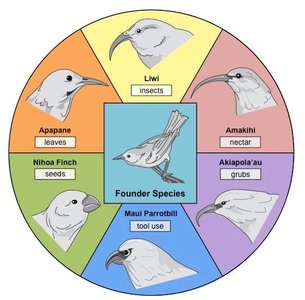
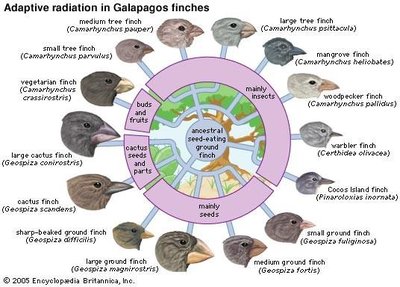
Adaptive radiation is the rapid diversification of a single ancestral species into many forms adapted to different environments or niches. This often follows mass extinctions or the colonization of new habitats.
Evidence for Evolution
Molecular, Morphological, and Fossil Evidence
Homologous structures: Similar anatomy due to shared ancestry (e.g., vertebrate limbs).
Analogous structures: Similar function, different ancestry (e.g., bird and insect wings).
Vestigial organs: Remnants of ancestral structures (e.g., human appendix).
Fossil record: Shows progression and transitions of life forms over time.
Comparative embryology: Similar developmental patterns indicate relatedness.
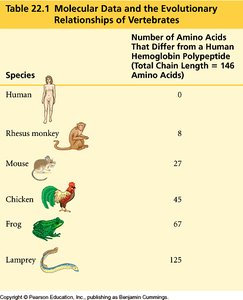
Comparative biochemistry: Similar DNA, RNA, and protein sequences indicate common ancestry.
Direct Observation and Biogeography
Direct observation: Evolution of antibiotic resistance in bacteria.
Biogeography: Geographic distribution of species supports evolutionary history (e.g., marsupials in Australia).
Models and Rates of Evolution
Gradualism vs. Punctuated Equilibrium
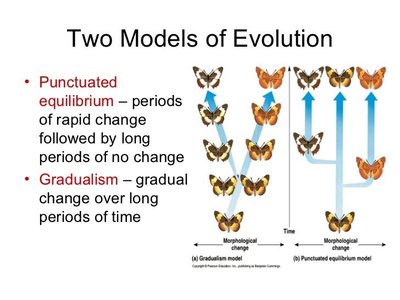
Gradualism: Evolution occurs slowly and steadily over long periods.
Punctuated Equilibrium: Long periods of stasis interrupted by brief periods of rapid change, often after mass extinctions.
Phylogenetic Relationships and Cladistics
Phylogenetic Trees and Cladograms
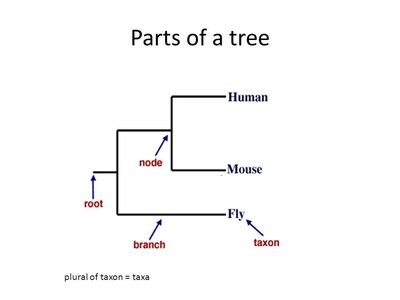
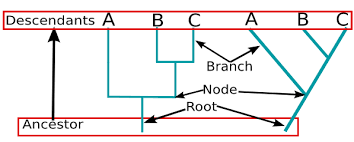
Phylogenetic trees and cladograms are diagrams that depict evolutionary relationships. Trees show evolutionary time and divergence, while cladograms focus on branching order and shared derived traits.
Clade: Group including an ancestor and all its descendants.
Root: Common ancestor of all taxa in the diagram.
Node: Point of divergence/speciation.
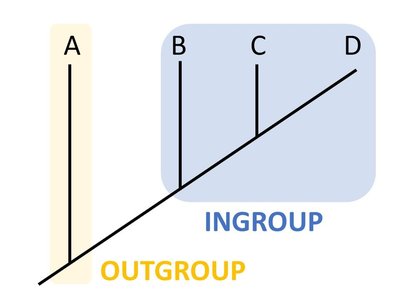
Outgroup: Reference group less closely related to the ingroup.
Ingroup: Group of interest in the analysis.
Constructing Cladograms
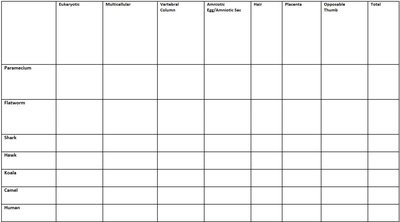
Cladograms can be constructed using morphological or molecular data. Shared derived traits (synapomorphies) are used to infer relationships. Molecular data (DNA, RNA, protein sequences) provide more precise information, especially for closely related species.
Origins of Life
Abiogenesis and Early Earth
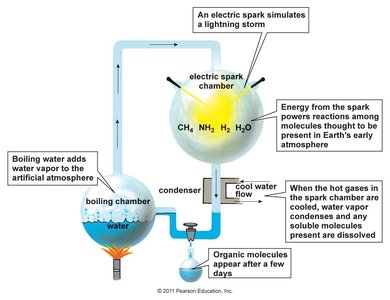
Life is thought to have originated from non-living matter through a series of chemical reactions in Earth's early environment. The Oparin-Haldane hypothesis and Miller-Urey experiment support the idea that organic molecules could form under prebiotic conditions.
RNA World Hypothesis: RNA was likely the first genetic material due to its ability to store information and catalyze reactions.
Miller-Urey Experiment: Demonstrated the abiotic synthesis of amino acids from inorganic precursors under simulated early Earth conditions.
Extinction and Biodiversity
Mass Extinctions and Their Impact
Mass extinctions are periods when a significant proportion of Earth's species die out rapidly. These events are often followed by adaptive radiations, where surviving species diversify to fill new ecological niches. Biodiversity is shaped by the balance between speciation and extinction rates.
Genetic Variation and Population Resilience
Importance of Genetic Diversity
Genetic diversity within populations increases resilience to environmental changes and disease. Low diversity can lead to vulnerability and extinction, as seen in the Irish potato famine and cheetah populations. High diversity allows for rapid adaptation, such as the evolution of antibiotic resistance in bacteria.
