 Back
BackDNA Replication and Polymerase Chain Reaction (PCR): Mechanisms, Enzymes, and Applications
Study Guide - Smart Notes
 Tailored notes based on your materials, expanded with key definitions, examples, and context.
DNA Replication
Introduction and Importance
DNA replication is a fundamental process in all living organisms, ensuring the accurate transmission of genetic information from one generation to the next. Understanding DNA replication is crucial for biochemistry, medicine, and biotechnology, as it underpins cell division, genetic inheritance, and numerous laboratory techniques such as PCR.
Essential for cell division: Accurate DNA replication is required for growth, development, and tissue repair.
Target for drugs: Many antibiotics and cancer drugs inhibit DNA replication.
Basis for molecular biology techniques: PCR and recombinant DNA technology rely on the principles of DNA replication.
Base Complementarity and Chargaff's Rule
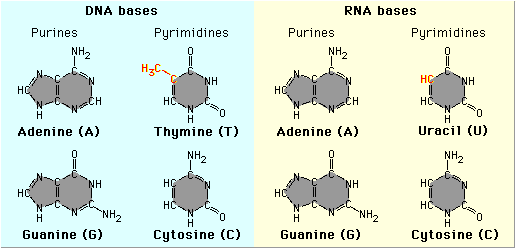
DNA structure is stabilized by specific base pairing between purines and pyrimidines, following Chargaff's rule: the amount of adenine equals thymine, and the amount of guanine equals cytosine.
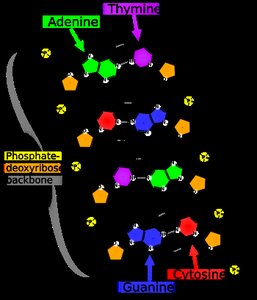
Base pairs: Adenine (A) pairs with Thymine (T); Guanine (G) pairs with Cytosine (C).
Hydrogen bonds: A-T pairs form two hydrogen bonds; G-C pairs form three hydrogen bonds, contributing to DNA stability.
DNA in Eukaryotes
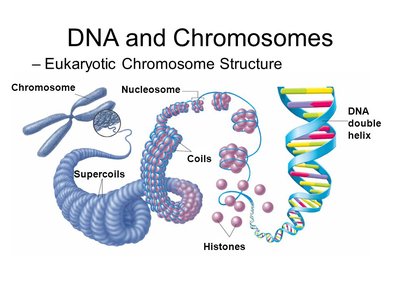
Eukaryotic DNA is organized into chromosomes, which are further compacted into nucleosomes and higher-order structures. This organization is essential for efficient packaging and regulation of genetic material.
Chromosomes: Linear DNA molecules associated with histone proteins.
Nucleosomes: DNA wrapped around histone octamers.
Supercoiling: Further compaction of DNA for efficient storage within the nucleus.
Models in Biological Systems
Biochemists often use simple model organisms, such as bacteria (prokaryotes), to study DNA replication. Insights gained from these models are extrapolated to more complex eukaryotic systems.
Prokaryotes: Simpler, single circular chromosome, one origin of replication.
Eukaryotes: Multiple linear chromosomes, multiple origins of replication.
Mechanism of DNA Replication
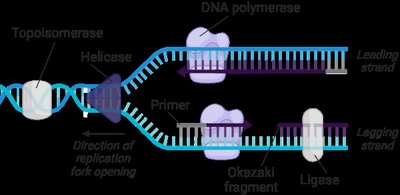
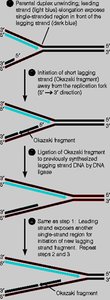
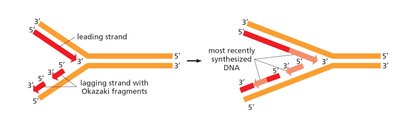
DNA replication is semiconservative: each daughter DNA molecule consists of one parental and one newly synthesized strand. Replication proceeds at a structure called the replication fork.
Leading strand: Synthesized continuously in the 5' to 3' direction.
Lagging strand: Synthesized discontinuously as Okazaki fragments, later joined by DNA ligase.
Enzymes and Proteins of DNA Replication
Multiple enzymes and proteins coordinate the accurate and efficient replication of DNA:
Helicase: Unwinds the double helix by breaking hydrogen bonds between bases.
Single-strand DNA binding proteins (SSBs): Stabilize unwound DNA and prevent reannealing.
Topoisomerase: Relieves supercoiling ahead of the replication fork by making temporary nicks in DNA.
Primase: Synthesizes short RNA primers to provide a free 3'-OH group for DNA polymerase.
DNA polymerase: Synthesizes new DNA by adding nucleotides to the 3'-OH end of the primer.
Sliding clamp: Holds DNA polymerase in place during strand elongation.
RNase H: Removes RNA primers after DNA synthesis.
DNA ligase: Joins Okazaki fragments by forming phosphodiester bonds.
Initiation of DNA Replication
Replication begins at specific DNA sequences called origins of replication (Ori). The process involves unwinding the DNA and preparing it for synthesis.
Prokaryotes: Typically one origin of replication.
Eukaryotes: Multiple origins of replication per chromosome.
Helicase: Unwinds DNA at the origin, creating a replication fork.
SSBs: Bind to single-stranded DNA to prevent reannealing.
Topoisomerase: Relieves torsional strain ahead of the fork.
Elongation of DNA Replication
During elongation, new DNA strands are synthesized by DNA polymerases, using the parental strands as templates.
Primase: Lays down RNA primers.
DNA polymerase: Extends the primers, synthesizing new DNA in the 5' to 3' direction.
Leading strand: Synthesized continuously.
Lagging strand: Synthesized discontinuously as Okazaki fragments (1000-2000 nucleotides in prokaryotes, 100-200 in eukaryotes).
Prokaryotes: DNA polymerase III (main synthesis), DNA polymerase I (removes primers).
Eukaryotes: DNA polymerase α (initiates), δ and ε (main synthesis).
Termination of DNA Replication
Termination involves the removal of RNA primers, replacement with DNA, and joining of DNA fragments.
RNA primer removal: DNA polymerase I (prokaryotes), RNase H and DNA polymerase δ (eukaryotes).
DNA ligase: Seals nicks between Okazaki fragments.
Telomerase: Extends telomeres in eukaryotes to prevent loss of genetic material.
Key Points about DNA Replication
Replication is semiconservative: each new DNA molecule contains one old and one new strand.
Replication is orderly, sequential, and highly accurate.
DNA polymerase can only add nucleotides to a free 3'-OH group.
Replication always proceeds in the 5' to 3' direction.
Polymerase Activity and Proofreading
Polymerase Activity
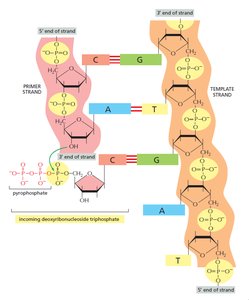
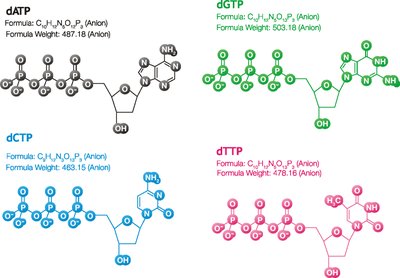
DNA polymerases catalyze the addition of deoxynucleotide triphosphates (dNTPs) to the growing DNA chain. The reaction forms a phosphodiester bond and releases pyrophosphate (PPi), which is hydrolyzed to drive the reaction forward.
Reaction:
Directionality: DNA synthesis occurs in the 5' to 3' direction.
Substrate specificity: Correct base pairing is enforced by the geometry of the active site and hydrogen bonding.
Proofreading and Error Correction
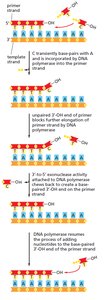
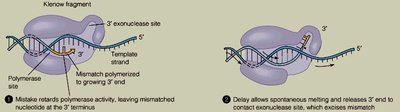
DNA polymerases possess 3' to 5' exonuclease activity, allowing them to remove incorrectly paired nucleotides and maintain high fidelity during replication.
Proofreading: Incorrectly incorporated nucleotides are excised before polymerization continues.
Prevents mutations: Reduces the error rate and maintains genetic stability.
Polymerase Chain Reaction (PCR)
Principle and Importance
The Polymerase Chain Reaction (PCR) is a revolutionary technique that allows for the exponential amplification of specific DNA sequences in vitro. Developed by Kary Mullis in the 1980s, PCR is now a cornerstone of molecular biology, genetics, and diagnostics.
Amplifies trace amounts of DNA from various sources (crime scenes, ancient samples, clinical specimens).
Enables cloning, sequencing, and genetic engineering.
PCR Steps
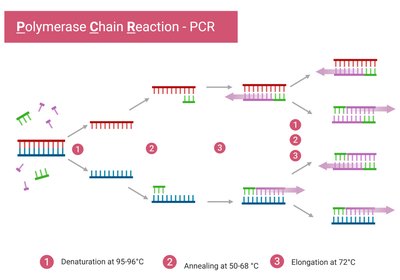
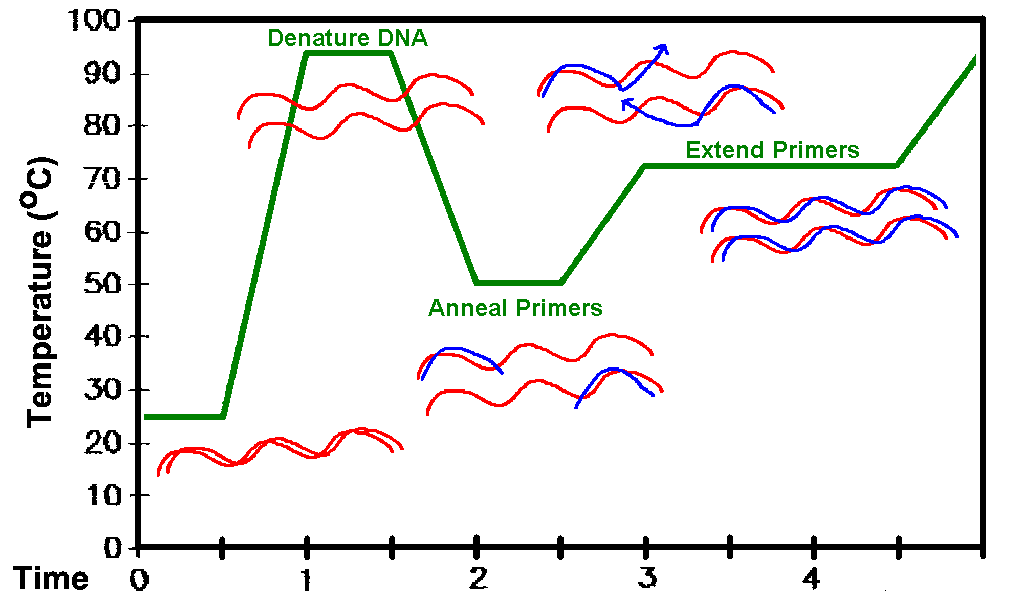
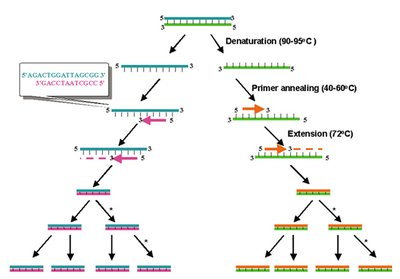
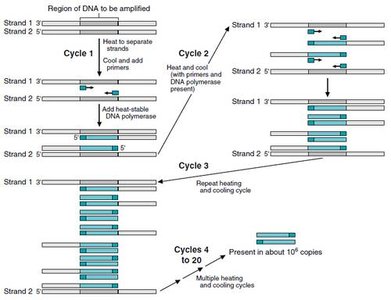
PCR consists of repeated cycles of three main steps:
Denaturation: Double-stranded DNA is separated into single strands by heating to 95°C.
Annealing: Temperature is lowered (45–60°C) to allow primers to bind to complementary sequences on the template DNA.
Extension: DNA polymerase synthesizes new DNA strands at 72°C, extending from the primers.
These steps are repeated for 30–35 cycles, resulting in exponential amplification of the target DNA sequence.
PCR Reagents
Template DNA: The DNA sequence to be amplified.
Primers: Short, single-stranded DNA sequences complementary to the target region's flanking ends.
dNTPs: Deoxynucleotide triphosphates (dATP, dTTP, dGTP, dCTP).
DNA polymerase: Thermostable enzyme (e.g., Taq polymerase from Thermus aquaticus).
Buffer: Maintains optimal pH and ionic strength.
Monovalent and divalent cations: (e.g., KCl, Mg2+) required for enzyme activity.
Applications of PCR
Forensic analysis (crime scene DNA amplification)
Cloning and gene expression studies
Detection of infectious agents (bacteria, viruses) in clinical samples
Identification of food and water pathogens
Analysis of ancient DNA (e.g., from fossils)
Rapid detection of biological warfare agents
Summary Table: Key Enzymes and Functions in DNA Replication
Enzyme/Protein | Function |
|---|---|
Helicase | Unwinds double-stranded DNA |
SSB proteins | Stabilize single-stranded DNA |
Topoisomerase | Relieves supercoiling |
Primase | Synthesizes RNA primers |
DNA polymerase | Synthesizes new DNA strands |
Sliding clamp | Holds DNA polymerase on DNA |
RNase H | Removes RNA primers |
DNA ligase | Joins Okazaki fragments |
Telomerase (eukaryotes) | Extends telomeres |
Key Equations
DNA synthesis reaction:
Hydrolysis of pyrophosphate:
