 Back
Enzyme Kinetics, Inhibition, and Regulation: Biochemistry Study Notes
Study Guide - Smart Notes
 Tailored notes based on your materials, expanded with key definitions, examples, and context.
Enzyme Kinetics and Catalysis
Introduction to Enzymes and Catalysis
Enzymes are biological catalysts, typically proteins, that accelerate chemical reactions in cells. They are essential for life, enabling reactions to proceed rapidly and in the desired direction. Enzymes solve two major cellular problems: speed and directionality of reactions.
Catalysts lower the activation energy required for reactions, increasing reaction rates without being consumed.
Enzyme specificity ensures that only particular substrates are converted to products.
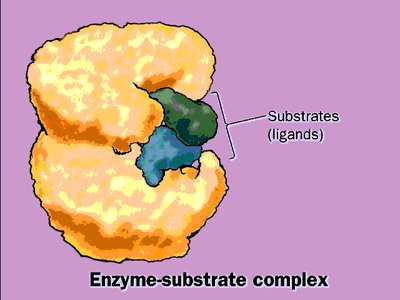
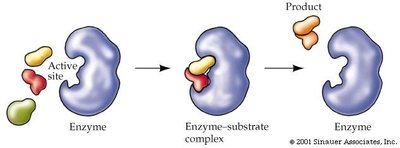
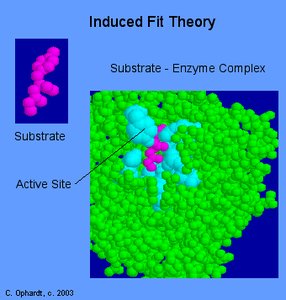
Active site is the region of the enzyme where substrate binding and catalysis occur.
Enzyme-substrate complex (ES) forms when the substrate binds to the enzyme's active site.
Transition state is a high-energy intermediate during the reaction, stabilized by the enzyme.
Specificity of Enzymes
Unlike inorganic catalysts, enzymes are highly specific for their substrates. This specificity is due to the precise interaction between the substrate and the enzyme's active site.
Enzymes recognize the shape, charge, and functional groups of substrates.
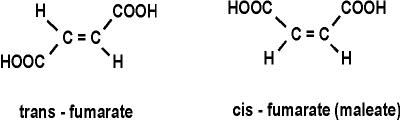
Example: Succinic dehydrogenase only catalyzes the conversion of succinic acid to fumaric acid, not similar molecules.
Enzyme Kinetics
Michaelis-Menten Kinetics
Enzyme kinetics studies the rate at which enzymes convert substrates to products. The Michaelis-Menten model describes how reaction velocity depends on substrate concentration.
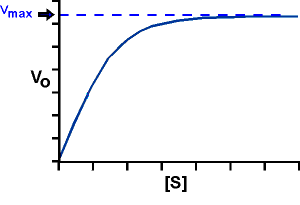
Initial velocity (V0) is measured at the start of the reaction.
At low substrate concentration, velocity increases linearly with [S].
At high substrate concentration, velocity approaches a maximum (Vmax).
Michaelis-Menten Equation
The Michaelis-Menten equation mathematically models enzyme kinetics:
Vmax: Maximum velocity, achieved when the enzyme is saturated with substrate.
Km: Michaelis constant, substrate concentration at which V0 is half of Vmax.
Turnover Number (kcat)
The turnover number, or kcat, is the maximum number of substrate molecules converted to product per enzyme molecule per second.
High kcat indicates a highly efficient enzyme.
Interpretation of Km
Km reflects the affinity of the enzyme for its substrate. Lower Km means higher affinity.
If , then (dissociation constant).
Enzyme Inhibition
Competitive Inhibition
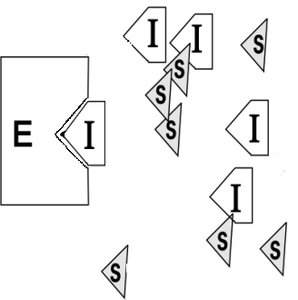
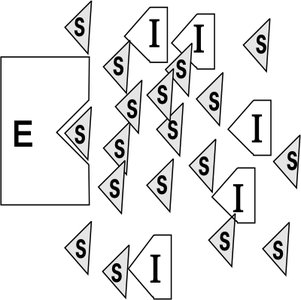
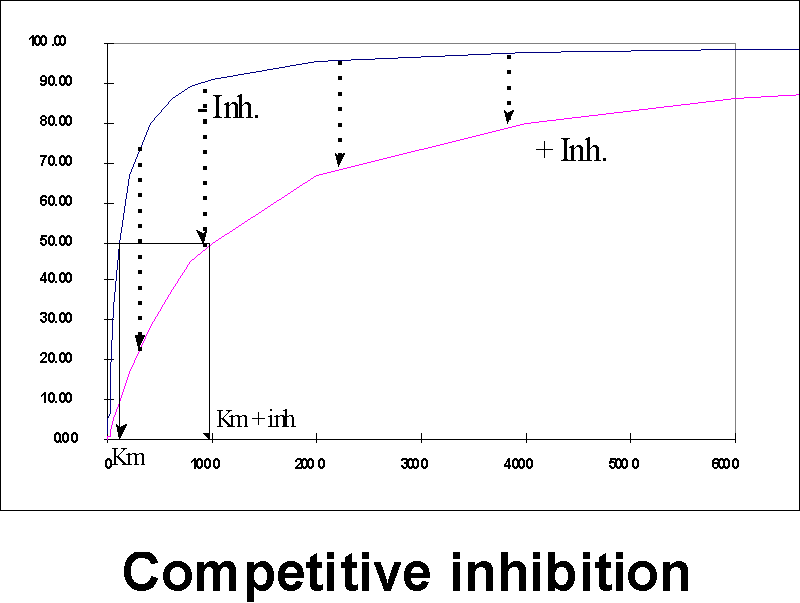
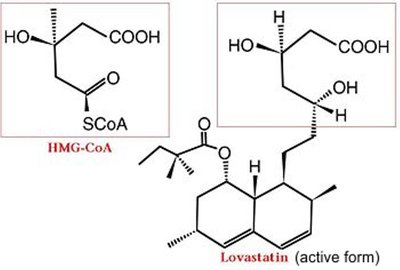
Competitive inhibitors resemble the substrate and bind to the active site, preventing substrate binding. Their effect can be overcome by increasing substrate concentration.
Apparent Km increases, Vmax remains unchanged.
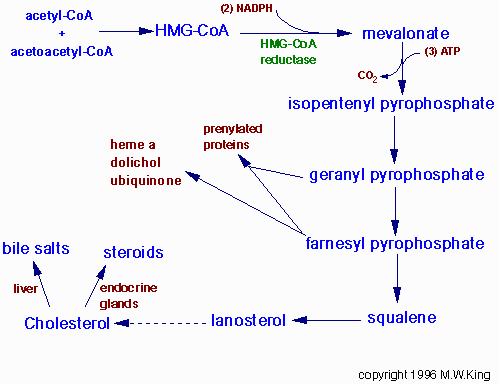
Many drugs act as competitive inhibitors (e.g., statins inhibit HMG-CoA reductase in cholesterol biosynthesis).
Non-Competitive Inhibition
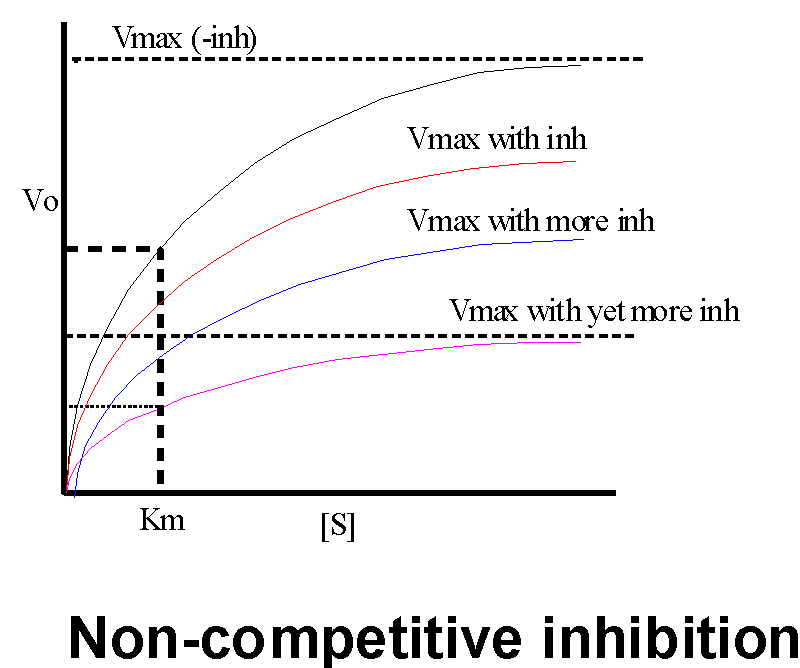
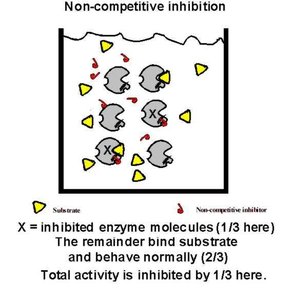
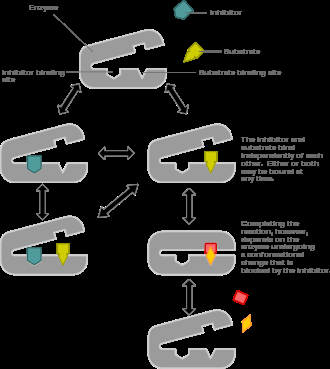
Non-competitive inhibitors bind to a site other than the active site, altering enzyme activity regardless of substrate concentration.
Vmax decreases, Km remains unchanged.
Example: Mercury ions binding to cysteine residues in the enzyme.
Allosteric Regulation and Feedback Inhibition
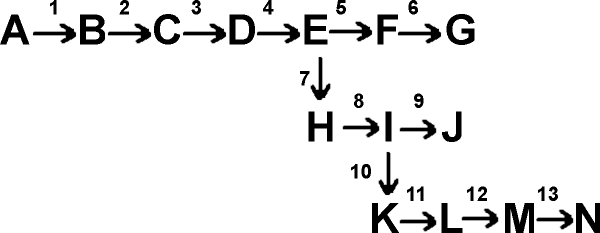
Allosteric inhibitors bind to sites other than the active site, causing conformational changes that affect enzyme activity. Feedback inhibition is a common regulatory mechanism in metabolic pathways.
Allosteric inhibitors may affect Km, Vmax, or both.
Feedback inhibition regulates pathway flux, often by inhibiting the first committed step.
Example: Isoleucine inhibits threonine deaminase in amino acid biosynthesis.
Metabolic Pathways and Regulation
Directionality and Free Energy
Metabolic pathways consist of a series of enzyme-catalyzed reactions. The direction of these reactions is governed by changes in free energy (ΔG).
Exergonic reactions (ΔG < 0) proceed spontaneously.
Endergonic reactions (ΔG > 0) require energy input.
Cells use enzymes and metabolic regulation to ensure reactions proceed in the desired direction.
Summary Table: Types of Enzyme Inhibition
Type | Binding Site | Effect on Vmax | Effect on Km | Can be Overcome by [S]? |
|---|---|---|---|---|
Competitive | Active site | Unchanged | Increases | Yes |
Non-competitive | Other site | Decreases | Unchanged | No |
Allosteric | Allosteric site | Variable | Variable | No |
Key Equations
Michaelis-Menten:
Turnover number:
Dissociation constant:
Conclusion
Understanding enzyme kinetics, inhibition, and regulation is fundamental to biochemistry. These principles explain how cells control reaction rates and metabolic pathways, ensuring efficient and regulated biochemical processes.
