 Back
BackEnzymes: Structure, Function, and Mechanism (with Lysozyme Case Study)
Study Guide - Smart Notes
 Tailored notes based on your materials, expanded with key definitions, examples, and context.
Enzymes: Biological Catalysts
General Overview of Enzymes
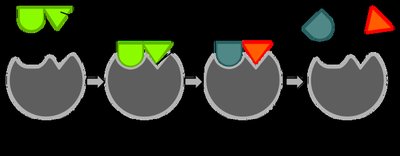
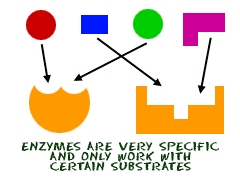
Enzymes are specialized proteins that act as biological catalysts, increasing the rate of chemical reactions without being consumed in the process. Nearly all metabolic reactions in living cells require enzymes to proceed at rates sufficient for life. Enzymes are highly specific, functioning under mild physiological conditions and exhibiting remarkable selectivity for their substrates.
Catalyst: A substance that increases the rate of a chemical reaction without undergoing permanent change.
Enzymology: The study of enzymes, of which over 3,000 have been characterized.
Applications: Enzymes are used in lactose-free milk production, meat tenderization, stain removal in detergents, and as diagnostic markers in medicine.
Key Properties of Enzymes
Specificity: Enzymes are highly specific due to their unique three-dimensional structures, allowing them to bind only particular substrates.
Optimal Conditions: Enzymes function best at specific temperatures and pH values; deviations can lead to loss of activity.
Regulation: Enzyme activity can be modulated by inhibitors (e.g., drugs, poisons) and activators.
Not Consumed: Enzymes emerge unchanged after catalyzing a reaction.
Free Energy and Enzyme Catalysis
Gibbs Free Energy (ΔG)
The spontaneity of a biochemical reaction is determined by the change in Gibbs free energy (ΔG). Enzymes affect the rate of reaction but do not alter the equilibrium or the overall ΔG.
ΔG < 0: Reaction proceeds spontaneously (exergonic).
ΔG > 0: Reaction is non-spontaneous (endergonic).
ΔG = 0: Reaction is at equilibrium.
Every system tends toward a minimum of free energy, making negative ΔG reactions favorable.
Activation Energy (ΔG‡)
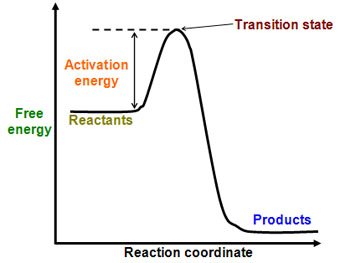
Activation energy is the minimum energy required for reactants to reach the transition state and form products. Enzymes accelerate reactions by lowering the activation energy barrier, thereby increasing the reaction rate without affecting the overall free energy change.
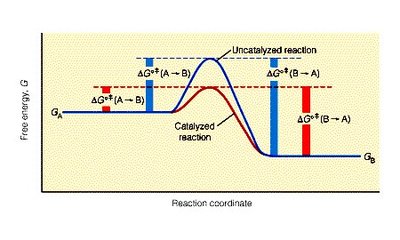
Enzyme Rate Enhancement: Enzymes can increase reaction rates by factors of up to 1010 or more.
Enzyme Active Site and Mechanism
Active Site Structure and Function
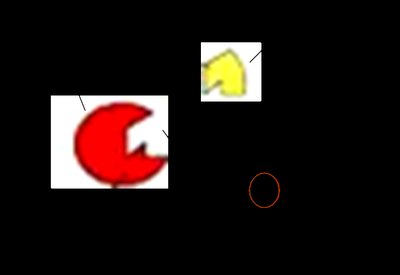
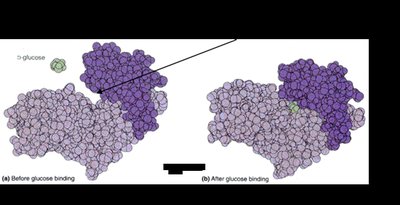
The active site is the region of the enzyme where substrate binding and catalysis occur. Substrate specificity arises from the precise fit between the enzyme's active site and its substrate, often described by the induced fit model.
Induced Fit Model: Initial weak interactions between enzyme and substrate induce conformational changes that enhance binding and catalysis.
Mechanisms of Catalysis:
Bond Strain: Enzyme binding strains substrate bonds, facilitating transition state formation.
Proximity and Orientation: Enzymes bring reactive groups into close proximity and proper orientation.
Acid-Base Catalysis: Amino acid side chains act as proton donors or acceptors.
Covalent Catalysis: Temporary covalent bonds form between enzyme and substrate.
Cofactors and Holoenzymes
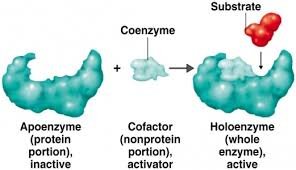
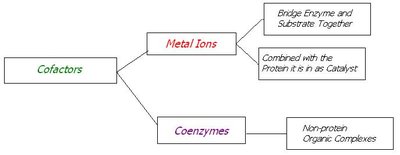
Some enzymes require non-protein components called cofactors for activity. The complete, active enzyme with its cofactor is termed a holoenzyme, while the protein portion alone is the apoenzyme.
Cofactor: Inorganic ion or organic molecule (coenzyme) required for enzyme activity.
Prosthetic Group: A cofactor covalently attached to the enzyme.
Holoenzyme = Apoenzyme + Cofactor
Enzyme Classification
Enzyme Commission (EC) Number System
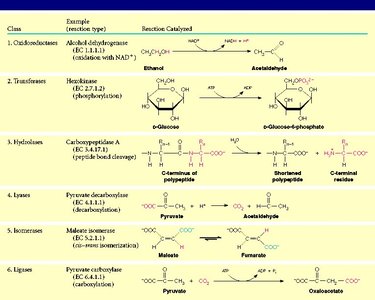
Enzymes are classified by the International Union of Biochemistry and Molecular Biology (IUBMB) using a four-digit EC number, reflecting the type of reaction catalyzed, the substrate, and other characteristics.
1st digit: Main class (e.g., oxidoreductases, transferases, hydrolases, lyases, isomerases, ligases)
2nd digit: Subclass (type of bond acted upon)
3rd digit: Sub-subclass (group acted upon, cofactor required, etc.)
4th digit: Serial number
Case Study: Lysozyme
Structure and Function
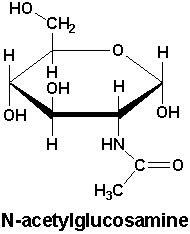
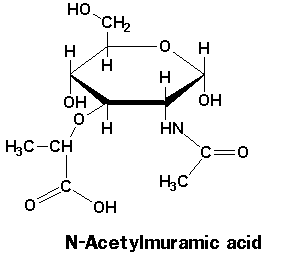
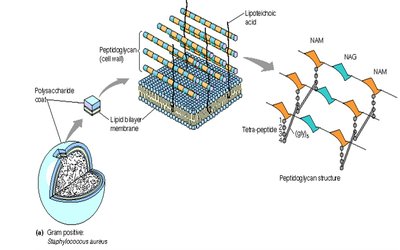
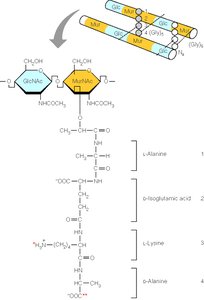
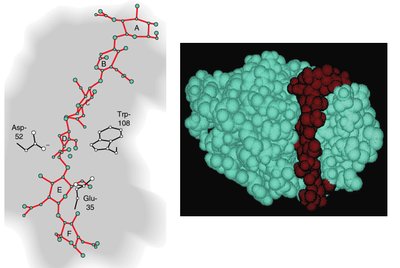
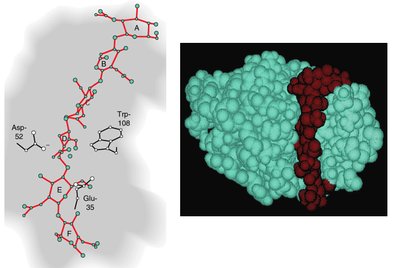
Lysozyme is a well-studied enzyme found in egg whites and human secretions such as tears and saliva. It catalyzes the hydrolysis of β(1-4) glycosidic bonds between N-acetylmuramic acid (NAM) and N-acetylglucosamine (NAG) in bacterial peptidoglycan, acting as a natural antibiotic by breaking down bacterial cell walls.
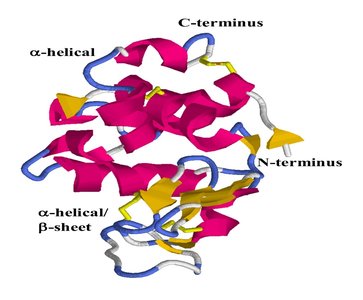
Structure: 129 amino acids, ellipsoid shape, two domains (α-helical and β-sheet regions).
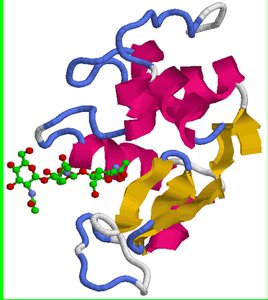
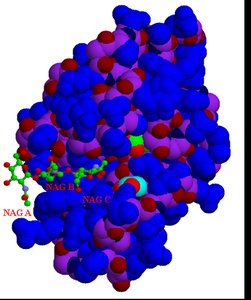
Mechanism: Binds six sugar residues in a cleft between domains; catalysis involves acid-base chemistry and bond distortion.
Mechanism of Action (Phillips Model)
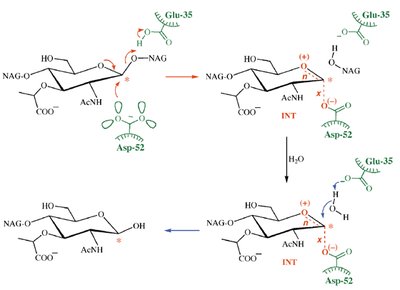
The Phillips mechanism describes lysozyme catalysis as follows:
Glu35 donates a proton to the glycosidic oxygen between the D and E rings, generating a carbonium ion at C1 of the D ring.
The E and F residues diffuse away, leaving the carbonium ion intermediate.
The intermediate reacts with water, and Glu35 is reprotonated, completing the catalytic cycle.
Key Features: Acid-base catalysis, carbonium ion stabilization by Asp52, and substrate distortion to lower activation energy.
Summary
Enzymes are highly specific biological catalysts essential for life.
They lower activation energy, increasing reaction rates without altering equilibrium.
Active sites, cofactors, and enzyme classification are central to understanding enzyme function.
Lysozyme serves as a model for enzyme structure and catalytic mechanism, illustrating key principles of enzymology.
