 Back
BackLEC 19 Glycolysis, Fermentation, and Gluconeogenesis: Pathways and Regulation
Study Guide - Smart Notes
 Tailored notes based on your materials, expanded with key definitions, examples, and context.
Glycolysis and Its Regulation
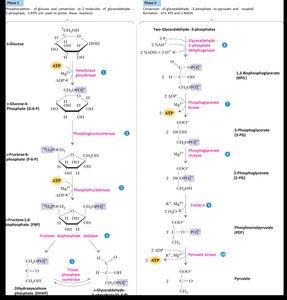
Overview of Glycolysis
Glycolysis is a central metabolic pathway that converts glucose into pyruvate, generating ATP and NADH. It occurs in the cytosol and is the primary pathway for energy production under both aerobic and anaerobic conditions.
Phase 1 (Preparatory Phase): Glucose is phosphorylated and split into two three-carbon sugars, consuming ATP.
Phase 2 (Payoff Phase): The three-carbon sugars are oxidized, producing ATP and NADH.
Key Enzymes: Hexokinase, phosphofructokinase, and pyruvate kinase catalyze the major regulatory steps.
Net Reaction:
Thermodynamics and Regulation of Glycolysis
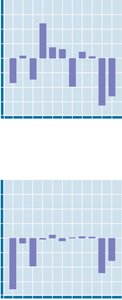
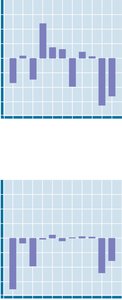
The free energy changes of glycolytic reactions determine their reversibility and regulatory importance. Most reactions operate near equilibrium, but three steps are highly exergonic and serve as regulatory points.
Key Regulatory Steps: Hexokinase (step 1), phosphofructokinase (step 3), and pyruvate kinase (step 10) have large negative values and are tightly regulated.
Regulation: These enzymes are regulated by allosteric effectors and energy status (ATP/AMP ratio).
Fates of Pyruvate and NADH
Aerobic and Anaerobic Pathways
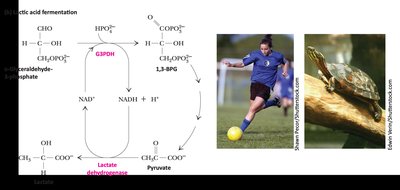
The fate of pyruvate and NADH depends on oxygen availability and organism type. Under aerobic conditions, pyruvate enters the mitochondria and is converted to acetyl-CoA for the TCA cycle. Under anaerobic conditions, pyruvate is reduced to lactate or ethanol to regenerate NAD+.
Aerobic Respiration: Pyruvate is oxidized to acetyl-CoA, entering the TCA cycle and oxidative phosphorylation.
Lactic Acid Fermentation: In muscle and some bacteria, pyruvate is reduced to lactate by lactate dehydrogenase, regenerating NAD+.
Alcoholic Fermentation: In yeast, pyruvate is converted to ethanol and CO2, also regenerating NAD+.
Gluconeogenesis: Synthesis of New Glucose
Overview and Importance
Gluconeogenesis is the metabolic pathway that generates glucose from non-carbohydrate precursors such as pyruvate, lactate, amino acids, and glycerol. It is essential for maintaining blood glucose levels during fasting or intense exercise, primarily occurring in the liver and kidneys.
Major Precursors: Pyruvate, lactate, most amino acids (except leucine and lysine), glycerol, and citric acid cycle intermediates.
Energetics: Gluconeogenesis is not a simple reversal of glycolysis due to the large negative of glycolysis; it uses alternate enzymes to bypass irreversible steps.
Key Steps and Enzymes in Gluconeogenesis
Three irreversible steps of glycolysis are bypassed by four unique gluconeogenic enzymes, allowing for regulation and thermodynamic feasibility.
Pyruvate Carboxylase and PEP Carboxykinase: Convert pyruvate to phosphoenolpyruvate (PEP) via oxaloacetate.
Fructose-1,6-bisphosphatase: Converts fructose-1,6-bisphosphate to fructose-6-phosphate.
Glucose-6-phosphatase: Converts glucose-6-phosphate to glucose (final step, occurs in the ER).
Pyruvate Carboxylase: Biotin-Dependent Carboxylation
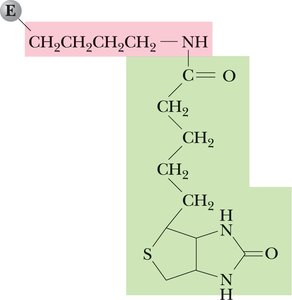
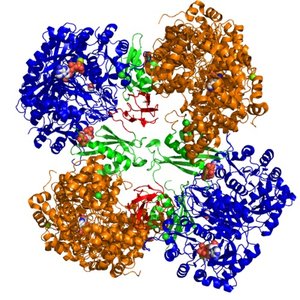
Pyruvate carboxylase catalyzes the ATP-dependent carboxylation of pyruvate to oxaloacetate, requiring biotin as a coenzyme. This reaction occurs in the mitochondrial matrix and is regulated by acetyl-CoA.
Reaction:
Biotin: Acts as a carrier of activated CO2 and is covalently linked to a lysine residue in the enzyme.
Regulation: Activated by acetyl-CoA (signals high energy status).

Compartmentalization and Transport
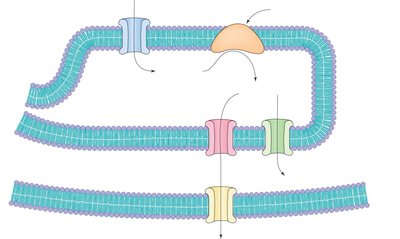
Oxaloacetate produced in the mitochondria cannot cross the mitochondrial membrane directly. It is reduced to malate, transported to the cytosol, and reoxidized to oxaloacetate for gluconeogenesis to proceed.
Malate Shuttle: Ensures separation of glycolysis and gluconeogenesis and provides reducing equivalents (NADH) to the cytosol.
PEP Carboxykinase and Other Bypass Reactions
PEP carboxykinase catalyzes the decarboxylation and phosphorylation of oxaloacetate to PEP, using GTP. Other bypass reactions include hydrolysis of phosphate esters by fructose-1,6-bisphosphatase and glucose-6-phosphatase.
PEP Carboxykinase Reaction:
Fructose-1,6-bisphosphatase: Hydrolyzes fructose-1,6-bisphosphate to fructose-6-phosphate.
Glucose-6-phosphatase: Hydrolyzes glucose-6-phosphate to glucose; absent in muscle and brain.



Energetics of Gluconeogenesis
Gluconeogenesis is energetically costly, requiring the hydrolysis of six nucleoside triphosphates (4 ATP + 2 GTP) per glucose synthesized from two pyruvate molecules. This investment makes the pathway exergonic and prevents futile cycling with glycolysis.
Reciprocal Regulation of Glycolysis and Gluconeogenesis
Allosteric and Hormonal Regulation
Glycolysis and gluconeogenesis are reciprocally regulated to prevent futile cycles. Key regulatory molecules include ATP, AMP, citrate, and fructose-2,6-bisphosphate. Hormones such as glucagon and insulin modulate enzyme activities via phosphorylation and allosteric effectors.
High ATP/Acetyl-CoA: Activates gluconeogenesis, inhibits glycolysis.
High AMP/Fructose-2,6-bisphosphate: Activates glycolysis, inhibits gluconeogenesis.
Hormonal Control: Glucagon stimulates gluconeogenesis by activating fructose-2,6-bisphosphatase and inhibiting phosphofructokinase-2.
The Cori Cycle: Recycling of Lactate
Lactate Metabolism and the Cori Cycle
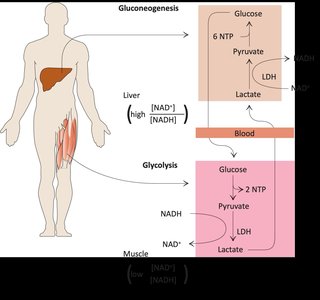
During intense exercise, lactate produced in muscles is transported to the liver, where it is converted back to glucose via gluconeogenesis. This glucose can then be returned to the muscles, completing the Cori cycle.
Purpose: Prevents lactic acidosis in muscles and provides a mechanism for continued ATP production under anaerobic conditions.
Net Reaction: Transfers the metabolic burden of gluconeogenesis to the liver, allowing muscles to focus on ATP production.
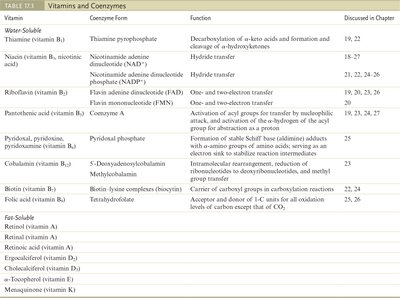
Summary Table: Vitamins and Coenzymes in Carbohydrate Metabolism
Vitamin | Coenzyme Form | Function |
|---|---|---|
Thiamine (B1) | Thiamine pyrophosphate | Decarboxylation of α-keto acids |
Niacin (B3) | NAD+, NADP+ | Hydride transfer |
Riboflavin (B2) | FAD, FMN | One- and two-electron transfer |
Pantothenic acid (B5) | Coenzyme A | Acyl group transfer |
Biotin | Biotin-lysine complex | Carboxyl group transfer (e.g., pyruvate carboxylase) |
Additional info: The above notes integrate key concepts from glycolysis, fermentation, gluconeogenesis, and their regulation, providing a comprehensive overview suitable for biochemistry students preparing for exams.
