 Back
Introduction to Biochemistry: History, Molecules, and Macromolecular Structure
Study Guide - Smart Notes
 Tailored notes based on your materials, expanded with key definitions, examples, and context.
Introduction to Biochemistry
What is Biochemistry?
Biochemistry is the scientific discipline that applies the principles and language of chemistry to explain biological phenomena. It seeks to understand the molecular basis of life by studying the chemical compounds and reactions that occur in living organisms. The field has revealed that the same fundamental chemical compounds and metabolic processes are shared across all forms of life, from bacteria to humans.
Key Point: The basic principles of biochemistry are universal among living organisms.
Application: Discoveries in one organism (e.g., E. coli) often apply to others, including humans.
Historical Foundations of Biochemistry
Early Milestones
Friedrich Wöhler's Synthesis of Urea (1828): Demonstrated that organic compounds found in living organisms could be synthesized from inorganic substances, refuting the idea of a 'vital force' unique to life.
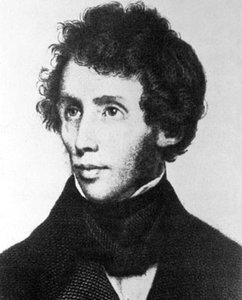
Louis Pasteur: Made significant contributions to microbiology and biochemistry, including the discovery of stereoisomers and the promotion of germ theory.
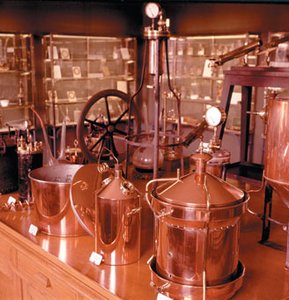
Eduard Buchner (1897): Showed that cell-free extracts of yeast could catalyze fermentation, proving that enzymes (biological catalysts) could function outside living cells.
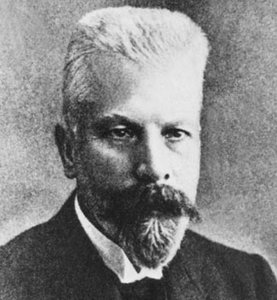
Emil Fischer: Proposed the lock-and-key model for enzyme-substrate interaction, emphasizing the specificity of enzymes.
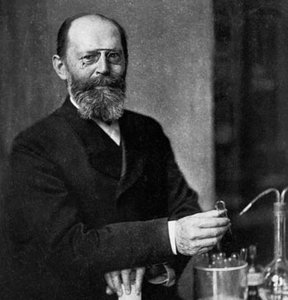
Breakthroughs in Macromolecular Biology
Proteins: The three-dimensional structures of proteins were first solved in the 1950s and 1960s, revealing the relationship between structure and function.
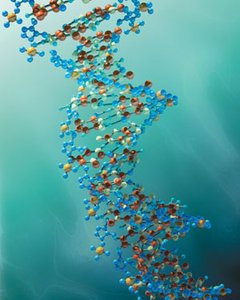
Nucleic Acids: The role of DNA as the genetic material was established in the 1940s, and its double-helical structure was elucidated by Watson and Crick in 1953. This led to the concept of the Central Dogma: information flows from DNA to RNA to protein.
Chemical Elements and Molecules of Life
Major Elements
Six nonmetallic elements—carbon, hydrogen, nitrogen, oxygen, phosphorus, and sulfur (CHNOPS)—make up more than 97% of the mass of most organisms. These elements form stable covalent bonds and are essential for the structure and function of biomolecules.
Key Point: Living things obey the standard laws of physics and chemistry; no special 'vital force' is required.
Types of Organic Compounds and Functional Groups
Biochemistry frequently involves the study of organic compounds and their functional groups, such as carboxyl, amino, hydroxyl, and phosphate groups. These groups determine the chemical reactivity and interactions of biomolecules.
Macromolecules: Structure and Function
Proteins
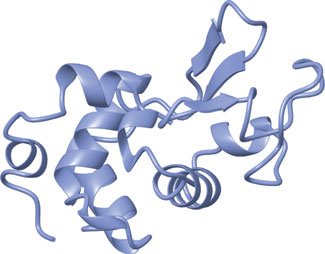
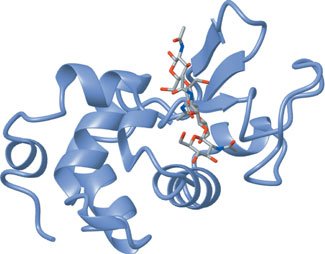
Proteins are polymers of amino acids linked by peptide bonds. Their function depends on their three-dimensional structure, which is determined by the sequence of amino acids (primary structure). Many proteins act as enzymes, catalyzing biochemical reactions with high specificity and efficiency.
Example: Lysozyme is an enzyme that catalyzes the hydrolysis of specific carbohydrate polymers.
Carbohydrates
Carbohydrates include simple sugars (monosaccharides) and their polymers (polysaccharides). They serve as energy sources and structural components. Monosaccharides can exist in linear or ring forms, and polysaccharides like cellulose and glycogen are important for structure and energy storage.
Nucleic Acids
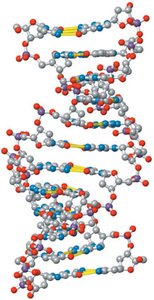
Nucleic acids (DNA and RNA) are polymers of nucleotides, each consisting of a sugar, a nitrogenous base, and a phosphate group. DNA stores genetic information, while RNA is involved in information transfer and protein synthesis.
Lipids and Membranes
Lipids are hydrophobic molecules that form the structural basis of biological membranes. Membranes are lipid bilayers with embedded proteins, creating barriers that separate cells and organelles from their environment.
Energetics and Thermodynamics in Biochemistry
Reaction Rates and Equilibria
The rate of a chemical reaction depends on the concentration of reactants and the rate constant. Most biochemical reactions are reversible and reach equilibrium, where the rates of the forward and reverse reactions are equal.
Gibbs Free Energy
The direction and spontaneity of biochemical reactions are determined by the Gibbs free energy change (ΔG). A negative ΔG indicates a spontaneous reaction. The standard Gibbs free energy change (ΔG°) is related to the equilibrium constant (Keq) by the equation:
Activation Energy
Even if a reaction is thermodynamically favorable, it may proceed slowly due to a high activation energy barrier. Enzymes lower the activation energy, increasing the rate of biochemical reactions.
Summary
Biochemistry explains life at the molecular level using the principles of chemistry and physics.
Key historical experiments established that biological molecules and reactions obey universal chemical laws.
Proteins, carbohydrates, nucleic acids, and lipids are the major classes of biomolecules, each with specific structures and functions.
Enzymes are highly efficient biological catalysts essential for life.
Thermodynamics and kinetics are fundamental to understanding biochemical processes.
