 Back
Introduction to Biochemistry: Molecular Logic, Water, and Amino Acids
Study Guide - Smart Notes
 Tailored notes based on your materials, expanded with key definitions, examples, and context.
Introduction to Biochemistry
The Molecular Logic of Living Organisms
Biochemistry explores the molecular foundations of life, focusing on how lifeless molecules assemble into living systems. Living organisms are composed of molecules that obey the same physical and chemical laws as inanimate matter, yet they exhibit unique properties such as self-maintenance, order, and reproduction. The outdated concept of vitalism, which posited a special life-force, has been replaced by a scientific understanding of life's molecular basis.
Self-maintenance: Living organisms maintain their structure and organization, in contrast to the increasing disorder (entropy) of inanimate matter.
Exchange of energy and matter: Organisms are open systems, exchanging energy and matter with their environment, and maintaining a steady state.
Thermodynamics: The first law states energy cannot be created or destroyed; the second law states that entropy tends to increase. Organisms maintain order by increasing the disorder of their environment.
Maximum economy: Cells efficiently handle energy and matter, using ATP as the universal energy currency.
Stages in the Extraction of Energy from Foodstuffs
Cells extract energy from nutrients through a series of metabolic stages, ultimately producing ATP.
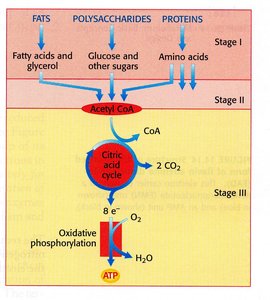
Stage I: Breakdown of fats, polysaccharides, and proteins into fatty acids, sugars, and amino acids.
Stage II: Conversion to Acetyl CoA.
Stage III: Citric acid cycle and oxidative phosphorylation, producing ATP.
Chemical Reactions in Living Cells: Enzymes
Enzymes are specialized protein catalysts that accelerate biochemical reactions with high specificity, governed by the principle of structural complementarity. Enzyme-catalyzed reactions are organized into metabolic pathways, allowing precise regulation and integration of cellular processes.
Biocatalysis: Enzymes enable cells to function as chemical engines, linking reactions into sequences for efficient metabolism.
Bioregulation: Cellular reactions are self-regulated, with reaction rates modulated by other parts of the metabolic network.
Uniformity and Self-Replication in Living Systems
All living organisms share common molecular building blocks, genetic information flow, and ATP as an energy currency. The capacity for self-replication with high fidelity is a defining feature of life.
Universal principles: Bacteria and humans use the same macromolecular building blocks and genetic mechanisms.
Self-replication: Cells reproduce with remarkable accuracy over many generations.
Summary of Cellular Principles
A living cell is a self-assembling, self-regulating, self-perpetuating isothermal open system, composed of linked organic reactions catalyzed by enzymes, operating with maximum efficiency.
Scope and Achievements of Biochemistry
Biochemistry seeks to understand the chemical basis of biological phenomena, with roots in medicine, nutrition, and natural product chemistry. Major achievements include the discovery of DNA structure, elucidation of metabolic pathways, and development of recombinant DNA technology.
Common molecular patterns: Underlie the diversity of life.
Medical relevance: Understanding molecular mechanisms of diseases (e.g., sickle-cell anemia).
Water and Noncovalent Interactions
Types of Noncovalent Bonds in Biomolecules
Biomolecular interactions are mediated by noncovalent bonds, which are essential for the structure and function of biological macromolecules.
Electrostatic bonds: Attraction or repulsion between charged groups.
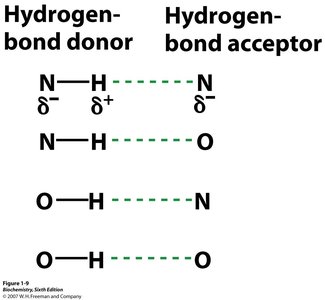
Hydrogen bonds: A hydrogen atom is shared between two electronegative atoms, stabilizing structures like DNA and proteins.

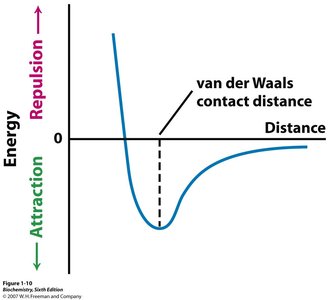
Van der Waals bonds: Weak, nonspecific attractions between atoms 3–4 Å apart, important for molecular packing.
Properties of Water
Water is the most abundant compound in living organisms, profoundly influencing molecular interactions due to its polarity and cohesiveness. Water solvates polar molecules and weakens ionic and hydrogen bonds, facilitating biochemical reactions.

Hydrophobic effect: Nonpolar groups aggregate in water, not due to mutual affinity but because water molecules prefer to interact with each other.

Biogenic Elements and Biomolecules
Essential Elements in Living Organisms
Of the 100 elements in Earth's crust, only 22 are essential for life, with hydrogen, oxygen, carbon, and nitrogen being the most abundant. These, along with sulfur and phosphorus, constitute 99% of cell mass.
Hierarchy of Molecular Organization in Cells
Cells are organized hierarchically, from organelles to macromolecules and their building blocks.

Proteins and Amino Acids
Functions of Proteins
Proteins perform a wide range of functions in cells, including catalysis, transport, motion, support, immune defense, nerve impulse transmission, and regulation of growth and differentiation.
Turnover: Proteins are constantly degraded and resynthesized, with half-lives ranging from minutes to years.
Amino Acids: Structure and Isomerism
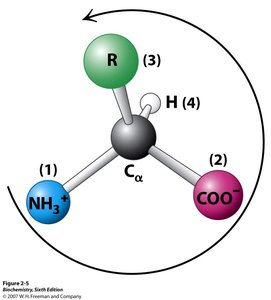
Proteins are polymers of 20 genetically encoded amino acids, each with a central carbon (Cα), an amino group, a carboxyl group, a hydrogen, and a variable side chain (R group). Amino acids exist as L and D isomers, but only L isomers are found in proteins.

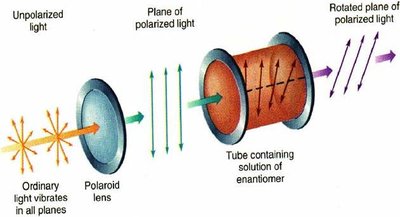
Optical activity: Amino acids can rotate plane-polarized light due to their chiral centers.
Ionization State of Amino Acids
The ionization state of amino acids depends on pH, affecting their charge and reactivity. At physiological pH, amino acids typically exist in a zwitterionic form.
Classification of Amino Acids
Amino acids are classified based on the properties of their side chains:
Hydrophobic (nonpolar)
Hydrophilic (polar)
Acidic
Basic
Protein Structure: Levels of Organization
Proteins have four levels of structure:
Primary: Linear sequence of amino acids linked by peptide bonds.
Secondary: Regular folding patterns such as α-helices and β-sheets, stabilized by hydrogen bonds.
Tertiary: Three-dimensional folding driven by hydrophobic interactions, disulfide bonds, hydrogen bonds, and ionic interactions.
Quaternary: Assembly of multiple polypeptide chains into multisubunit complexes.
Protein Folding and Chaperones
The amino acid sequence determines the three-dimensional structure of a protein. Molecular chaperones assist in proper folding, allowing proteins multiple attempts to reach their correct conformation.
Allosteric Regulation
Allosteric proteins, often composed of multiple subunits, can change their functional properties in response to environmental signals, playing a crucial role in cellular regulation.
