 Back
BackIntroduction to Biology: Scientific Method, Experimental Design, and Life's Organization
Study Guide - Smart Notes
 Tailored notes based on your materials, expanded with key definitions, examples, and context.
Introduction to Biology
Definition and Scope of Biology
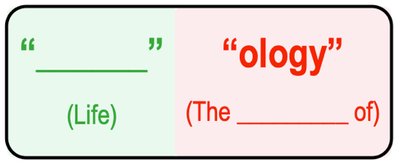
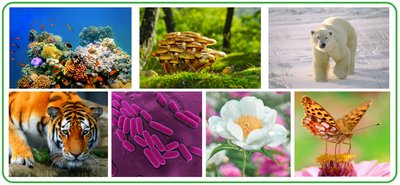
Biology is the scientific study of life, encompassing the structure, function, growth, origin, evolution, and distribution of living organisms. The prefix "bio-" means "life," and the suffix "-ology" means "the study of." Life on Earth is incredibly diverse, ranging from microscopic organisms to large plants and animals, but most life forms are too small to be seen without magnification.
Unicellular vs. Multicellular Organisms
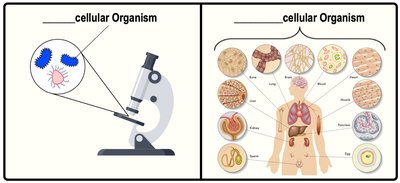
Living organisms can be classified as either unicellular (consisting of a single cell) or multicellular (composed of many cells). Unicellular organisms are typically microscopic, while multicellular organisms have specialized cells that form tissues and organs.
The Scientific Method
Overview and Steps
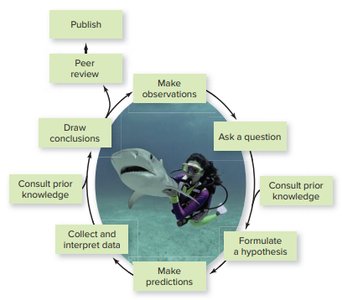
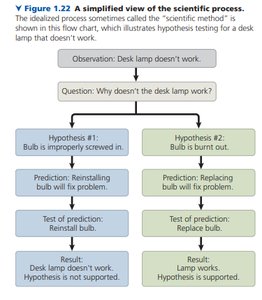
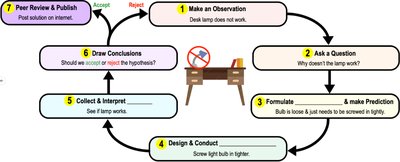
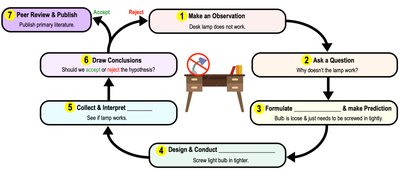
The scientific method is a systematic procedure used to answer questions, test ideas, and build scientific knowledge. It involves making observations, asking questions, consulting prior knowledge, formulating hypotheses, making predictions, designing and conducting experiments, collecting and interpreting data, drawing conclusions, and publishing results for peer review.
Observation: Gathering information about a phenomenon.
Question: Asking why or how something occurs.
Hypothesis: A proposed, testable explanation for an observation.
Prediction: An expected outcome based on the hypothesis.
Experiment: Testing the hypothesis through controlled procedures.
Data Collection: Gathering and analyzing results.
Conclusion: Interpreting results to support or refute the hypothesis.
Peer Review & Publish: Sharing findings for validation by the scientific community.
Predictions, Hypotheses, and Theories
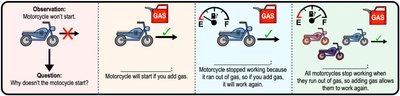
Prediction: An expected outcome that can be correct or incorrect; answers "what will happen?"
Hypothesis: A testable explanation for an observation; answers "why will it happen?"
Theory: A well-supported, testable hypothesis that explains many observations and is backed by substantial evidence. Theories and hypotheses can be falsified but not absolutely proven.
Basic Theories of Biology
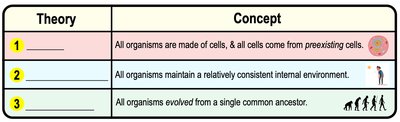
Three foundational theories in biology are:
Theory | Concept |
|---|---|
1. Cell Theory | All organisms are made of cells, and all cells come from preexisting cells. |
2. Homeostasis Theory | All organisms maintain a relatively consistent internal environment. |
3. Evolution Theory | All organisms evolved from a single common ancestor. |
Experimental Design
Variables in Experiments
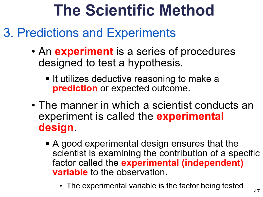
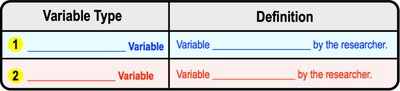
Experiments are designed to test hypotheses by manipulating and measuring variables. The main types of variables are:
Type of Variable | Definition | Example |
|---|---|---|
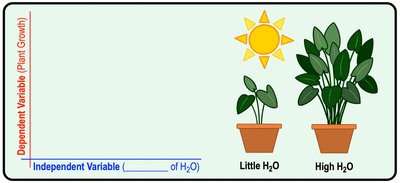
Independent variable | Manipulated by the investigator to determine its effect | Dose of vaccine |
Dependent variable | Measured to see if it is affected by the independent variable | Number of children with illness |
Standardized variable | Held constant for all subjects | Age and health of children |


Controls in Experiments
Controls are essential for preventing false positives and negatives. There are two main types:
Control Type | Definition | Purpose |
|---|---|---|
Negative Control | Group where no response is expected (e.g., placebo) | Prevents false positives |
Positive Control | Group where a response is expected | Prevents false negatives |

Characteristics of Life
Defining Features of Living Organisms
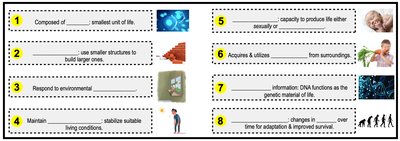
All living organisms share several key characteristics that distinguish them from nonliving things:
Composed of cells (the smallest unit of life)
Organized structure (hierarchical organization)
Respond to environmental stimuli
Maintain homeostasis (stable internal conditions)
Reproduce (sexually or asexually)
Metabolism (sum of chemical reactions, energy acquisition)
Genetic information (DNA as hereditary material)
Evolution (changes in DNA over time for adaptation)
Life's Organizational Hierarchy
Levels of Biological Organization
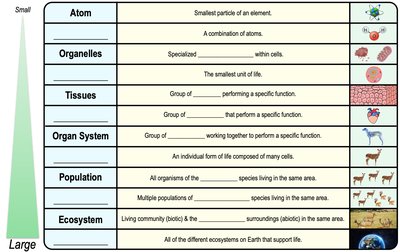
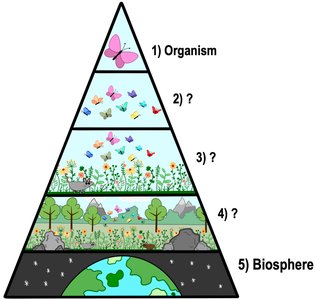
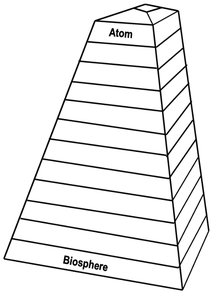
Life is organized into a hierarchy from the smallest to the largest scale:
Level | Description |
|---|---|
Atom | Smallest particle of an element |
Molecule | Combination of atoms |
Organelle | Specialized structures within cells |
Cell | Smallest unit of life |
Tissue | Group of cells performing a specific function |
Organ | Group of tissues working together |
Organ System | Group of organs working together |
Organism | Individual living entity |
Population | All organisms of the same species in an area |
Community | Multiple populations in an area |
Ecosystem | Living community plus abiotic environment |
Biosphere | All ecosystems on Earth |
Emergent Properties
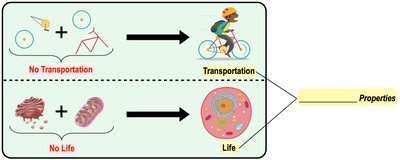
Emergent properties are characteristics that arise when smaller parts combine to form a larger, more complex system. At each level of the hierarchy, the whole exhibits properties not present in the individual components.
Natural Selection and Evolution
Adaptation and Fitness
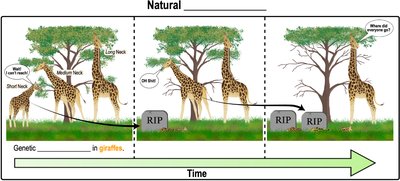
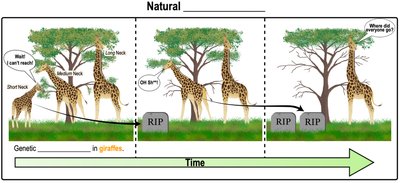
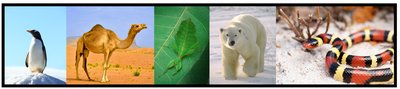
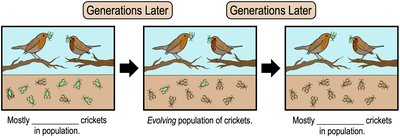
Organisms are well suited to their environments due to adaptation, which improves their fitness—the ability to survive and reproduce. Adaptation results from natural selection, a process described by Charles Darwin, where the environment favors organisms with traits that enhance survival and reproduction.
Requirements for Natural Selection
Genetic variation in a population
Selective pressure for heritable traits affecting fitness
Differential reproductive success
Evolution
Evolution is the change in the genetic makeup of a population over generations. It can occur through various mechanisms, with natural selection being a primary driver. Evolution explains the diversity of life and the adaptation of organisms to their environments.
Introduction to Taxonomy
Classification of Life
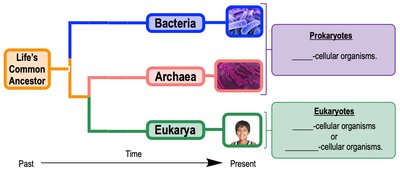
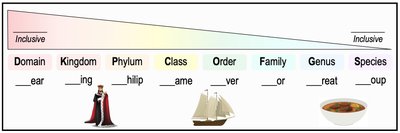
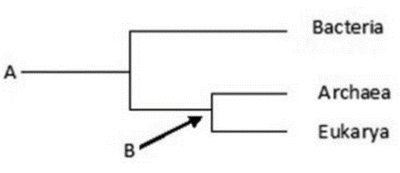
Taxonomy is the branch of science concerned with classifying, identifying, and naming organisms. Life is classified into hierarchical categories, with the broadest being the three domains:
Bacteria (prokaryotic cells, no nucleus)
Archaea (prokaryotic cells, no nucleus)
Eukarya (eukaryotic cells, contain a nucleus)
Kingdoms of Eukarya
Within the domain Eukarya, organisms are further subdivided into kingdoms, such as Plantae, Protista, Fungi, and Animalia.
Energy Acquisition Categories
Organisms are categorized based on how they acquire energy:
Autotrophs (producers): Make their own food, usually via photosynthesis.
Heterotrophs (consumers): Obtain energy by eating other organisms.
Decomposers: Acquire energy from wastes and dead organisms.
Most energy utilized by life originates from the sun, and with every transfer, some energy is lost as heat.
Summary Table: Key Concepts
Concept | Definition |
|---|---|
Biology | Study of life |
Scientific Method | Systematic approach to answering questions |
Cell Theory | All organisms are made of cells |
Homeostasis | Maintaining stable internal conditions |
Evolution | Change in genetic makeup over time |
Taxonomy | Classification of organisms |
Autotroph | Organism that produces its own food |
Heterotroph | Organism that consumes others for energy |
