 Back
BackLipid and Protein Metabolism: Catabolism, Biosynthesis, and the Urea Cycle
Study Guide - Smart Notes
 Tailored notes based on your materials, expanded with key definitions, examples, and context.
Lipid Metabolism
Catabolism of Triacylglycerols
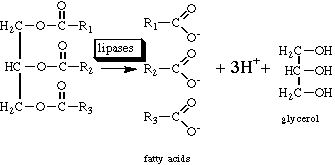
Lipid catabolism involves the breakdown of triacylglycerols (TAGs) into fatty acids and glycerol, which are then further metabolized to produce energy. This process is essential for mobilizing stored energy during fasting or increased energy demand.
Triacylglycerols are hydrolyzed by lipases to yield three fatty acids and one glycerol molecule.
Fatty acids are transported to tissues for β-oxidation, while glycerol enters glycolysis or gluconeogenesis.
Equation:
Example: During fasting, adipose tissue releases fatty acids for energy production in muscle and liver.
β-Oxidation of Fatty Acids
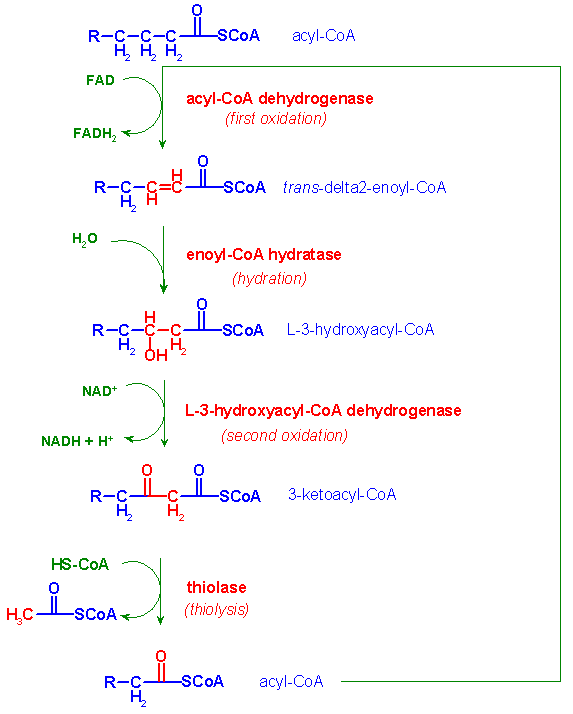
Fatty acids undergo β-oxidation in the mitochondria, producing acetyl-CoA, NADH, and FADH2. Acetyl-CoA enters the citric acid cycle for further energy extraction.
Each cycle of β-oxidation shortens the fatty acid by two carbons, releasing one acetyl-CoA.
Key enzymes: acyl-CoA dehydrogenase, enoyl-CoA hydratase, L-3-hydroxyacyl-CoA dehydrogenase, thiolase.
Equation:
Example: Palmitic acid (C16) yields 8 acetyl-CoA, 7 FADH2, and 7 NADH after complete β-oxidation.
Biosynthesis of Fatty Acids
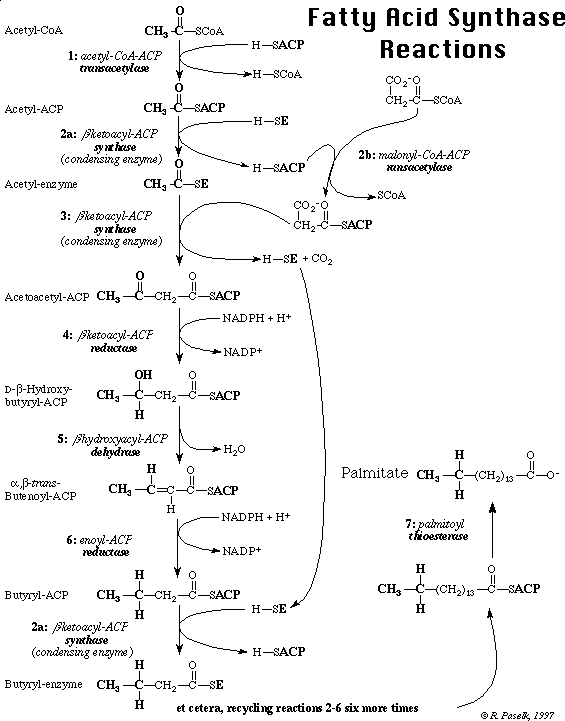
Fatty acid synthesis is an anabolic process that occurs mainly in the cytoplasm, using acetyl-CoA as the building block. The process is catalyzed by the fatty acid synthase complex and involves repeated cycles of condensation, reduction, dehydration, and reduction.
Key intermediates are attached to acyl carrier protein (ACP).
NADPH provides reducing power for the reactions.
Palmitate (C16:0) is the primary product in animals.
Equation:
Example: Fatty acid synthesis is active in the liver and adipose tissue after carbohydrate-rich meals.
Protein Metabolism
Catabolism of Proteins
Protein catabolism involves the breakdown of proteins into amino acids, which can be used for energy or as precursors for biosynthetic pathways. Proteolytic enzymes (proteases) mediate this process.
Endopeptidases cleave internal peptide bonds (e.g., pepsin, trypsin, chymotrypsin, elastase).
Exopeptidases remove terminal amino acids: carboxypeptidases (C-terminus), aminopeptidases (N-terminus).
Di- and tripeptidases hydrolyze di- and tripeptides to free amino acids.
Sequential action: endopeptidases → exopeptidases → di/tripeptidases.
Released amino acids are used for new protein synthesis or further catabolized.
Catabolism of Amino Acids: Deamination
Amino acid catabolism begins with the removal of the amino group, primarily through deamination reactions. The resulting ammonia is toxic and must be converted to urea for excretion.
Reductive deamination: Removal of amino group with reduction.
Intramolecular deamination: Rearrangement within the molecule.
Hydrolytic deamination: Removal of amino group with water.
Oxidative deamination: Removal of amino group with oxidation.
Transamination of Amino Acids
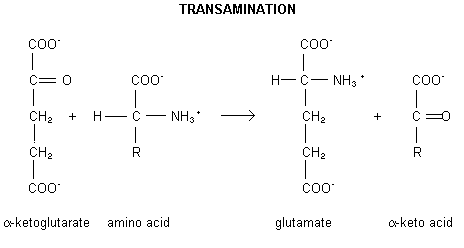
Transamination is the transfer of an amino group from an amino acid to an α-keto acid, typically α-ketoglutarate, forming glutamate and a new α-keto acid. This reaction is catalyzed by aminotransferases and is central to amino acid metabolism.
Allows for the redistribution of amino groups among amino acids.
Glutamate often serves as the amino group donor in the urea cycle.
Equation:
Decarboxylation of Amino Acids
Decarboxylation involves the removal of a carboxyl group from amino acids, producing amines and carbon dioxide. This process is important in the synthesis of neurotransmitters and other biologically active amines.
Alpha-decarboxylation: Removal of the α-carboxyl group.
Omega-decarboxylation: Removal of a carboxyl group from the ω-position.
Decarboxylation can be coupled with transamination in amino acid metabolism.
Urea Cycle
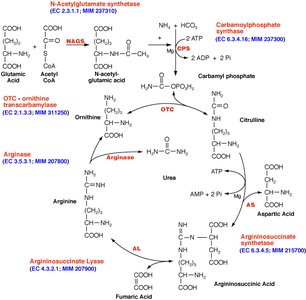
The urea cycle is the primary pathway for the detoxification of ammonia in mammals. It converts toxic ammonia to urea, which is excreted in urine. The cycle occurs mainly in the liver and involves several key enzymes and intermediates.
Key steps: formation of carbamoyl phosphate, synthesis of citrulline, argininosuccinate, arginine, and finally urea.
Links amino acid catabolism to nitrogen excretion.
Equation:
Example: Defects in urea cycle enzymes can lead to hyperammonemia.
Protein Biosynthesis (Translation)
Activation of Amino Acids
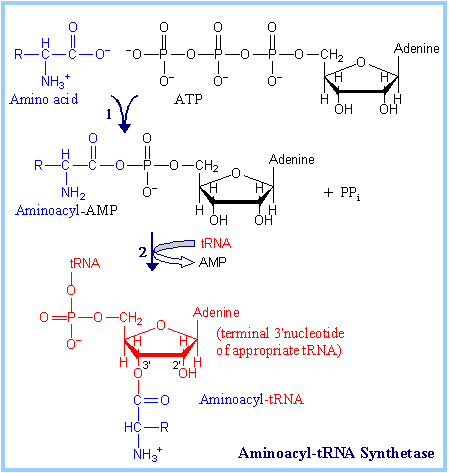
Before translation, amino acids are activated and attached to their corresponding tRNA molecules by aminoacyl-tRNA synthetases. This process ensures the correct amino acid is incorporated during protein synthesis.
Two-step reaction: amino acid + ATP → aminoacyl-AMP; aminoacyl-AMP + tRNA → aminoacyl-tRNA + AMP.
Each aminoacyl-tRNA synthetase is specific for one amino acid and its tRNA(s).
Translation: Initiation
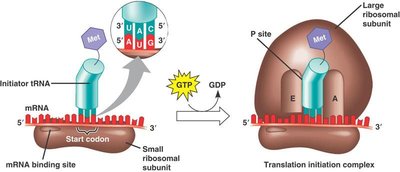
Translation initiation involves the assembly of the ribosome, mRNA, and initiator tRNA at the start codon. This step sets the reading frame for protein synthesis.
Initiator tRNA (carrying methionine) binds to the start codon (AUG) on mRNA.
Small and large ribosomal subunits assemble to form the initiation complex.
Initiation factors and GTP are required for proper assembly.
Translation: Elongation
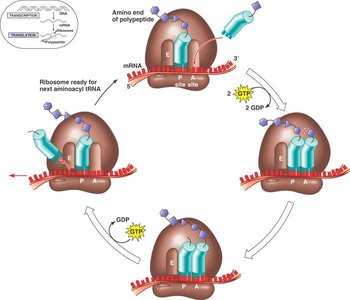
During elongation, amino acids are sequentially added to the growing polypeptide chain. The ribosome moves along the mRNA, and peptide bonds are formed between adjacent amino acids.
Elongation factors and GTP hydrolysis drive the process.
Peptidyl transferase catalyzes peptide bond formation.
Peptidyl translocase moves the ribosome along the mRNA.
Translation: Termination
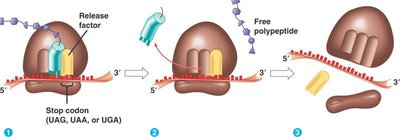
Termination occurs when a stop codon is encountered. Release factors promote the release of the newly synthesized polypeptide from the ribosome, and the translation complex dissociates.
Stop codons: UAG, UAA, UGA.
Release factors recognize stop codons and trigger hydrolysis of the bond between the polypeptide and tRNA.
Post-Translational Modification
After translation, polypeptides may undergo folding and various modifications (e.g., phosphorylation, glycosylation) to become fully functional proteins.
Proper folding is essential for biological activity.
Chaperone proteins assist in folding.
Summary Table: Key Pathways in Lipid and Protein Metabolism
Pathway | Main Function | Key Enzymes | Major Products |
|---|---|---|---|
Lipid Catabolism (β-oxidation) | Breakdown of fatty acids for energy | Acyl-CoA dehydrogenase, enoyl-CoA hydratase, thiolase | Acetyl-CoA, NADH, FADH2 |
Lipid Anabolism (Fatty Acid Synthesis) | Synthesis of fatty acids from acetyl-CoA | Fatty acid synthase, acetyl-CoA carboxylase | Palmitate (C16:0) |
Protein Catabolism | Breakdown of proteins to amino acids | Endopeptidases, exopeptidases | Amino acids |
Amino Acid Catabolism | Removal of amino groups, energy production | Aminotransferases, deaminases | Ammonia, α-keto acids |
Urea Cycle | Detoxification of ammonia | Carbamoyl phosphate synthetase, arginase | Urea |
Protein Biosynthesis | Synthesis of polypeptides from amino acids | Ribosome, aminoacyl-tRNA synthetase | Proteins |
