 Back
11/12 Membrane Transport and Bioenergetics: Biochemistry Study Notes
Study Guide - Smart Notes
 Tailored notes based on your materials, expanded with key definitions, examples, and context.
Membrane Transport
Thermodynamics of Membrane Transport
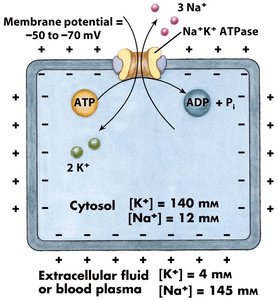
Membrane transport is governed by both concentration gradients and charge imbalances, which together generate a voltage across the membrane. The movement of ions is influenced by these gradients, and the free energy change for transport can be calculated using thermodynamic principles.
Concentration Gradient: Drives passive movement of molecules from high to low concentration.
Charge Imbalance: The difference in ion concentrations across the membrane creates a membrane potential.
Free Energy Equation: The free energy change for ion transport is given by: where and are concentrations, is ion charge, is Faraday's constant, and is membrane potential.
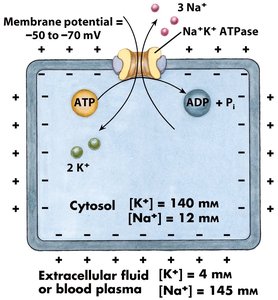
Modes of Membrane Transport
Substances cross biological membranes via several mechanisms, each with distinct properties and requirements.
Simple Diffusion: Movement of small, hydrophobic, or uncharged molecules (e.g., O2, CO2) directly through the lipid bilayer.
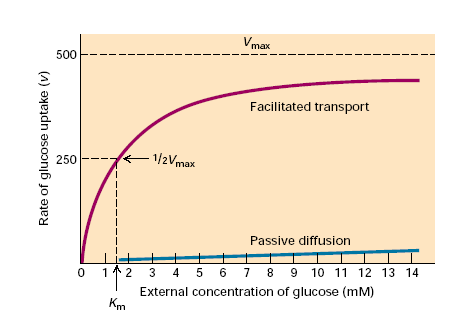
Facilitated Transport: Movement assisted by protein channels or carriers.
Passive Transport: Down a concentration or charge gradient, no energy required.
Active Transport: Against a gradient, requires energy input (e.g., ATP).
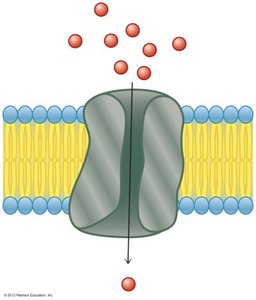
Channels and Pores
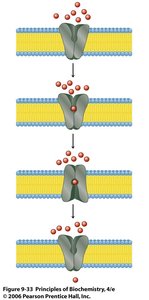
Channels and pores allow passive movement of molecules, often with selectivity based on size and charge. They are typically open to both sides of the membrane and exhibit linear kinetics.
Bacterial Porins: Trimeric β-barrel structures selective for small ions.
Channel Selectivity: Weakly selective, not saturated by substrate.
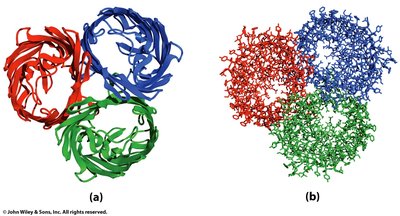
Aquaporins: Water Channel Selectivity
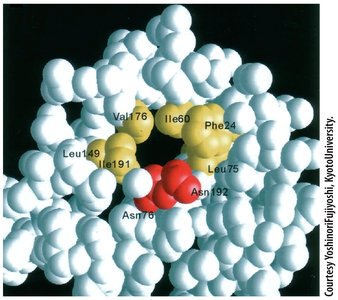
Aquaporins are highly selective water channels that exclude protons, ensuring only water passes through. Their selectivity is achieved by hydrophobic residues and conserved Asn residues lining the pore.
Structure: Six transmembrane α-helices form the channel.
Function: Prevents proton transport, maintains cellular pH.
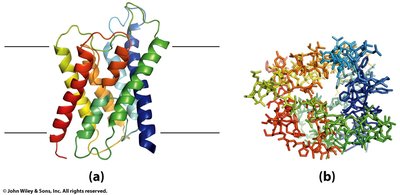
Potassium Channels: Selectivity and Structure
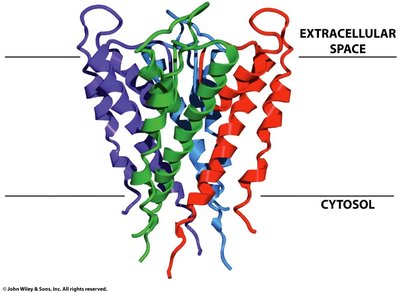
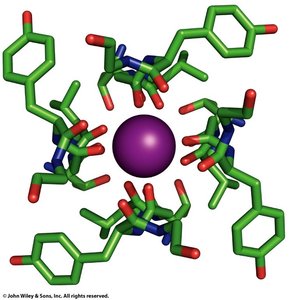
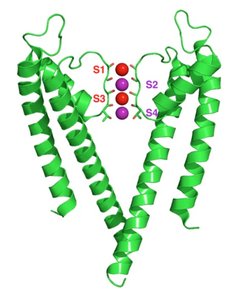
Potassium channels are highly selective for K+ ions, due to a filter lined with carbonyl groups that coordinate the ion. These channels are much more permeable to K+ than Na+, despite Na+ being smaller.
Selectivity Filter: Carbonyl groups create an optimal environment for desolvated K+.
Permeability: 10,000 times more permeable to K+ than Na+.
Carrier Proteins
Carrier proteins alternate between conformations, exposing binding sites to only one side of the membrane at a time. They may facilitate passive or active transport and are typically selective and regulated.
Conformational Change: Allows substrate binding and release on opposite sides.
Transport Types: Uniport, symport, antiport.
Voltage-Gated Channels and Nerve Impulse Propagation
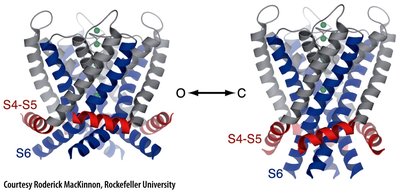
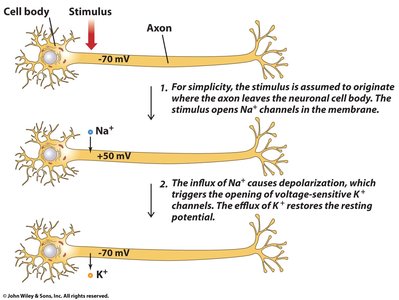
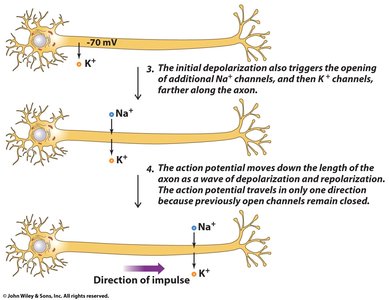
Voltage-gated channels undergo conformational changes in response to membrane potential, crucial for nerve impulse propagation. K+ and Na+ channels in neurons enable rapid changes in membrane potential.
Action Potential: Sequential opening and closing of Na+ and K+ channels propagates the nerve impulse.
Resting Potential: Maintained by Na+/K+ ATPase.
Active Transport: Primary and Secondary Mechanisms
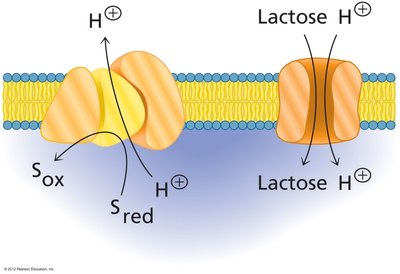
Active transport requires energy to move substances against their gradients. Primary active transport uses ATP, light, or redox energy, while secondary active transport couples the movement of one solute to another.
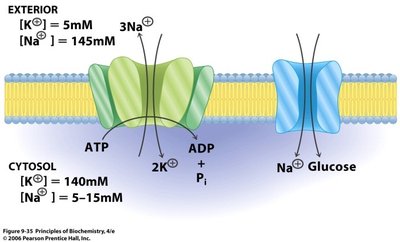
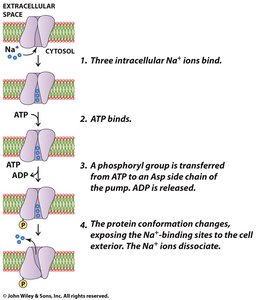
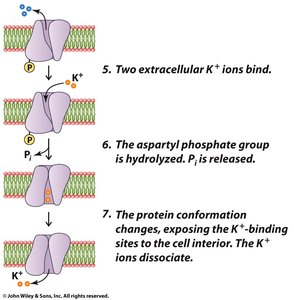
Primary Active Transport: Direct use of energy (e.g., Na+/K+ pump).
Secondary Active Transport: Utilizes gradients established by primary transport (e.g., Na+/glucose symporter).
Coupled Glucose Transport
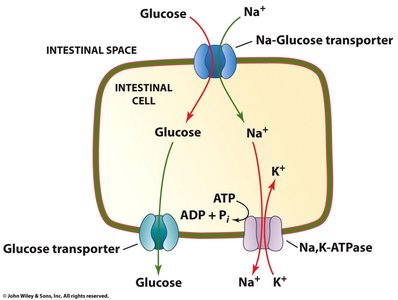
Glucose transport in intestinal cells is coupled with Na+ transport. The energetically favorable movement of Na+ down its gradient drives the uptake of glucose against its gradient.
Na+/Glucose Symporter: Couples Na+ influx with glucose uptake.
Na+/K+ ATPase: Maintains Na+ gradient required for symporter function.
Bioenergetics and Metabolism
Thermodynamic Overview
Bioenergetics studies the flow and transformation of energy in biological systems. Key concepts include enthalpy, entropy, and Gibbs free energy, which together determine reaction spontaneity.
Enthalpy (H): Heat content of a system.
Entropy (S): Measure of disorder.
Gibbs Free Energy (G): Determines spontaneity:
Spontaneity: is spontaneous (exergonic), is non-spontaneous (endergonic).
Equilibrium and Coupled Reactions
At equilibrium, . The equilibrium constant () relates to standard free energy change:
Unfavorable reactions can be coupled to favorable ones to achieve a net negative .
ATP: The Energy Currency
ATP hydrolysis releases energy by breaking phosphoanhydride bonds, which can drive endergonic reactions. The separation of negative charges, increased resonance stabilization, and increased entropy contribute to its high energy.
ATP Hydrolysis:
Coupling: Used to drive glucose phosphorylation and other biosynthetic reactions.
Metabolic Pathways Overview
Metabolism consists of anabolic (building up) and catabolic (breaking down) reactions. Catabolic reactions release energy, while anabolic reactions require energy input, often from ATP hydrolysis.
Anabolic Reactions: Assembly of macromolecules from monomers.
Catabolic Reactions: Breakdown of macromolecules to monomers, releasing energy.
Digestion and Absorption of Macromolecules
The human diet includes proteins, nucleic acids, polysaccharides, and fats, which are broken down into their monomeric units for absorption and further metabolism.
Proteins: Broken down to amino acids.
Nucleic Acids: Broken down to nucleotides.
Polysaccharides: Broken down to monosaccharides.
Fats: Broken down to fatty acids.
Carbohydrate and Fat Processing
Carbohydrates are digested by amylases and glycosidases, while fats are hydrolyzed by lipases. Monomers are absorbed and may be reassembled or stored as needed.
Carbohydrates: Absorbed by active transport.
Fats: Reassembled into triacylglycerides and packaged into chylomicrons.
Metabolic Pathway Regulation
Major metabolic pathways share common intermediates and are tightly regulated to ensure efficient energy use and biosynthesis.
Regulation: Achieved through enzyme activity, substrate availability, and feedback mechanisms.
Additional info: Key concepts such as lipid composition, membrane transition temperature, cholesterol function, and hydropathy plots for membrane protein prediction are important for exam preparation but were not fully detailed in the provided materials.
