 Back
Metabolism: Anabolic and Catabolic Pathways, Regulation, and Redox Chemistry
Study Guide - Smart Notes
 Tailored notes based on your materials, expanded with key definitions, examples, and context.
Metabolism Overview
Anabolic and Catabolic Processes
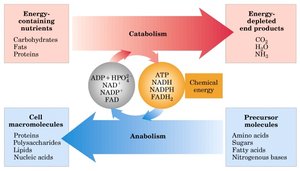
Metabolism encompasses all chemical reactions in living organisms, divided into two main types: catabolism and anabolism. Catabolic pathways break down complex molecules to release energy, while anabolic pathways build complex molecules from simpler precursors, consuming energy in the process.
Catabolism: Degradation of carbohydrates, fats, and proteins to produce energy-depleted end products (CO2, H2O, NH3).
Anabolism: Synthesis of cell macromolecules (proteins, polysaccharides, lipids, nucleic acids) from precursor molecules (amino acids, sugars, fatty acids, nitrogenous bases).
Energy Transfer: Catabolic reactions generate ATP, NADH, NADPH, and FADH2, which are used in anabolic reactions.
Connection Between Catabolism and Anabolism
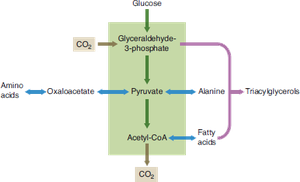
Catabolic and anabolic pathways are interconnected through shared intermediates and cofactors. The central metabolic hub involves molecules like glucose, pyruvate, and acetyl-CoA, which link various metabolic processes.
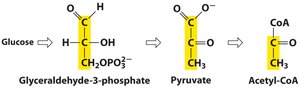
Intermediates: Glucose is converted to glyceraldehyde-3-phosphate, then to pyruvate, and finally to acetyl-CoA.
Pathway Integration: Acetyl-CoA can be used for fatty acid synthesis (anabolism) or further oxidized for energy (catabolism).
Transamination: Pyruvate can be converted to alanine, linking amino acid metabolism to central carbon metabolism.
Oxidation-Reduction Reactions and Cofactors
Role of NAD(P)+ and NAD(P)H
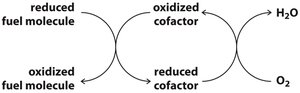
Oxidation-reduction (redox) reactions are fundamental to metabolism. NAD(P)+ and NAD(P)H serve as electron carriers, facilitating energy transfer between catabolic and anabolic pathways.
NAD(P)+: Functions as an electron acceptor in catabolic reactions, becoming reduced to NAD(P)H.
NAD(P)H: Acts as a reductant in anabolic pathways, donating electrons for biosynthetic reactions (e.g., fatty acid synthesis).
Respiratory Chain: NAD(P)H is re-oxidized, driving ATP production.
Types of Chemical Reactions in Metabolic Pathways
Major Reaction Types
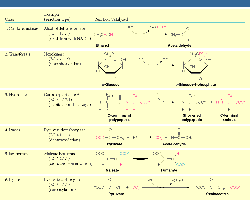
Metabolic pathways involve a variety of chemical reactions, each catalyzed by specific enzymes. Understanding these reaction types is essential for grasping metabolic regulation and integration.
Phosphate Transfer: Transfer of phosphate groups, often involving ATP.
Redox Reactions: Electron transfer between molecules, mediated by cofactors like NADH and NADPH.
Degradation of Polymers: Breakdown of macromolecules (e.g., polysaccharides, proteins).
Degradation of Esters: Hydrolysis of ester bonds, important in lipid metabolism.
Regulation of Metabolic Pathways
Mechanisms of Regulation
Metabolic pathways are tightly regulated to maintain cellular homeostasis and respond to environmental changes. Regulation occurs at multiple levels, including enzyme activity, localization, and feedback mechanisms.
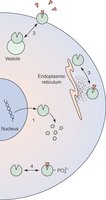
Enzyme Biosynthesis and Degradation: Rate-limiting steps are controlled by the synthesis and degradation of key enzymes (e.g., hexokinase, glucokinase).
Hormonal Regulation: Hormones modulate metabolite uptake and enzyme activity via cellular signaling pathways.
Allosteric Regulation: Enzymes controlling steps with high free energy change (ΔG) are regulated by allosteric effectors (e.g., phosphofructokinase).
Sub-cellular Localization: Enzymes may be transported to specific compartments for localized control.
Covalent Modification: Enzymes are modified (e.g., phosphorylation) in response to hormonal signals.
Feedback Regulation: End products inhibit pathway initiation, providing local control.
End of Section Questions
Pyruvate to Acetyl-CoA Reaction and Metabolic Transformations
The conversion of pyruvate to acetyl-CoA is irreversible. This limits the possible metabolic transformations:
Acetyl-CoA → Glucose: Not possible due to irreversibility.
Acetyl-CoA → Fatty Acids: Possible via anabolic pathways.
Acetyl-CoA → Alanine: Not possible directly; alanine is synthesized from pyruvate.
Oxidation and Reduction in Metabolic Reactions
For each reaction, determine whether the reactant is being oxidized or reduced:
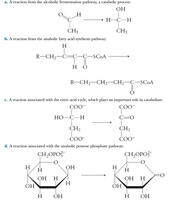
Alcoholic fermentation pathway: Reactant is reduced.
Fatty acid synthesis pathway: Reactant is reduced.
Citric acid cycle: Reactant is oxidized.
Pentose phosphate pathway: Reactant is oxidized.
Example: In the citric acid cycle, malate is oxidized to oxaloacetate, producing NADH.
Additional info: These questions reinforce understanding of metabolic directionality and redox chemistry, which are central to biochemistry.
