 Back
BackNucleic Acids: Structure, Chemistry, and Biological Roles
Study Guide - Smart Notes
 Tailored notes based on your materials, expanded with key definitions, examples, and context.
Introduction to Nucleic Acids Chemistry
Overview
Nucleic acids are essential biomolecules responsible for the storage, transmission, and expression of genetic information in all living organisms. They are polymers composed of nucleotide monomers, which are themselves made up of a nitrogenous base, a pentose sugar, and a phosphate group.
DNA (deoxyribonucleic acid) and RNA (ribonucleic acid) are the two main types of nucleic acids.
Nucleic acids play central roles in heredity, protein synthesis, and cellular regulation.
Nucleosides and Nucleotides
Composition and Classification
Nucleosides and nucleotides are the fundamental building blocks of nucleic acids.
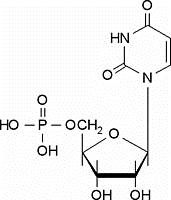
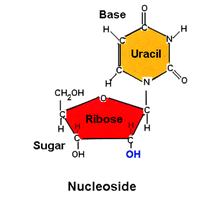
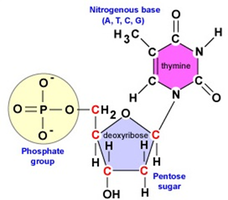
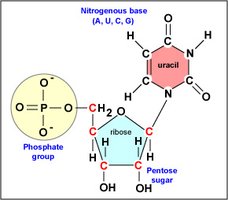
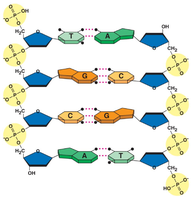
Nucleoside: Consists of a nitrogenous base (purine or pyrimidine) linked to a pentose sugar (ribose or deoxyribose).
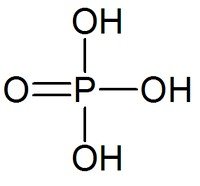
Nucleotide: Formed when one or more phosphate groups are attached to the 5' carbon of the nucleoside's sugar.
Nitrogenous Bases
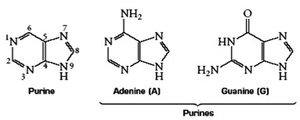
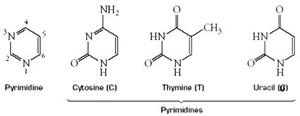
Nitrogenous bases are classified into two groups:
Purines: Adenine (A) and Guanine (G) – double-ring structures.
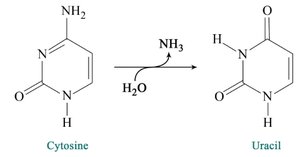
Pyrimidines: Cytosine (C), Thymine (T, in DNA), and Uracil (U, in RNA) – single-ring structures.
Deoxynucleotides and Ribonucleotides
Deoxynucleotides: Contain deoxyribose sugar and are the monomers of DNA.
Ribonucleotides: Contain ribose sugar and are the monomers of RNA.
Functions of Nucleotides in the Organism
Nucleotides serve several critical roles in cellular metabolism and regulation:
Building blocks of nucleic acids (DNA and RNA).
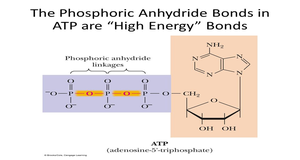
Donors of phosphate groups (e.g., ATP is the universal energy currency).
Structural components of coenzymes (e.g., NADH, FADH2, Coenzyme A).
Activation of biosynthetic precursors (e.g., UDP-glucose, CDP-choline).
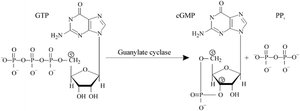
Intracellular second messengers (e.g., cAMP, cGMP).
Carriers of sugars and other groups in metabolic pathways.
Formation of Phosphodiester Bonds
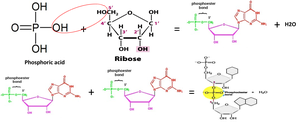
Nucleotides are joined together in nucleic acids by phosphodiester bonds, which link the 3' hydroxyl group of one sugar to the 5' phosphate group of the next.
This linkage forms the sugar-phosphate backbone of DNA and RNA.
The sequence of bases along the backbone encodes genetic information.
Polynucleotides or Nucleic Acids
Classification and Notations
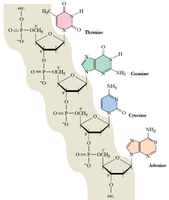
Polynucleotides are long chains of nucleotides.
DNA: Usually double-stranded, stores genetic information.
RNA: Usually single-stranded, involved in gene expression and regulation.
Nucleoside Analogues for Disease Control
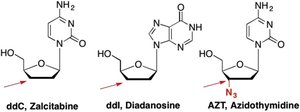
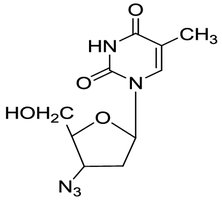
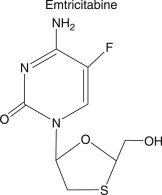
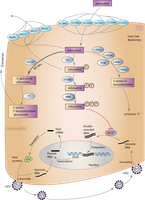
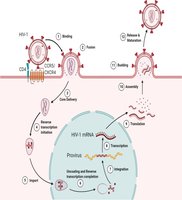
Nucleoside analogues are synthetic molecules that mimic natural nucleosides and are used as antiviral drugs, especially in the treatment of HIV.
They interfere with viral replication by incorporating into viral DNA and causing chain termination.
Structure and Properties of DNA
Base Composition (Primary Structure)
The primary structure of DNA is the linear sequence of its four types of nucleotides (A, T, G, C). The order of these bases encodes genetic information.
The Double Helix Model of DNA (Secondary Structure)
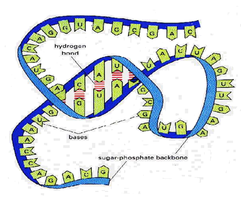
DNA is composed of two antiparallel strands that form a right-handed double helix.
The strands are held together by hydrogen bonds between complementary bases (A-T and G-C).
Base stacking interactions (hydrophobic and van der Waals forces) contribute to helix stability.
Biological Meaning of the Double Helix
The helical structure protects genetic information and allows for efficient replication and repair.
Major and minor grooves on the helix surface provide binding sites for proteins involved in gene regulation.
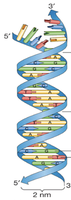
Dimensions of the DNA Double Helix
Distance between two base pairs: 0.34 nm
One turn of the helix: 3.4 nm (10 base pairs per turn)
Width of the DNA molecule: 2 nm
Forms of the Double Helix
DNA can exist in several conformations, with B-DNA being the most common in cells. Other forms include A-DNA and Z-DNA, which differ in helical twist and groove dimensions.
Association of DNA with Proteins: Histones and Chromatin Structure
DNA is packaged into chromatin by association with histone proteins.
Histones are rich in lysine and arginine, giving them a positive charge that facilitates tight binding to negatively charged DNA.
The nucleosome is the fundamental unit of chromatin, consisting of DNA wrapped around a histone octamer.
General Organization of DNA in the Human Genome
Human Genome Project and Chromosome Mapping
The human genome contains approximately 3 billion base pairs organized into 23 pairs of chromosomes. Mapping the genome has enabled the identification of genes associated with inherited diseases.
Structure and Properties of RNA
Base Composition and Structure
RNA is typically single-stranded but can form secondary and tertiary structures through intramolecular base pairing.
RNA contains ribose sugar and uracil instead of thymine.
The presence of the 2' hydroxyl group makes RNA more chemically reactive and less stable than DNA.
Types of RNA: General Structure and Functions
Messenger RNA (mRNA)
mRNA carries genetic information from DNA to ribosomes for protein synthesis.
Features include a 5' cap (for ribosome binding and protection) and a poly-A tail (for stability and export from the nucleus).
Transfer RNA (tRNA)
tRNA molecules transport specific amino acids to the ribosome during translation.
Each tRNA has an anticodon that base-pairs with the corresponding mRNA codon and a 3' end that attaches to an amino acid.
tRNA molecules contain modified bases and fold into a characteristic cloverleaf structure.
Ribosomal RNA (rRNA)
rRNA is a structural and catalytic component of ribosomes.
The small subunit decodes mRNA, while the large subunit catalyzes peptide bond formation (peptidyl transferase activity).
Other Types of RNA
snRNA (small nuclear RNA): Involved in mRNA splicing.
gRNA (guide RNA): Directs RNA editing.
miRNA (micro RNA): Regulates gene expression by inhibiting translation.
Signal Recognition Particle RNA: Directs proteins to the endoplasmic reticulum.
Summary Table: Comparison of DNA and RNA
Feature | DNA | RNA |
|---|---|---|
Sugar | Deoxyribose | Ribose |
Bases | A, T, G, C | A, U, G, C |
Strandedness | Double-stranded | Single-stranded (usually) |
Stability | Stable | Less stable |
Main Functions | Genetic information storage | Gene expression, regulation, catalysis |
