 Back
Nucleic Acids: Structure, Synthesis, Replication, and Expression
Study Guide - Smart Notes
 Tailored notes based on your materials, expanded with key definitions, examples, and context.
Specific Objectives
This section outlines the foundational learning goals for understanding nucleic acids, including their structure, synthesis, and the molecular mechanisms of genetic information flow.
Nucleotides: General Structure
Definition and Components
Nucleotides are the basic building blocks of nucleic acids (DNA and RNA). Each nucleotide consists of three components:
A nitrogenous base (purine or pyrimidine)
A five-carbon sugar (ribose in RNA, deoxyribose in DNA)
One or more phosphate groups
Nucleotides are essential for storing and transferring genetic information and serve as energy carriers (e.g., ATP).
Purines Versus Pyrimidines
Classification of Nitrogenous Bases
Nitrogenous bases are classified into two groups:
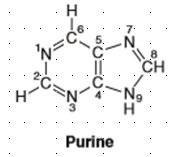
Purines: Adenine (A) and Guanine (G); double-ring structure
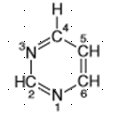
Pyrimidines: Cytosine (C), Thymine (T, in DNA), and Uracil (U, in RNA); single-ring structure
Type | Examples | Structure |
|---|---|---|
Purines | Adenine, Guanine | Double-ring |
Pyrimidines | Cytosine, Thymine, Uracil | Single-ring |
Nucleotide Synthesis
Pathways of Synthesis
Nucleotides are synthesized by two main pathways:
De novo synthesis: Building nucleotides from basic precursors (amino acids, CO2, etc.)
Salvage pathway: Recycling free bases and nucleosides from nucleic acid breakdown
The salvage pathway is especially important in adults for purine synthesis.
Purine Salvage Pathway
Mechanism and Importance
The purine salvage pathway recycles purine bases (adenine, guanine, hypoxanthine) to form nucleotides, conserving energy and resources. The key enzyme is hypoxanthine-guanine phosphoribosyltransferase (HGPRT).
Deficiency of Purine Salvage Pathway
Clinical Correlates
Deficiency in the purine salvage pathway, particularly HGPRT, leads to disorders such as Lesch-Nyhan syndrome and gout:
Lesch-Nyhan syndrome: X-linked disorder with neurological dysfunction and self-mutilation due to HGPRT deficiency.
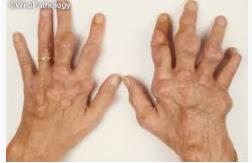
Gout: Accumulation of uric acid crystals in joints, causing inflammation and pain (hyperuricemia).
DNA Structure
Double Helix and Base Pairing
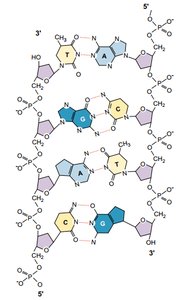
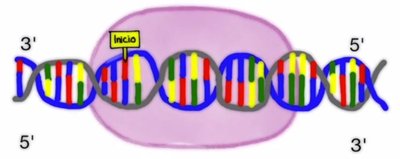
DNA is a double-stranded helix with antiparallel strands (one runs 5' to 3', the other 3' to 5'). The backbone is composed of alternating sugar and phosphate groups, while the interior "rungs" are nitrogenous base pairs:
Adenine (A) pairs with Thymine (T) via 2 hydrogen bonds
Guanine (G) pairs with Cytosine (C) via 3 hydrogen bonds
This complementary base pairing ensures accurate replication and information transfer.
DNA Replication
Mechanism and Enzymes
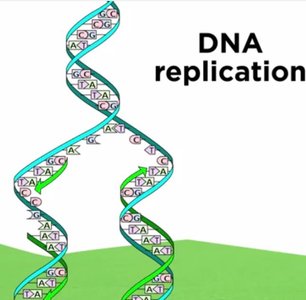
DNA replication is a semiconservative process, meaning each new DNA molecule contains one parental and one newly synthesized strand. Key steps include:
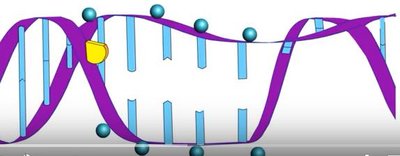
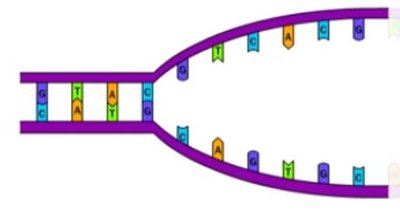
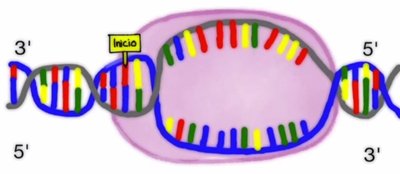
Initiation: Helicase unwinds the DNA helix, creating a replication fork.
Stabilization: Single-strand binding proteins prevent re-annealing.
Relief of Tension: Topoisomerase prevents supercoiling ahead of the fork.
Primer Synthesis: Primase synthesizes short RNA primers.
Elongation: DNA polymerase III adds nucleotides in the 5' to 3' direction.
Lagging Strand Synthesis: Okazaki fragments are synthesized discontinuously.
Primer Removal and Ligation: DNA polymerase I replaces RNA primers with DNA; ligase seals nicks.

Ribonucleic Acid (RNA)
Structure and Types
RNA is typically single-stranded and contains ribose sugar and uracil (U) instead of thymine (T). Major types include:
mRNA (messenger RNA): Encodes protein sequences
tRNA (transfer RNA): Brings amino acids to ribosomes during translation
rRNA (ribosomal RNA): Structural and catalytic component of ribosomes

Central Dogma of Molecular Biology
Flow of Genetic Information
The central dogma describes the flow of genetic information:
DNA → RNA (transcription)
RNA → Protein (translation)
Transcription
Process and Regulation
Transcription is the synthesis of RNA from a DNA template. Key steps include:
Initiation: RNA polymerase binds to the promoter region, unwinds DNA, and begins RNA synthesis.
Elongation: RNA polymerase adds ribonucleotides complementary to the DNA template (A pairs with U in RNA).
Termination: RNA polymerase stops at a termination signal, releasing the RNA transcript.
After transcription, mRNA undergoes maturation (splicing, capping, polyadenylation) before translation.
Genetic Code
Codons and Properties
The genetic code is read in triplets (codons) on mRNA, each specifying an amino acid or a stop signal. Key features:
Unambiguous: Each codon specifies only one amino acid
Degenerate: Multiple codons can code for the same amino acid
Universal: Nearly all organisms use the same code
Codon | Function |
|---|---|
AUG | Start codon (Methionine) |
UAA, UAG, UGA | Stop codons |
Translation
Protein Synthesis
Translation is the process by which ribosomes synthesize proteins using mRNA as a template. Steps include:
Initiation: mRNA binds to the ribosome; the start codon is recognized.
Elongation: tRNAs bring amino acids to the ribosome, matching codons via their anticodons; peptide bonds form between amino acids.
Termination: When a stop codon is reached, the polypeptide is released.
Post-translational modifications (e.g., trimming, phosphorylation, glycosylation) may occur.
Clinical Correlates
Inhibitors of Nucleic Acid and Protein Synthesis
Certain antibiotics target bacterial transcription and translation:
Rifampin, Actinomycin: Inhibit RNA synthesis
Streptomycin, Tetracycline, Chloramphenicol, Erythromycin: Inhibit protein synthesis
These agents are important in clinical medicine for treating bacterial infections.
