Back
BackRNA Synthesis and Processing: Transcription and Post-Transcriptional Modifications
Study Guide - Smart Notes
 Tailored notes based on your materials, expanded with key definitions, examples, and context.
RNA Synthesis and Processing (Transcription)
Central Dogma of Molecular Biology
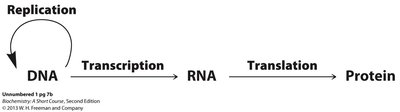
The central dogma describes the flow of genetic information in cells: DNA is transcribed into RNA, which is then translated into protein. DNA can also be replicated to maintain genetic continuity.
Replication: DNA duplicates itself for cell division.
Transcription: DNA is used as a template to synthesize RNA.
Translation: RNA directs the synthesis of proteins.
Genes and Types of RNA
Genes are DNA segments encoding various RNA species. RNA polymerase transcribes these genes, producing different types of RNA:
Constitutive expression: Genes always expressed, producing RNA continuously.
Regulated expression: Genes expressed only under certain conditions.
Types of RNA:
mRNA (Messenger RNA): Encodes protein information.
tRNA (Transfer RNA): Transfers amino acids during translation.
rRNA (Ribosomal RNA): Forms the core of ribosome's structure and catalyzes protein synthesis.
RNA Polymerase and Transcription Mechanism
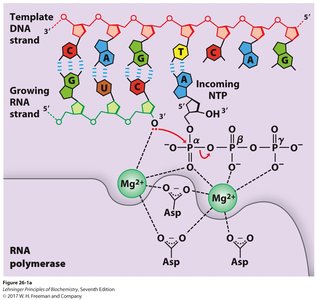
Transcription is catalyzed by RNA polymerase, which synthesizes RNA using a DNA template. The process is similar to DNA replication but has distinct features.
Similarities to Replication:
Requires a DNA template.
Synthesis direction: 5' → 3'.
Uses Mg2+ ions and nucleoside triphosphates (NTPs).
Differences:
Only a limited DNA segment is unwound (~17 bp).
Only one DNA strand serves as template.
No primer required for initiation.
Classes of RNA Polymerase
Prokaryotes have a single RNA polymerase, while eukaryotes possess multiple types:
RNA polymerase I: Synthesizes pre-ribosomal RNA (28S, 18S, 5.8S rRNAs).
RNA polymerase II: Synthesizes mRNA; recognizes many promoters and requires transcription factors.
RNA polymerase III: Synthesizes tRNAs and some small RNAs.
RNA polymerase IV (plants): Synthesizes small interfering RNAs.
Mitochondrial RNA polymerase: Unique to mitochondria.
Template vs. Coding Strand
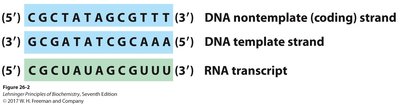
During transcription, only one DNA strand is used as a template:
Template (antisense) strand: Used by RNA polymerase to synthesize RNA.
Coding (sense) strand: Has the same sequence as the RNA transcript (except T is replaced by U).
Regulatory sequences: Listed by coding strand sequence.
Stages of RNA Synthesis
Initiation, Elongation, and Termination
Transcription occurs in three main stages:
Initiation: RNA polymerase binds to a promoter sequence on DNA.
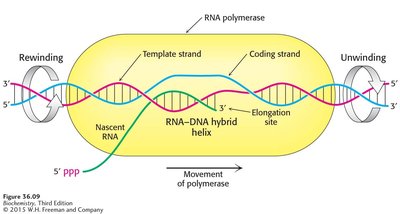
Elongation: RNA polymerase synthesizes RNA, forming a transcription bubble.
Termination: RNA synthesis stops, and the RNA–DNA hybrid dissociates.
Promoter Sequences
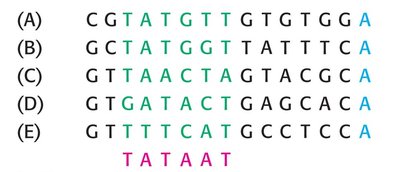
Promoters are specific DNA sequences where RNA polymerase binds to initiate transcription. In E. coli, common promoter elements include:
-10 sequence (Pribnow box): Consensus sequence TATAAT.
-35 sequence: Another conserved region upstream of the transcription start site.
Promoter sequences vary between genes, but consensus sequences are used for reference.
Transcription Bubble and Elongation
The transcription bubble is the region containing RNA polymerase, DNA, and the growing RNA product. DNA is unwound and rewound as the bubble moves, and an RNA–DNA hybrid helix forms as an intermediate.
Termination of Transcription
Termination involves stopping phosphodiester bond formation, dissociation of the RNA–DNA hybrid, reannealing of DNA, and release of RNA polymerase. Termination signals in the RNA product trigger this process.
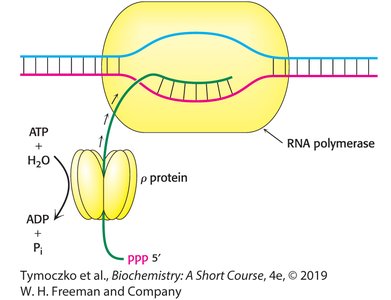
Rho-dependent termination: The protein rho (ρ) binds to a specific RNA sequence and uses ATP hydrolysis to dissociate the transcription bubble.
RNA Processing
Overview of RNA Processing
Newly synthesized RNA (primary transcript) is often processed before becoming functional. Processing includes splicing, capping, and polyadenylation.
Splicing: Removal of introns and joining of exons.
5'-capping: Addition of a 7-methylguanosine cap to the 5' end.
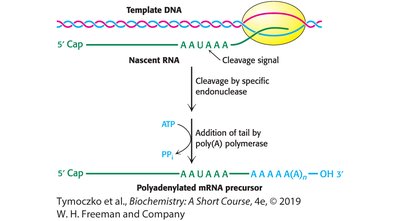
3'-polyadenylation: Addition of a poly(A) tail to the 3' end.
Ribosomal RNA Processing
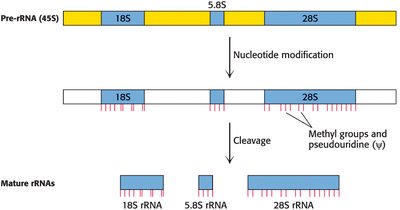
Ribosomal RNA is generated by cleavage of a precursor molecule. In mammals, RNA polymerase I transcribes a single precursor (45S) encoding three rRNA components: 18S, 28S, and 5.8S rRNA.
Transfer RNA Processing
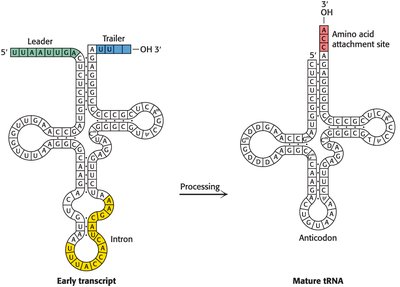
tRNA precursors are processed to yield mature tRNA molecules:
5' end cleaved by RNase P.
3' end removed by RNase Z.
CCA sequence added to 3' end by tRNA nucleotidyltransferase.
Maturation of Eukaryotic mRNA
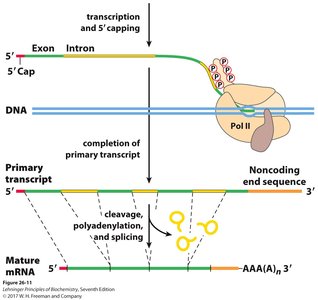
Eukaryotic mRNA undergoes several modifications:
5'-Cap: 7-methylguanosine added via 5',5'-triphosphate linkage, formed with GTP, protects RNA from nucleases, and forms a ribosome binding site.
3'-Poly(A) tail: Added by poly(A) polymerase after cleavage at a specific site, enhances stability and translation.
Splicing: Introns are removed, and exons are joined to form a continuous coding sequence.
Introns and Splicing
Introns and Exons
Introns are non-coding sequences within genes removed during RNA maturation. Exons are coding sequences retained in mature RNA. Introns are found in many genes across all domains of life.
Exons: Usually less than 1,000 bp.
Introns: Range from 50 to 700,000 bp; average 1,800 bp.
Human genome: Over 200,000 introns in ~20,000 genes.
Classes of Introns
Introns are classified based on their splicing mechanism:
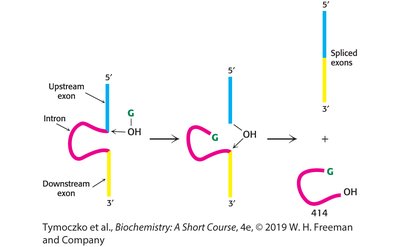
Group I and II introns: Self-splicing ribozymes, require no proteins or ATP.
Spliceosomal introns: Spliced by spliceosomes, common in eukaryotic protein-coding genes.
tRNA introns: Spliced by protein-based enzymes.
Self-Splicing Introns
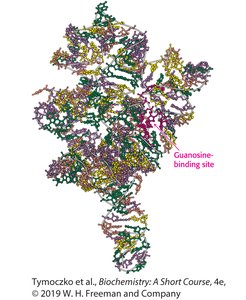
Some RNAs, called ribozymes, function as catalysts. Group I introns require guanosine as a cofactor for self-splicing.
Transcription and Processing of the β-globin Gene
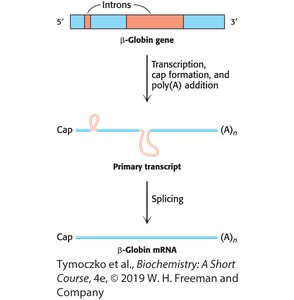
The β-globin gene undergoes transcription, capping, polyadenylation, and splicing to produce mature mRNA.
Alternative Splicing
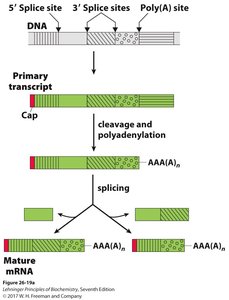
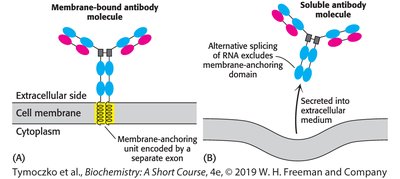
Alternative splicing allows a single gene to produce multiple peptide variants by retaining or removing specific regions. This process is highly prevalent in humans, with at least 95% of genes being alternatively spliced.
Enables diversity in protein products from a single gene.
Particular exons may be included or excluded in the final mRNA.