 Back
BackStudy Guide: Electron Transport, Oxidative Phosphorylation, and Mitochondrial Structure
Study Guide - Smart Notes
 Tailored notes based on your materials, expanded with key definitions, examples, and context.
Q1. Summarize the three stages of oxidative energy generation. What happens in each stage?
Background
Topic: Cellular Respiration and Energy Production
This question tests your understanding of the overall process by which cells extract energy from fuel molecules, focusing on the three main stages: oxidation to acetyl-CoA, the citric acid cycle, and oxidative phosphorylation.
Key Terms:
Acetyl-CoA: A central metabolic intermediate formed from carbohydrates, fats, and proteins.
Citric Acid Cycle (Krebs Cycle): A series of reactions in the mitochondrial matrix that fully oxidizes acetyl-CoA.
Oxidative Phosphorylation: The process by which ATP is synthesized using energy from electron transport.
Step-by-Step Guidance
Identify the three stages: (1) Oxidation of fuel molecules to acetyl-CoA, (2) Citric Acid Cycle, (3) Oxidative Phosphorylation.
For each stage, consider what molecules are involved and what products are generated (e.g., acetyl-CoA, CO2, NADH, FADH2, ATP).
Think about how each stage connects to the next: acetyl-CoA feeds into the citric acid cycle, which produces electron carriers for oxidative phosphorylation.
Review the role of the mitochondrion as the site where these processes occur.
Try solving on your own before revealing the answer!
Q2. Where in the cell does each stage take place?
Background
Topic: Cellular Compartmentalization
This question tests your knowledge of where key metabolic processes occur within the cell, especially the mitochondrion.
Key Terms:
Cytoplasm: The site of glycolysis and some amino acid catabolism.
Mitochondrial Matrix: The site of fatty acid β-oxidation, citric acid cycle, and parts of amino acid catabolism.
Inner Mitochondrial Membrane: The site of oxidative phosphorylation and electron transport chain.
Step-by-Step Guidance
List each stage and match it to its cellular location (e.g., glycolysis in cytoplasm, citric acid cycle in matrix).
Consider the specificity for each fuel source (carbohydrates, fats, proteins) and where their initial breakdown occurs.
Review the structure of the mitochondrion and how its compartments relate to these processes.
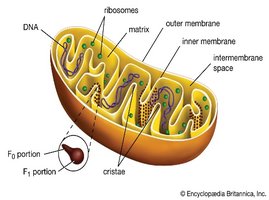
Try solving on your own before revealing the answer!
Q3. Know these structures of the mitochondria: outer membrane, inner membrane, intermembrane space, cristae, matrix.
Background
Topic: Mitochondrial Anatomy
This question tests your ability to identify and describe the key structural features of the mitochondrion, which are essential for understanding its function in energy metabolism.
Key Terms:
Outer Membrane: The external boundary of the mitochondrion.
Inner Membrane: Highly folded (cristae), contains the electron transport chain complexes.
Intermembrane Space: The area between the inner and outer membranes, where protons are pumped during electron transport.
Cristae: Folds of the inner membrane that increase surface area.
Matrix: The innermost compartment, site of the citric acid cycle.
Step-by-Step Guidance
Review the diagram of the mitochondrion and locate each structure.
Understand the functional significance of each compartment (e.g., why cristae are folded, what happens in the matrix).
Relate each structure to the processes of cellular respiration and ATP synthesis.
Try solving on your own before revealing the answer!
Q4. Where in the mitochondria does electron transport occur? Oxidative phosphorylation?
Background
Topic: Mitochondrial Function
This question tests your understanding of the spatial organization of the electron transport chain and ATP synthesis within the mitochondrion.
Key Terms:
Electron Transport Chain (ETC): Series of protein complexes embedded in the inner mitochondrial membrane.
Oxidative Phosphorylation: ATP synthesis driven by the proton gradient across the inner membrane.
Step-by-Step Guidance
Identify the inner mitochondrial membrane as the site of both electron transport and oxidative phosphorylation.
Understand how the ETC pumps protons into the intermembrane space, creating a gradient.
Recognize that ATP synthase (Complex V) uses this gradient to synthesize ATP on the matrix side.
Try solving on your own before revealing the answer!
