 Back
TCA Cycle: Chemical Strategy, Regulation, and Mitochondrial Connections
Study Guide - Smart Notes
 Tailored notes based on your materials, expanded with key definitions, examples, and context.
TCA Cycle and Mitochondria: Metabolic Hub
Overview of the TCA Cycle
The tricarboxylic acid (TCA) cycle, also known as the citric acid cycle or Krebs cycle, is a central metabolic pathway in mitochondria. It connects carbohydrate, fat, and protein metabolism, serving as a metabolic hub for energy production and biosynthetic precursors.
Metabolic Hub: The TCA cycle integrates carbon sources from glucose and glutamine, linking cytosolic and mitochondrial metabolism.
Energy Production: The cycle generates NADH and FADH2 for ATP synthesis via oxidative phosphorylation.
Connections to Disease: Dysregulation of TCA cycle enzymes is implicated in aging, cardiomyopathies, diabetes, cancer, and neurological disorders.
Apoptosis and ROS: Mitochondria are central to apoptotic signaling and reactive oxygen species (ROS) production, influencing cell fate.
Chemical Strategy Behind TCA Reactions
Entry Points and Pyruvate Fate
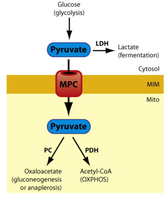
Pyruvate, produced from glycolysis, is a key substrate for the TCA cycle. Its fate is determined by mitochondrial transport and enzymatic conversion.
Mitochondrial Pyruvate Carrier (MPC): Transports pyruvate from cytosol into mitochondria.
Pyruvate Dehydrogenase (PDH): Converts pyruvate to acetyl-CoA, linking glycolysis to the TCA cycle.
Pyruvate Carboxylase (PC): Converts pyruvate to oxaloacetate for gluconeogenesis or anaplerosis.
Lactate Dehydrogenase (LDH): Converts pyruvate to lactate during anaerobic metabolism.
Pyruvate Dehydrogenase Complex (PDC) Mechanism
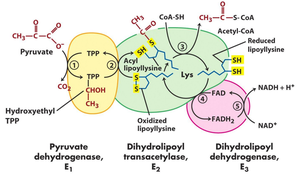
The pyruvate dehydrogenase complex catalyzes the oxidative decarboxylation of pyruvate, producing acetyl-CoA and NADH. It consists of three enzyme components:
E1: Pyruvate Dehydrogenase (uses TPP as a cofactor)
E2: Dihydrolipoyl Transacetylase (uses lipoamide)
E3: Dihydrolipoyl Dehydrogenase (uses FAD and NAD+)
Reaction Steps:
Decarboxylation of pyruvate
Transfer of acetyl group to CoA
Regeneration of oxidized lipoamide and reduction of NAD+ to NADH
Free Energy Strategy in the TCA Cycle
The TCA cycle is driven by highly exergonic reactions, particularly those involving thioester bonds and decarboxylation.
Citrate Synthase: Highly exergonic due to thioester hydrolysis ( kJ/mol).
Malate Dehydrogenase: Endergonic, but driven forward by consumption of oxaloacetate in the next step.
Decarboxylation Steps: Linked to oxidation/reduction, generating NADH.
Succinate Dehydrogenase: Part of the electron transport chain, produces reduced ubiquinone.
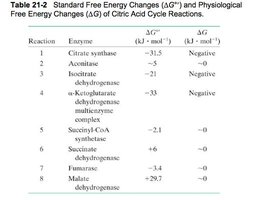
Reaction | Enzyme | (kJ/mol) | (kJ/mol) |
|---|---|---|---|
1 | Citrate synthase | -31.5 | Negative |
2 | Aconitase | +6 | 0 |
3 | Isocitrate dehydrogenase | -21 | Negative |
4 | -Ketoglutarate dehydrogenase | -33 | Negative |
5 | Succinyl-CoA synthetase | -2.1 | 0 |
6 | Succinate dehydrogenase | +6 | 0 |
7 | Fumarase | -3.4 | 0 |
8 | Malate dehydrogenase | +29.7 | 0 |
Regulation and Metabolic Reprogramming
Local and Global Control of TCA Cycle
The TCA cycle is tightly regulated at multiple levels to meet cellular energy and biosynthetic demands.
Allosteric Regulation: Key enzymes (e.g., citrate synthase, isocitrate dehydrogenase, ) are regulated by ATP, NADH, and other metabolites.
Metabolic Reprogramming: Cells can alter TCA cycle activity in response to stress, disease, or changing nutrient availability.
Disease Implications: Metabolic reprogramming is prominent in cancer cells (Warburg effect), immune cells (neutrophil activation), and during aging.
Connections to ATP Biosynthesis and Shuttle Mechanisms
Electron Transport Chain (ETC) and Proton Motive Force
NADH and FADH2 produced by the TCA cycle donate electrons to the ETC, generating a proton gradient used for ATP synthesis.
ATP Production: Mitochondria produce up to 6 kg of ATP per day to sustain cardiac function.
Reactive Oxygen Species (ROS): Byproducts of ETC, involved in signaling and cell death.
Shuttle Mechanisms
Citrate Shuttle: Transports acetyl-CoA from mitochondria to cytosol for fatty acid biosynthesis.
NADH Shuttle: Transfers reducing equivalents between cytosol and mitochondria.
Summary Table: TCA Cycle Enzyme Regulation
Enzyme | Regulators | Effect |
|---|---|---|
Citrate synthase | ATP, NADH | Inhibition |
Isocitrate dehydrogenase | ADP, Ca2+ | Activation |
-Ketoglutarate dehydrogenase | Succinyl-CoA, NADH, Ca2+ | Inhibition/Activation |
Pyruvate dehydrogenase | ATP, NADH, Acetyl-CoA | Inhibition |
Conclusion
The TCA cycle is a central pathway in biochemistry, integrating energy production, biosynthesis, and cellular regulation. Its chemical strategy, regulation, and connections to mitochondrial function are critical for understanding metabolism in health and disease. Additional info: Academic context was added to clarify enzyme regulation, shuttle mechanisms, and disease connections.
